




When Your Child Still Counts One by One
Your child still counts slowly, pointing at each number one at a time. With abacus beads, your child sees how numbers are arranged and starts adding without counting from the very beginning each time.
Your child learns to count by sliding real abacus beads, which builds focus and a clear picture of numbers. Over time, your child can solve sums simply by picturing the beads in their head. Private and online classes available.
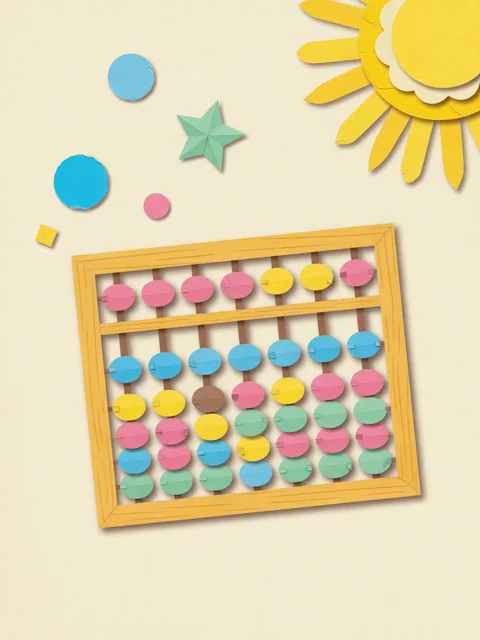

The Sempoa (abacus) is a counting tool with sliding beads for children ages 3 to 10 that helps them work with numbers accurately, stay focused, and picture the beads in their head. Once your child is comfortable, they simply picture the abacus in their head and find the answer right away. Every bead they move builds focus, working memory, and visualization. This way of learning is fun and helps your child feel more confident with numbers.
If your child matches one of the pictures below, the abacus is a fitting learning companion for them.
Your child still counts slowly, pointing at each number one at a time. With abacus beads, your child sees how numbers are arranged and starts adding without counting from the very beginning each time.
Your child's attention drifts easily and they slip up on sums they can actually do. Moving the beads with the thumb and index finger trains hand and eye to work together, so focus and accuracy grow.
Your child is comfortable adding and subtracting and is ready for a new challenge. The Small Friend and Big Friend formulas help your child count more smoothly, then slowly picture the abacus in their head.
Your child enjoys numbers and wants to keep leveling up. The S0 to S18 ladder gives them clear stage after stage, and they move up only when they have truly mastered the one before.
60 minutes/session
Contact us
60 minutes/session
Contact us
45-60 minutes/session
Contact us
A leveled curriculum. Your child moves up only after mastering each stage, so the foundation stays solid.
Verified tutors ready to teach online, trained in reading, writing, counting, and finger math for young children.
Tekun menemani anak mengenal angka dan cara menghitungnya dengan konkret dalam suasana belajar yang hangat.
Hangat menemani anak berlatih sempoa supaya fokus dan memori kerjanya terlatih lewat permainan dan benda nyata.
Hangat menemani anak berlatih sempoa supaya fokus dan memori kerjanya terlatih lewat permainan dan benda nyata.
Telaten menyiapkan anak menguasai baca tulis hitung sebelum masuk SD dalam suasana belajar yang hangat.
Dengan ramah mengajak anak berhitung memakai jari dengan langkah yang jelas lewat langkah kecil yang menyenangkan.
Sabar menemani anak berlatih sempoa supaya fokus dan memori kerjanya terlatih lewat permainan dan benda nyata.
Abacus at Lilo is arranged neatly into 19 stages, from S0 to S18. Your child moves real beads first, then slowly learns to picture them in their head. This way of learning, used in Singapore, helps your child understand numbers deeply and keeps their memory strong.
Your child gets to know the parts of the abacus and what each bead means through play. The mood stays relaxed, so your child feels like they are simply playing and having fun.
Your child adds and subtracts directly on the abacus. From here they truly understand the value of each number, the foundation that makes their counting strong.
Your child begins to picture the bead movements in their head. This is the bridge toward counting in their head without the tool.
Your child works out the answer accurately just by picturing it. Their focus and visualization grow stronger along the way.
Your child moves real beads first, then slowly carries that picture of the abacus into their head. This practice is what grows your child's focus, working memory, and visualization.
When your child can clearly picture the position of every bead in their head, that is the moment their focus and visualization are truly formed.
Lilo uses the soroban abacus with one upper bead worth 5 and four lower beads worth 1. From this simple rule, your child sees how numbers are built up from the ground, ones, tens, and hundreds on each rod.
Your child moves the beads with one hand. The thumb pushes the lower beads up, the index finger brings them down and slides the upper bead. Repeating this finger movement sharpens your child's accuracy and concentration.
Number pairs that add up to the same total, the Small Friend pairs that make five (1 and 4, 2 and 3) and the Big Friend pairs that make ten (1 and 9, up to 5 and 5). These formulas let your child add and subtract smoothly even when a rod runs out of beads to move.
At the mental-math stage (anzan), your child closes the abacus and pictures the beads moving inside their mind. This practice without the tool grows your child's visualization and working memory.
This ladder has 19 stages from S0 to S18, and your child moves up to the next stage when they have truly mastered the one before.
Here are the things that often slow children down when learning the abacus, and how Lilo's step-by-step method helps your child move past each one calmly.
Why it happensWhen a rod does not have enough beads, a child with no way to cross into the value of 5 or 10 goes back and counts from the start. This tires their working memory and makes their answers slip often.
How Lilo helpsLilo teaches the Small Friend formula (pairs that make five, like 1 and 4) and the Big Friend formula (pairs that make ten) at stages S4 and S6. With these number pairs, your child adds and subtracts smoothly when there seem to be too few beads, with no recounting.
Why it happensYour child still leans fully on the beads they can see and has not yet built a picture of the abacus in their head. This visualization needs to grow step by step, and it cannot be forced to appear all at once.
How Lilo helpsAt the anzan stage (S16), Lilo closes the abacus and guides your child to move the beads inside their mind. This gradual practice is what grows visualization and working memory, until your child can do mental math calmly.
Why it happensUntrained finger movement makes the beads shift in a messy way. Many children get a wrong answer because a bead moved by accident, even when they understand the math.
How Lilo helpsLilo trains the thumb and index finger technique with one hand, the thumb pushing the lower beads up, the index finger bringing them down and sliding the upper bead. This neat movement sharpens your child's accuracy and concentration from the very first stage.
Why it happensOne upper bead is worth 5 and four lower beads are each worth 1. A child who does not yet grasp this place value reads the number wrong, and the whole calculation slips far off.
How Lilo helpsLilo begins with the concrete step at stage S0, where your child holds a real soroban abacus and learns the value of each bead on every rod, ones, tens, and hundreds. From this simple rule, your child understands how numbers are built from the roots up before moving on.
Getting to know the parts of the abacus and the value of each bead.
Addition and subtraction directly on the abacus.
Picturing the abacus and counting without the tool.
Regular practice that builds focus and care.
See how the abacus builds your child's focus and ability to picture numbers, set beside other counting methods, so you can choose what fits your child best.
| Aspek | Abacus | Finger Math | Plain Memorization |
|---|---|---|---|
| Helper tool | Abacus beads, then mental | Fingers | No tool |
| Main strength | Visualization and mental work | Logic and movement | Memory recall |
| Long-term strength | Mental math by picturing numbers | Counting fluently on the fingers | Leans on memorization |
| Builds concentration | Very high | High | Limited |
Satu sesi 60 menit. Bisa les privat di rumah atau online. Paket lebih besar lebih hemat per sesi.
Or pay per session:Rp 63.365online, Rp 76.865private, tutor visits your home.
Your child gets used to picturing the beads in their head and working out answers calmly, with no tool needed.
Abacus practice grows the concentration and care that help with every subject.
Abacus at Lilo is arranged into 19 stages. Your child moves up only when they have truly mastered a stage.
The pace and material follow each child's own ability and rhythm.
Picturing the abacus trains your child's ability to visualize, an important skill for thinking.
Learn in person at home or online, with a schedule that fits your family's time.
From the first time your child slides the abacus beads to picturing the whole sum in their head (the stage teachers call anzan, mental calculation), we walk alongside your child as their focus and ability to picture numbers grow step by step. Have a free WhatsApp consultation with us, and we will help you choose the class that fits your child.
Limited tutor slots.