


Jihan D.Medan
Guides young children through reading, writing, counting, and jarimatika in small, cheerful steps.
- Reading
- Sempoa Abacus
- Counting
- Literacy and Numeracy
- School Readiness
- Writing
- Jarimatika
Lilo is one-to-one calistung tutoring (reading, writing and counting) for children aged 3 to 10, at home or online, fully managed from tutor matching and scheduling to a weekly progress report and free tutor replacement, built on Lilo's own curriculum of 122 modules with Singapore Math CPA and seven phonics levels, from IDR 76,865 per session, backed by a national network of 5,000+ tutors trusted by 5,500+ learners.
From pre-reading skills for your little one to logic for older children, each ability has its own structured learning track built on the Lilo method.
Pre-reading and pre-math skills for ages 3 to 4. Learning sounds, building vocabulary, and developing fine motor skills through play.
Register LiteracyFrom learning letters to reading fluently and understanding what they read.
Register LiteracyBuilding hand control for writing, from letters to neatly formed sentences.
Register LogicFrom recognizing numbers through real objects to solving Singapore-style story problems.
Register LogicFinger math (jarimatika), a hands-on way of counting that builds focus and helps your child picture numbers, moving through levels J0 to J11.
Register LogicBuilding focus, memory, and the ability to picture numbers in the mind, moving through levels S0 to S18.
Register LogicFor ages 6 to 10. Patterns, puzzles, and open-ended problems that train your child to think and solve problems.
RegisterLilo blends the Singapore Math method with regular, step-by-step practice across every learning track. Your child fully understands each concept and gets used to applying it, building a strong learning foundation for their whole school journey.
Your child learns from things they can hold first, then moves gently to pictures and symbols. This Singapore Math approach (CPA) helps your child truly understand, from counting to reading.
Story problems are drawn as simple bars. Your child learns to break a big problem into small, logical steps.
Each track is built in levels, from the first step to mastery. Your child masters one stage first, then moves on to the next.
An example of the Numeracy learning journey at Lilo
Every track, from Reading to Abacus, has a structured ladder just like this.
Today, more and more work is done with the help of artificial intelligence (AI), and the skills that matter now may change by the time your child grows up.
What endures as a human strength is the ability to think, reason, understand, and keep learning. This is what Lilo plants early, so your child grows into a learner ready to lead their own future.
Children aged 3 to 10 learn most securely when their hands hold real objects, their ears catch letter sounds, and they climb one coded level at a time. Here is how it works.
Take 7 + 5. A child who memorises a table stores 12 as a loose fact, and loose facts slip away when a child is tired or nervous. A child who has lined up seven buttons and added five sees for themselves that three buttons complete ten and two are left over, making twelve. They keep the path. When 27 + 5 appears in Grade 2, the same path works straight away, because they already know how to complete a ten. This is why Lilo starts counting with objects to hold, then pictures, then written numbers.
Reading works the same way. A child who memorises the word 'buku' as a picture gets lost when 'buka' or 'kuku' turns up. A child who knows the sound of each letter, b with u making bu, k with u making ku, holds a key that opens thousands of other words. Indonesian rewards this approach, since almost every letter is read the way it sounds. So Lilo tutors train your child's ear first: catching the first sound, joining syllables, then reading short sentences they understand. Fluency grows from there, and your child reads to follow the story.
Writing begins long before a pencil touches paper, in the small muscles of the fingers, wrist and shoulder. A three-year-old who squeezes clay, threads beads and draws lines in sand is building the grip that will later hold a pencil without tiring. When letters arrive, the tutor teaches the direction of each stroke while saying its sound, so hand and ear learn together. A child who understands why b and d face opposite ways seldom mixes them up again. Neat handwriting follows naturally from a ready hand and a clear head.
Coded levels keep all of this in order. The Lilo curriculum has 122 modules, and each carries a code that marks its place on the ladder, such as L4 for number bonds to ten or J5 in jarimatika. Your child moves to the next module once the previous stage is truly secure. The codes make small gaps easy to spot. If a Grade 2 child stumbles on column subtraction, the tutor can trace back to the place value module, patch the gap there, and climb again on firm footing.
For children aged 3 to 10, the payoff shows up in two ways. New lessons at school feel like a continuation of something familiar, so your child walks into class calm. Your child also builds the habit of asking why, and that habit carries into every subject. These are the years when a child's view of learning takes shape. A child who often feels that 'oh, so that's how it works' moment grows up believing hard things can be understood, and that belief is the most lasting thing they carry with them.
Learning at Lilo grows with your child. It starts with strong foundations in reading, writing, and counting, then rises to the thinking skills that prepare them for the future. Every step is practiced during the prime learning years, when your child is most ready to absorb good habits.
Your child learns letters and their sounds, learns to write neatly by hand, and understands numbers through real objects. This is where strong reading, focus, and confidence begin to grow, long before the first day of school.
Your child begins to organize problems calmly. The Singapore Bar Model turns story problems into logical pictures, and abacus practice builds focus and working memory. Your child gets used to explaining their own reasoning.
Your child learns to solve multi-step problems, think a few steps ahead, and discover their own way of learning. These are the skills that keep them ready to learn in a world that will keep changing.
Three future skills that grow along the way
Your child gets used to thinking a few steps ahead and choosing the best approach, like planning a strategy in a game. They carry this habit into any challenge they meet later on.
Through the Singapore Bar Model, your child learns to break a complex problem into small steps that can be solved one by one. They grow into a child who stays calm with hard problems.
Your child comes to know their own way of learning and enjoys the process. This is the skill that keeps them ready to take in new things throughout life.
Each age range has abilities that are blossoming. This table helps you see what is typical at your child's age, what Lilo works on, and what you can enjoy together at home.
| Age | What is growing | Focus at Lilo | Best-fit program | At home |
|---|---|---|---|---|
| Ages 3-4The play years | Vocabulary leaps, curiosity runs high, the grip grows stronger, and attention holds for a few minutes at a time. | Hearing the first sound in words, knowing how many objects up to five, and training fingers through threading, sticking and free scribbling. | Lilo Tots as the first door, blending sounds, vocabulary, small numbers and hand practice in one playful session. | Read picture books before bed, then invite your child to guess the first sound of things around the house. |
| Ages 4-5Meeting symbols | Your child grows curious about the letters in their own name, counts objects one by one, and loves copying grown-up writing. | Linking sounds to letters, naming a small quantity without recounting, and drawing straight lines, curves and circles. | Lilo Tots at a later stage, or early levels of Reading and Numeracy once your child looks ready. | Play letter spotting on shop signs and count the plates together when setting the table. |
| Ages 5-6Before primary school | Your child can sit for longer, starts joining syllables, and understands that numbers stand for amounts that can be split. | Reading words and short sentences, forming letters with the right stroke direction, and number pairs that make ten. | Calistung to build all three skills together, or Primary School Readiness for study habits and independence in class. | Ask your child to read out food labels in the kitchen and write a short shopping list with you. |
| Ages 6-8Grades 1 and 2 | Reading becomes fluent, your child enjoys rules and patterns, and starts explaining the reasons behind an answer. | Understanding what they read, writing full sentences, tens and ones, and story problems drawn with the Bar Model. | Reading, Writing or Numeracy as your child needs, with Jarimatika and Lilo Logic ready to begin in this range. | Ask about the story your child has just read, then make up story problems from everyday moments together. |
| Ages 8-10Layered thinking | Working memory grows stronger, so your child can hold several steps in mind and enjoys challenges with many layers. | Multi-step story problems, picturing numbers in the mind, writing paragraphs in order, and puzzles that take several moves. | Abacus for focus and visualisation, Lilo Logic for problem solving, and Writing for well-ordered pieces of writing. | Play board games that need strategy, then ask your child why they chose a particular move. |
The ages here are a general picture. The first Lilo session finds your child's starting point through play, with no written test, so every child begins at the stage that suits them.
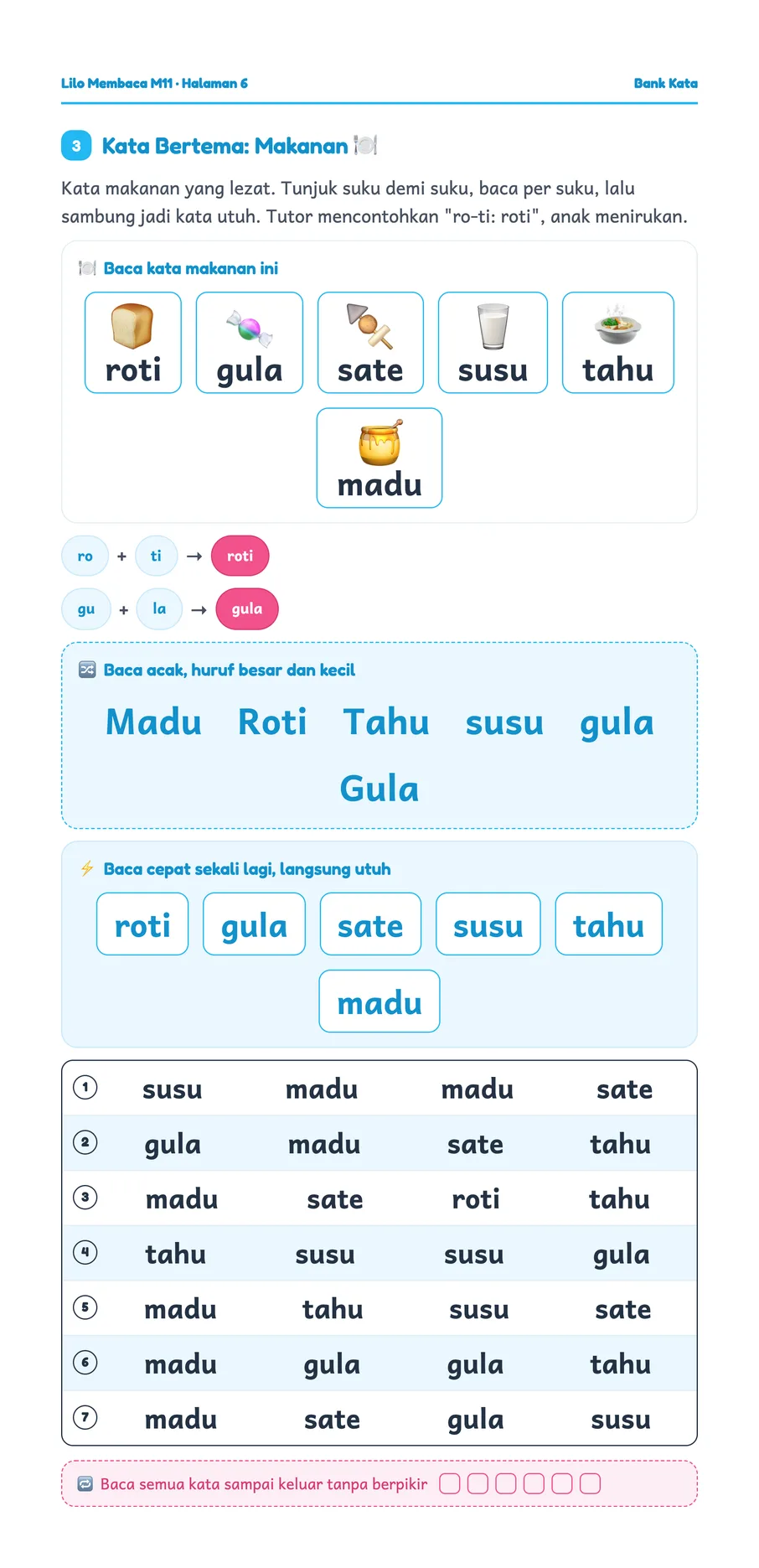
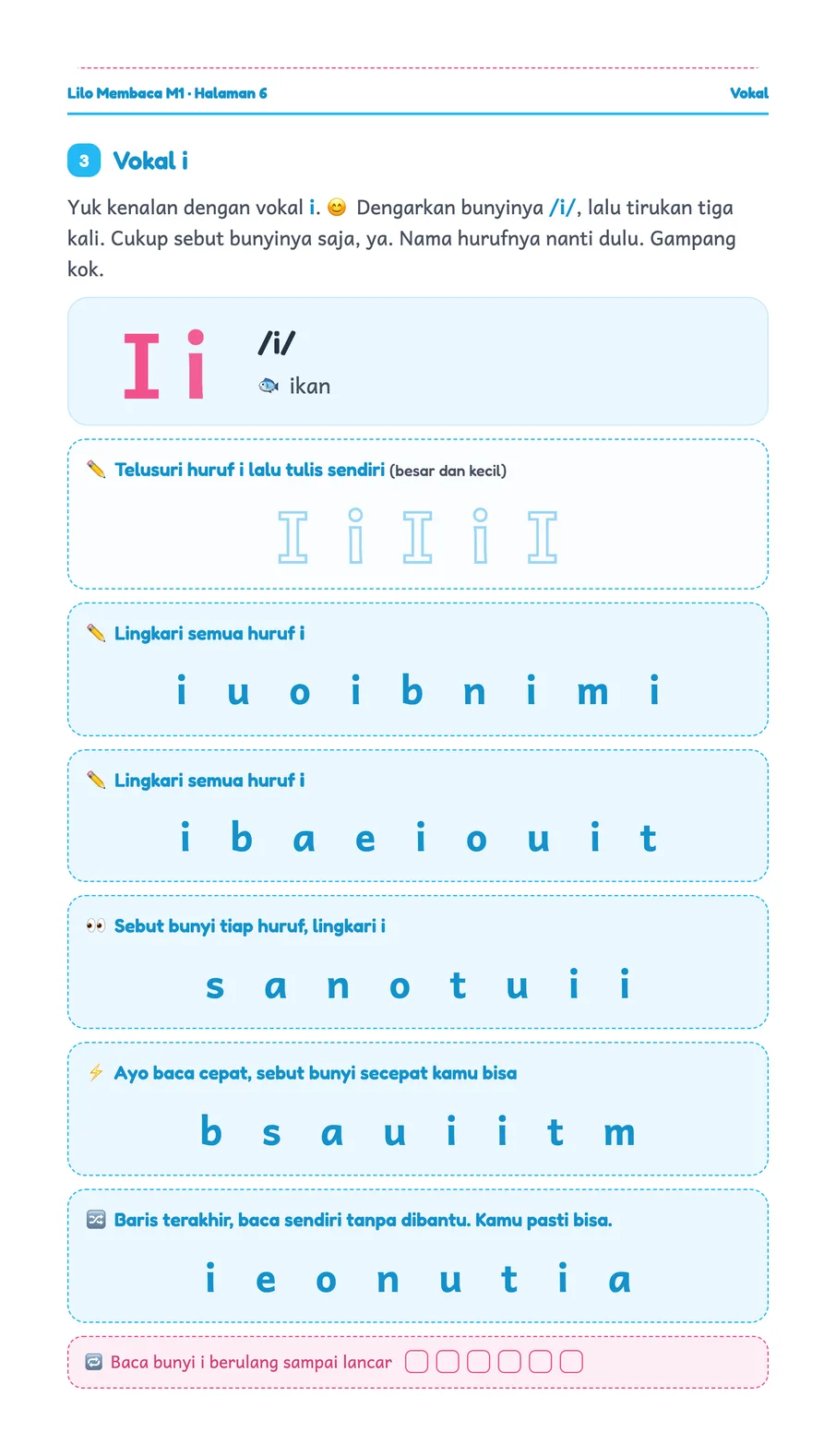
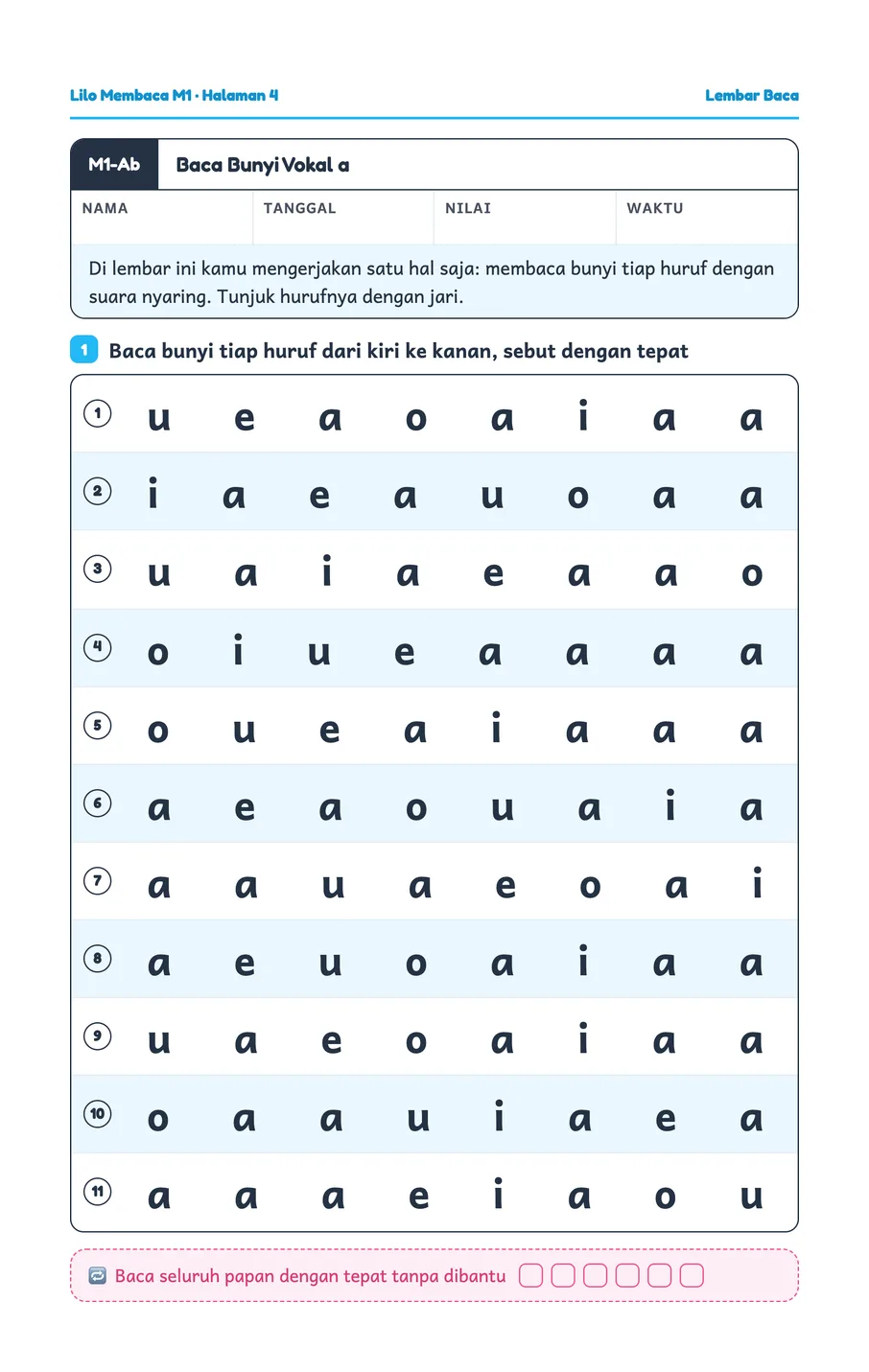
These are the very sheets your child uses each session: Singapore bar models, jarimatika, abacus, and reading. All built in levels from Lilo's 122 original curriculum modules.
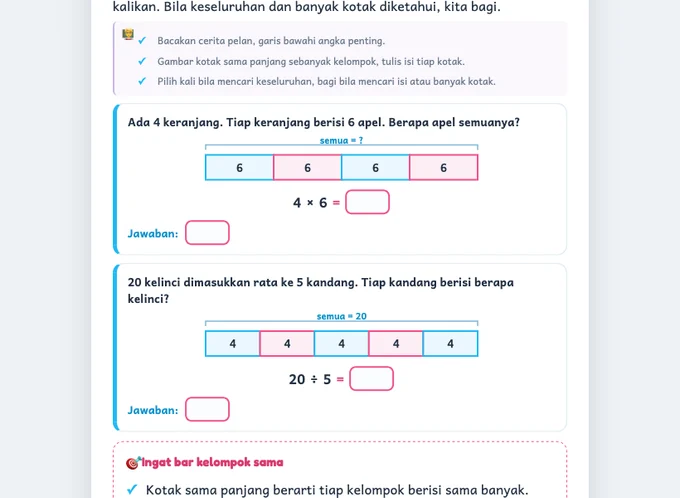
Story problems drawn as bars, so your child gets used to reasoning.
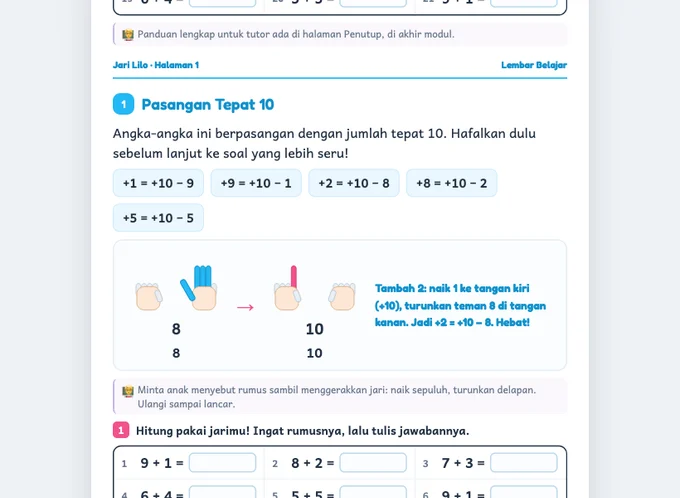
A fun finger method that helps your child count carefully and stay focused.
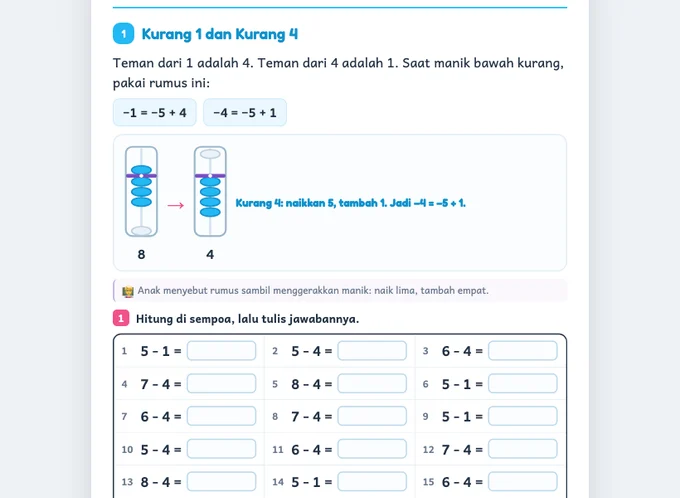
Each bead your child moves builds their focus and working memory.
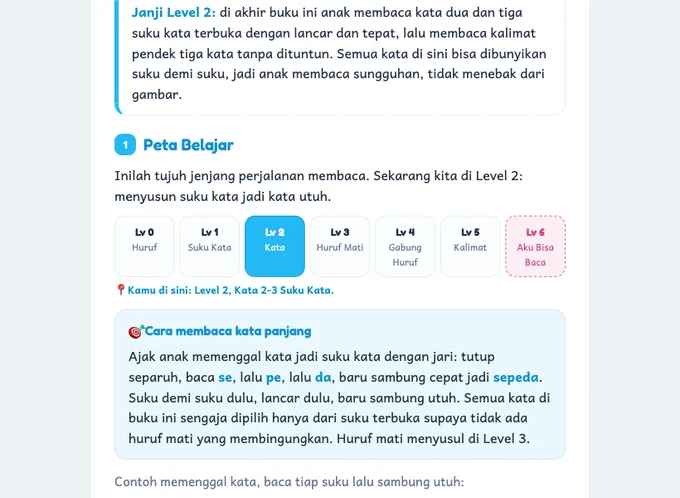
Step by step, from syllables to fluent reading.
Five to fifteen minutes a day keeps what your child has learned warm. These activities sit alongside the small ten-minute task a Lilo tutor gives at the end of every session.
| Activity | Time | What you need |
|---|---|---|
First Sound HuntSay a sound, such as 'mmm', and invite your child to find things whose names begin with it: meja, mangkuk, mainan. Say the sound only, because your child's ear is learning to pick sounds out of words. Take turns giving the clue so your child also practises choosing a sound. This prepares them to join syllables when reading begins. | 5 minutes | Everyday things around the house |
Fridge Door NotesLeave a one-sentence note for your child on the fridge, such as 'Find the red socks'. Your child reads it, then writes a reply in their own hand. For a beginning writer, one word is plenty, and spelling slips can wait. What grows here is the courage to share an idea in writing, and your child will look forward to the next note. | 10 minutes | Small paper, a pencil, a fridge magnet |
Ten Buttons on Two PlatesPut ten buttons on the table and ask your child to share them between two plates in different ways: seven and three, six and four, five and five. Write down each pair they find. These pairs to ten become the footing for adding and subtracting across tens in later grades, and your child discovers them with their own hands. | 10 minutes | Ten buttons or dried beans, two small plates |
Numbers on FingersCall out a number below ten. Your child shapes it on their fingers with eyes closed, then opens them to check. Next, swap roles: you shape the fingers and your child reads the number. This small game trains your child to picture amounts in the mind and to check carefully, two habits used in jarimatika and abacus. | 5 minutes | Your hands and your child's hands |
Spoon and Fork PatternsLay out a short pattern, such as spoon, fork, fork, spoon, fork, fork, and ask what comes next. Once your child answers, ask them to explain why, then let them build a pattern for you to guess. Explaining the rule behind a pattern trains your child to reason and speak in order, skills that Lilo Logic takes further. | 15 minutes | Spoons, forks, colourful bottle caps |
The same sheets children work on in Lilo classes are also sold as packs. Buy once, open everything in your account, and print again whenever your child wants another round.
We know your child is special and deserves a quality education. Lilo walks alongside your child as they grow through reading, writing, counting, jarimatika, abacus, and logic, in a way that makes learning a joy.
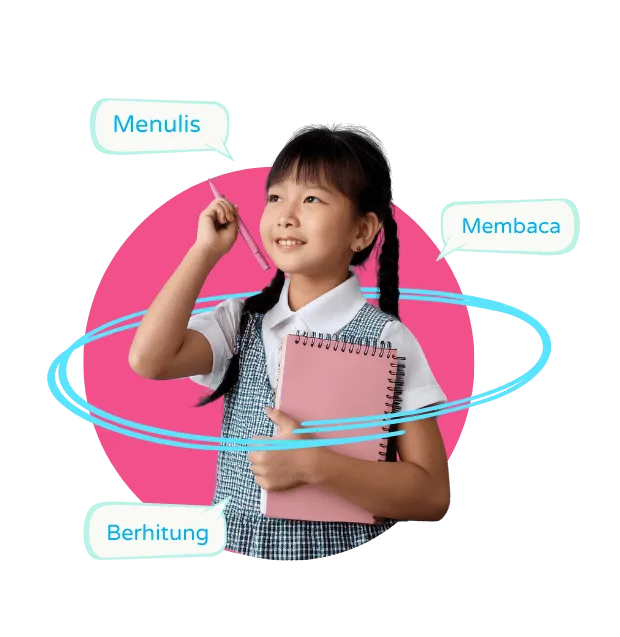
Materials and pace adapt to each child's needs.
In-person or online, following the times that work best for your child.
You receive a progress report on your child every week.
122 of our own curriculum modules, so your child moves up level by level with ease.
These questions are worth asking anywhere. The answers show you whether your child will be guided all the way to understanding, and how clearly you can follow the journey.
A child who starts too high gets frustrated, and a child who starts too low gets bored. How the starting point is found also shapes your child's first feelings about learning, especially between three and six. Ask whether your child will play or be handed a worksheet. At Lilo, the first session is a game that reads your child's abilities, with no written test.
Without a clear sequence, lessons drift with the mood of the day and small gaps go unnoticed. A levelled curriculum gives every session a purpose and tells you which stage your child has reached. Ask to see a sample worksheet. Lilo uses its own curriculum of 122 coded modules, and your child's worksheets always come from the module they are working on.
Young children learn through relationships. A tutor who understands how children develop knows when to get them moving, when to pause, and when to stretch a little further. Knowing the tutor's background before class gives you peace of mind. At Lilo, you can view the tutor's profile before the first session, and many tutors come from primary teaching, early childhood, psychology and mathematics degrees.
The match between child and tutor shapes how eager your child feels, and sometimes it only shows after a few sessions. A good provider has a clear way forward for this, with no extra cost and no awkwardness for you. Lilo replaces the tutor free of charge whenever your child needs a better match, a service promise that applies to every child in every program.
A young child's progress can be hard to see from one day to the next, so you need notes that are regular and easy to read. Those notes also show where to help at home. Ask how often updates arrive. Lilo tutors write a progress report every week, for example noting that your child now joins syllables smoothly and is ready for short sentences.
Children aged 3 to 10 understand ideas through things they can touch and move. Lessons that jump straight to worksheets may show quick results, then wobble when a question changes shape. Look for buttons, beads, cards or an abacus on the table. Lilo tutors start from real objects on every track, and in online classes the camera points at your child's book and hands.
Learning at Lilo fits your family's needs and comfort, from a tutor who comes to your home to self-guided study.
A Lilo tutor comes to your home and teaches your child one-on-one, in the place where they feel most comfortable.
Private learning with a tutor over the screen, from anywhere, on a flexible schedule.
A digital self-study space. Your child practices on their own through fun, interactive exercises, step by step.
Lilo sends the materials and a teaching guide, and you guide your child at home, much like homeschooling.
Lilo learning centers where your child learns alongside friends and tutors.
Reach us on WhatsApp for a free consultation, then we match a tutor and schedule the first session.
Your child learns with a tutor, in private or online sessions, with fun materials.
Track their progress every week as your child understands more and grows in confidence.
Choose your city to see how lessons run there, at home or online, backed by a national network of more than 5,000 active tutors. Wherever you live, online classes can start right away.
Lilo tutors are friendly and truly understand a child's world. With a warm, caring approach, your child feels comfortable and excited to learn.
A team of verified tutors skilled in reading, writing, counting, and jarimatika methods for young children.
Guides young children through reading, writing, counting, and jarimatika in small, cheerful steps.
Trains focus through sempoa and jarimatika practice, while preparing reading, writing, and counting before primary school.
Walks children through reading, writing, and counting in a warm, unhurried classroom.
Takes children from letter sounds to fluent reading through small, enjoyable steps.
Leads children through reading, writing, and counting one step at a time.
Patiently guides reading, writing, and counting using games and objects children can hold.
A session can run 60, 90, or 120 minutes. The prices above are for a 60 minute session, longer sessions adjust accordingly. Choose private lessons at home or online. Larger packages cost less per session.
Each session works out to IDR 76,865 for online or private in-home sessions. Payment is made per package.
Feel free to ask. We are ready to help prepare a brighter future for your child.
Register Now