


Ages 3 to 4, meeting letters through play
Your little one plays with real objects, meets the letters A to Z and the numbers 1 to 10, and traces lines and patterns. Everything happens through play, with no pressure at all.
Your child moves through four clear levels, from first letters and numbers to confident reading, starting at the stage a friendly placement assessment says fits best.
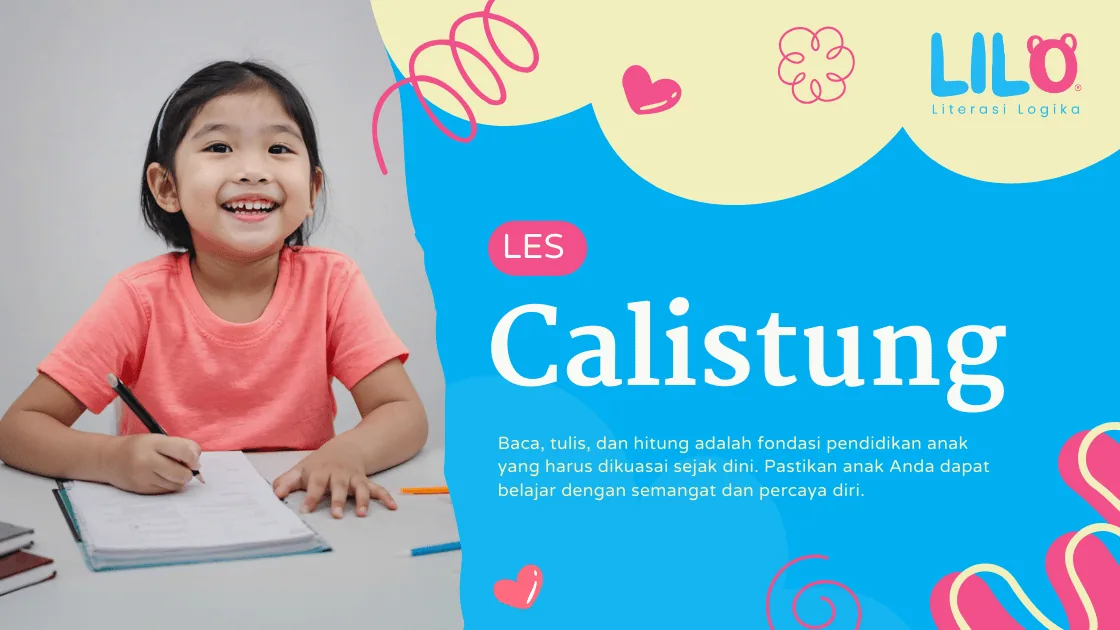
Reading, writing and counting in Mataram is a Lilo program where children aged 3 to 8 learn all three skills together through four levels that follow their age. Your child starts with real objects, moves to pictures, then to letters and numbers, and climbs from the Introduction Level to the Advanced Level only after each stage is truly mastered.
The four levels follow your child, whatever the starting point. Here are the children we most often welcome into this program across Mataram.
Your little one plays with real objects, meets the letters A to Z and the numbers 1 to 10, and traces lines and patterns. Everything happens through play, with no pressure at all.
The kindergarten years are a wonderful window. Your child blends syllables, counts with growing confidence and writes letters and numbers, building a calm, solid base before the first day of primary school.
Early primary children read with comprehension, work through addition and subtraction, and write full sentences. The program deepens what school has started and keeps all three skills growing together.
Some children simply started later, and that is fine. The placement assessment finds the level where your child succeeds today, and steady mastery closes the gap without stress or shame.
Mataram is the capital of West Nusa Tenggara Province, located on the island of Lombok. The city grew from a blend of areas with their own stories, from Ampenan with its historic old port, to Mataram as the seat of government, and Cakranegara, long known as a trading quarter. The rich Sasak culture colors everyday life here, including the tradition of Quran study after maghrib that has long nurtured a habit of learning in children. This atmosphere makes Mataram a lovely place for a child to grow.
Children learn through stages from concrete to abstract. They handle real objects first, see pictures, then meet numbers and letters. With this sequence, children in Mataram truly grasp concepts and grow confident.
Your child begins at the level that matches what they can do today, then moves up one small step after another. The worksheets finished in each session let you follow how far your child has come.
Your child in Mataram can start right away with a one-on-one online tutor from Lilo's national network, working from their own desk. Schedules are agreed together and fit around your child's week.
Readiness shows up in small daily habits. When several of the clues below appear, your child can begin with steps that feel like play.
Children in Mataram learn online with 5,000+ Lilo tutors.
Graduates and active students.
Applications screened
Our team reads every application.
ID card and diploma verified
Identity and diploma are matched.
Teaching profile completed
Teaching history goes into the portal.
Trained before teaching
Lilo guides and materials are provided.
Matched to your child
Candidates answer questions about the child.
Not the right fit? Read the tutor replacement guarantee
The first session is made of games, with no written test. While your child plays, the tutor notes what comes easily and where hesitation begins.
In Mataram, sessions start online. The class link and worksheet arrive in app.lilo.id before the lesson, so your child simply sits down and greets the tutor.
The tutor greets your child by name and says a few words aloud together, clapping each syllable. Ears and voice are ready before the pencil comes out.
Letter cards, sticks or small toys come out to match your child's stage. A dictated word is first built from cards that slide around, then written.
Your child stands, jumps once per syllable, or traces a letter shape in the air. This quick break brings attention back for the next part.
Together they work through a sheet from the module in progress. The tutor watches the pencil grip and how your child reads their own writing back.
The tutor sums up what your child handled well today, then sets one light practice of roughly ten minutes to finish before the next session.
Each stage carries its own mark of completion, so progress stays visible.
Every Lilo session follows the same careful path, from real objects to symbols on paper, so your child understands each idea deeply and keeps it for good.
Every child begins with a friendly placement assessment. We look at what your child can already do with letters, numbers and a pencil, then place them in one of the four levels, so nothing feels too easy or too hard.
New ideas arrive as real objects your child can touch, then as pictures, then as letters and numbers on paper. This is the Singapore Math way, and it means your child truly understands before practicing.
Your child learns the sound each letter makes and blends those sounds into syllables and words, so reading grows naturally. Later, word problems are drawn as simple bar pictures that train real reasoning.
Each session closes with small, friendly portions of practice, steady practice built level by level. Your child levels up only after truly mastering the current stage, so confidence builds with every step.
From recognizing single letters to understanding a whole passage, your child climbs step by step: letters, syllables, sentences, then genuine comprehension of what the words say.
Small hands warm up with lines and patterns before shaping print letters, then words, then full sentences, so writing stays comfortable, neat and enjoyable.
Your child gets to know numbers through real objects, then adds and subtracts with confidence, and finally solves word problems drawn as simple bars.
Alongside the three skills, every session quietly builds concentration, independence and confidence, the everyday habits that carry your child happily through school.
Hearing a word and writing it down asks your child to complete several jobs in order. Knowing that order helps you see exactly where they get stuck.
The first job happens in the ear. Your child breaks a heard word into smaller parts, so sapu becomes sa and pu, and sa becomes the sounds s and a. This grows gradually. A child who still hears a word as one lump writes letters at random, so the tutor says each word slowly and has your child clap every syllable.
The second job is matching each sound to its letter. Indonesian helps here, since most of its sounds are written with one steady letter. The exceptions need their own practice: ng in bunga and ny in nyanyi sound like one sound and take two letters. Children also drop a final letter, writing ruma for rumah, because a final h is very faint. English spelling hides more surprises, so English dictation starts with regular words such as sun and map.
The third and fourth jobs run together: holding the order of sounds in memory while the hand forms letters. When the hand still works hard, memory is spent on moving the pencil and the word falls apart halfway. The tutor separates these loads. The word is first built from sliding letter cards, and once the arrangement is right, your child copies it in pencil.
What you can watch at home are your child's lips. A child learning dictation usually whispers the sounds while writing, and that is a good sign. Invite your child to read their writing back with a finger under each letter. When the reading differs from the word they meant, your child finds the missing letter on their own, and a discovery like that stays.
The best practice materials are already around the house. These four short activities use plant pots, pets and the kitchen, and each trains one clear stage.
| Activity | Time | What you need |
|---|---|---|
First sounds of pet namesName animals at home or next door, such as kucing, ikan or ayam. Your child guesses the first sound and picks the matching letter card, so letter recognition grows through sound. | 5 minutes | letter cards cut from scrap paper |
Name labels for plant potsSay a plant name slowly, like cabai or kemangi. Your child claps the syllables, writes the word on a slip and tapes it to the pot. It is dictation practice they can feel proud of every time they walk past. | 10 minutes | small paper slips, pencil, tape |
Pairs to ten with beansSplit ten beans between two bowls in different ways, seven and three, then six and four. Your child names each pair and writes it as numbers, building basic counting from real objects. | 10 minutes | ten dried beans, two bowls |
Reading a cooking cardWrite three short steps, such as wash your hands, lay the bread on a plate, spread the jam. Your child reads each step and carries it out with you. Any slip in order shows up on the plate, which trains reading for meaning. | 15 minutes | handwritten recipe card, bread, jam |
This picture follows a six year old already in grade 1 who wants to catch up with classmates. Eight sessions a month on the Regular package, about twice a week, keep the rhythm close and still light.
Your child blends sounds into syllables and writes two syllable words from dictation, such as buku and meja.
New words are read through their sounds, and words ending in a consonant, like rumah, are written in full.
Capitals take straight strokes and numbers follow the arrows. Short dictated sentences come out with clear gaps between words.
Adding and taking away move from objects to pictures to symbols, and bundles of ten sticks make place value visible.
Your child reads a short paragraph and answers questions about it, then draws simple word problems as bars before solving them.
Each month builds on the last, and your child moves up once the current stage is truly mastered.
Four signatures shape every session, so your child understands each idea before practicing it and carries real confidence into reading, writing and counting.
When a child holds an idea in their hands first, the symbols that follow finally make sense.
Every new idea begins as something your child can touch and move. Pictures come next, and written symbols come last, so understanding is built on real experience.
Your child learns what each letter sounds like and blends those sounds into syllables and words. Reading becomes something the child figures out with growing delight.
Story problems are drawn as simple bars, the Singapore way, so your child can see what the question is really asking and reason a path to the answer.
Small portions, done often, level by level. The rhythm feels light to the child, and mastery quietly accumulates from week to week.
These stages come straight from our leveled modules and mark the path your child climbs one mastered step at a time.
A few well-meaning habits can make reading, writing and counting harder for young children. Here is what we see most often, and how the program handles each one.
Why it happensMemorized material fades quickly, and lessons start to feel sour because nothing truly connects in the child's mind.
How Lilo helpsLilo starts every idea with real objects the child can hold, so understanding comes first and memory follows naturally.
Why it happensSmall hand muscles need warming up. Pushing letters too early creates frustration and a lasting dislike of the pencil.
How Lilo helpsThe Introduction Level trains lines and patterns first, so letters arrive when the hands are genuinely ready.
Why it happensWithout real objects behind them, numbers become empty recital, and word problems later feel impossible.
How Lilo helpsCounting begins with objects the child can touch, moves to pictures, and only then to written numbers.
Why it happensSkills built over a calm ladder of stages take root; a rushed sprint leaves gaps and puts heavy pressure on the child.
How Lilo helpsStarting earlier, at the level that fits, lets your child walk into primary school ready and confident.
choose 60, 90, or 120 minutes
Contact us
60/90/120 minutes
Contact us
60, 90, or 120 minutes
Contact us
Ask these five questions of any tutoring provider. The answers show whether your child will stay focused, feel at ease and stay safe while learning.
Young children focus best in short stretches. A session spent entirely seated drains attention, while one spent entirely playing rarely reaches the worksheet. At Lilo, every session switches between short activities with a movement break in the middle.
A good game always trains a skill you can name, so ask which stage it serves. Lilo's games are tied to 122 coded modules, so every clap and every letter card has a reason.
Your child's sense of safety starts with an adult you know. An open provider shares the education and experience of its teachers. With Lilo, you can view the tutor's profile before the first session.
A good match shapes how bravely your child tries and makes mistakes, so look for a clear way out at no extra cost. With Lilo, a tutor who is a poor fit is swapped at no charge, a firm service promise.
Useful reports name real abilities, such as which dictated words your child now writes. A vague note like works hard is difficult to act on. Lilo tutors report every week, for instance that your child now writes words ending in h in full.
In Mataram, sessions run online first from your child's own study table, and home lessons follow once a nearby tutor is confirmed.
Families in Mataram have several ways to help a child learn. Here is an honest look at how the approaches differ.
| Aspek | Lilo | Worksheet Tutoring | Learning Apps |
|---|---|---|---|
| How new ideas are introduced | Real objects first, then pictures, then symbols | Printed exercises from the first day | Taps and animations on a screen |
| Who guides the child | A verified tutor, live and responsive | A tutor who checks completed sheets | The app follows its own script |
| How progress is measured | Mastery of each of four leveled stages | Number of sheets completed | Points, stars and streaks |
| Word problems | Drawn as bar models to train reasoning | Practiced through repetition | Usually multiple choice |
| Fit to your child | Placement assessment sets a personal starting level | One series shared by most children | Fixed level menus |
Two meetings a week, or eight sessions a month, is the rhythm of the Regular package at IDR 604,782. You settle the monthly package in one payment at the start. Within a session your child can switch between reading, writing and number practice at their own stage. Classes begin online with worksheets sent ahead, and home sessions follow once a nearby tutor is confirmed.
By month's end, sitting calmly to greet the tutor feels routine.
IDR 307,460Opening the worksheet without a reminder becomes your child's own habit.
IDR 604,782Neat writing and checking each sum before answering become second nature.
IDR 891,965Daily calistung practice turns into a routine your child looks forward to.
IDR 1,692,684From the very first session.
We find a replacement for free. Ask at any point in your package.
The steps:
Topped up by a monthly report.
From the Introduction Level at age 3 to the Advanced Level at ages 6 to 8, each stage matches your child's age and is mastered before moving on.
Lilo teaches from its own original curriculum of 122 leveled modules across all its programs, so every session follows a clear, tested path from first letters to full comprehension.
Every tutor is verified and teaches your child live online with materials matched to their level. For home lessons in Cakranegara, Ampenan, Sekarbela or Selaparang, we first confirm a tutor who lives nearby.
Sessions can run in English, in Indonesian, or in a warm mix of both, which suits bilingual and national-plus families beautifully.
Reading, writing and counting are woven together so each skill strengthens the others, and your child's progress stays balanced across all three.
Latifah really looks forward to her lessons, she says they are fun. She is starting to understand addition using things around the house, like counting spoons while helping set the table.
Barra started primary school feeling well prepared. His teacher said he already knows his letters and numbers well. We are thankful we began lessons before school started.
These are original sheets from Lilo's calistung materials. Reading, writing, and counting are trained side by side at each level, so all three grow together from first steps to mastery.
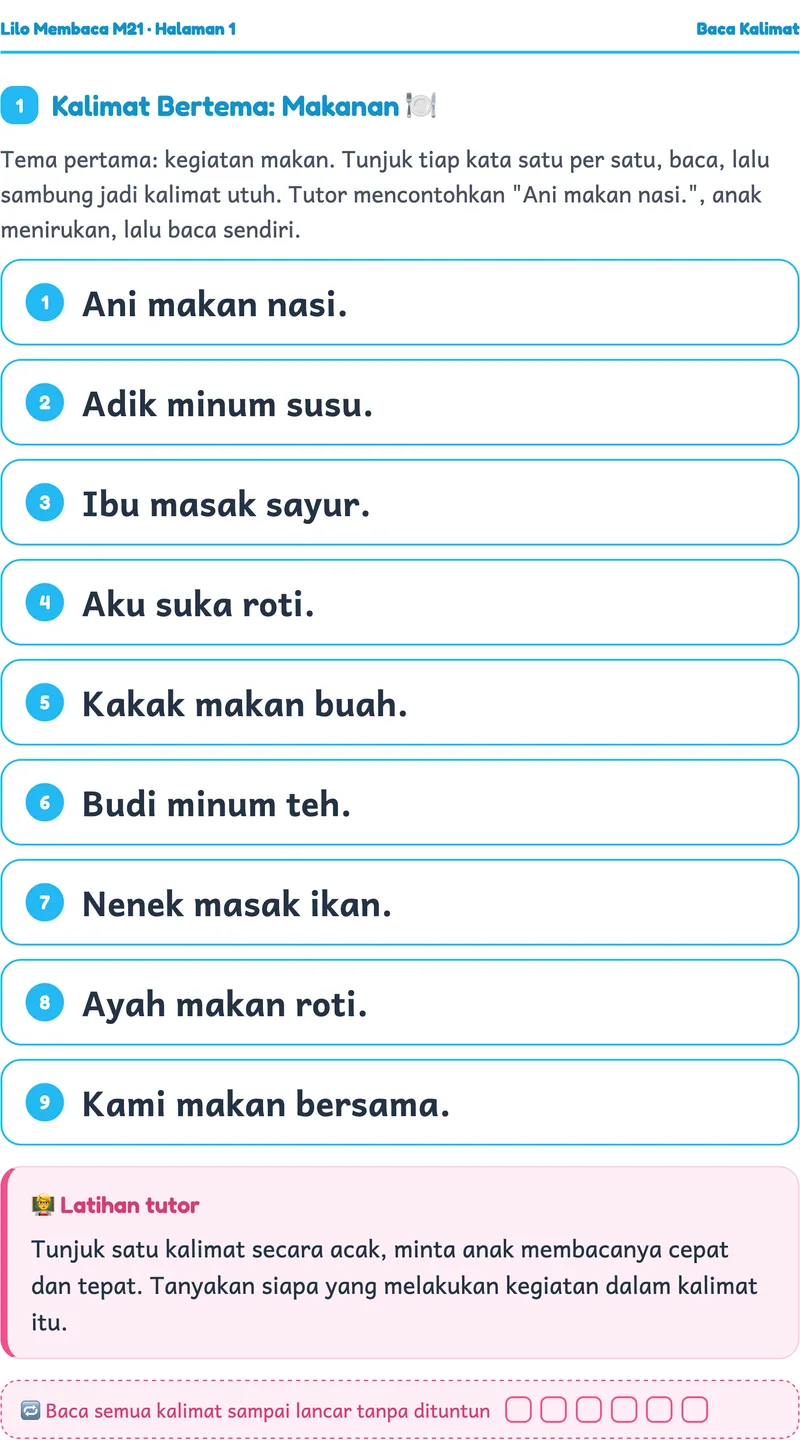
A real reading-module page: short food-themed sentences read in full, combining everything from letter sounds to syllables.
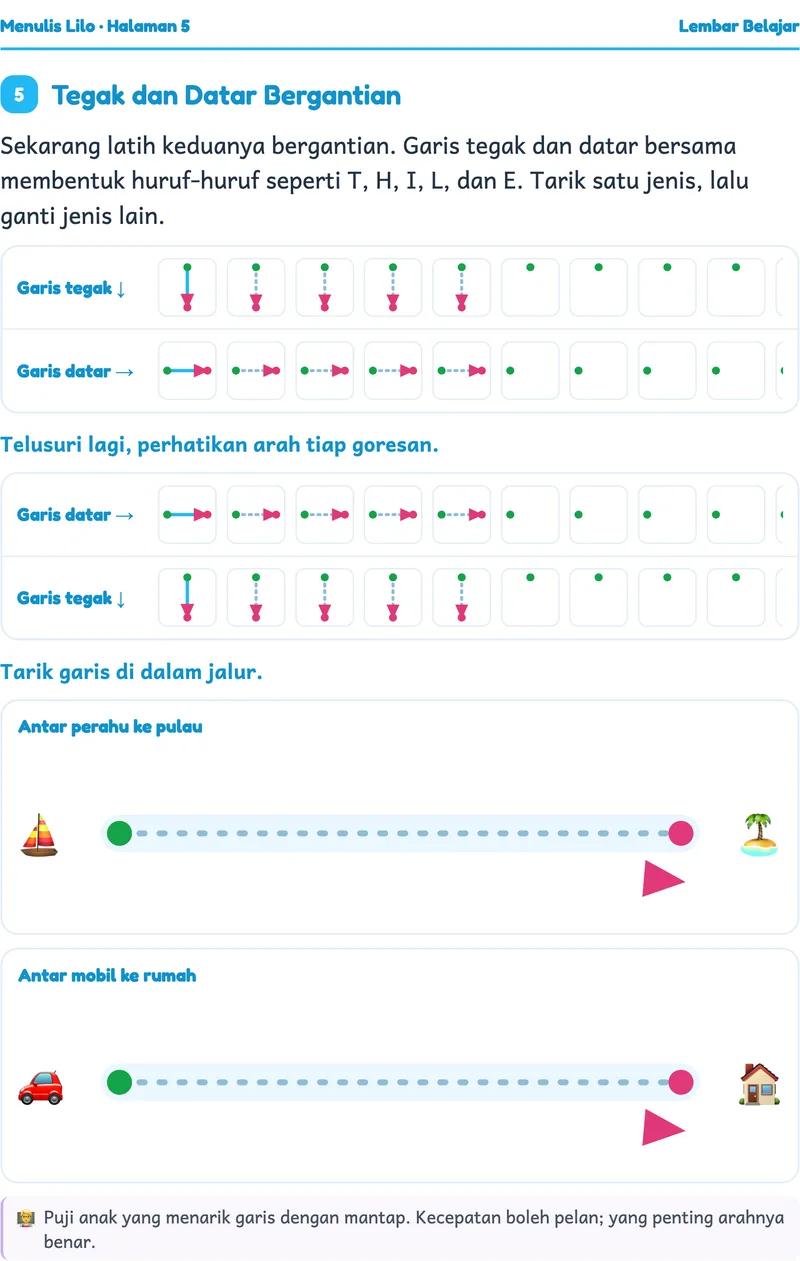
A real writing-module page: alternating straight and flat strokes train small hand muscles before the first letters.
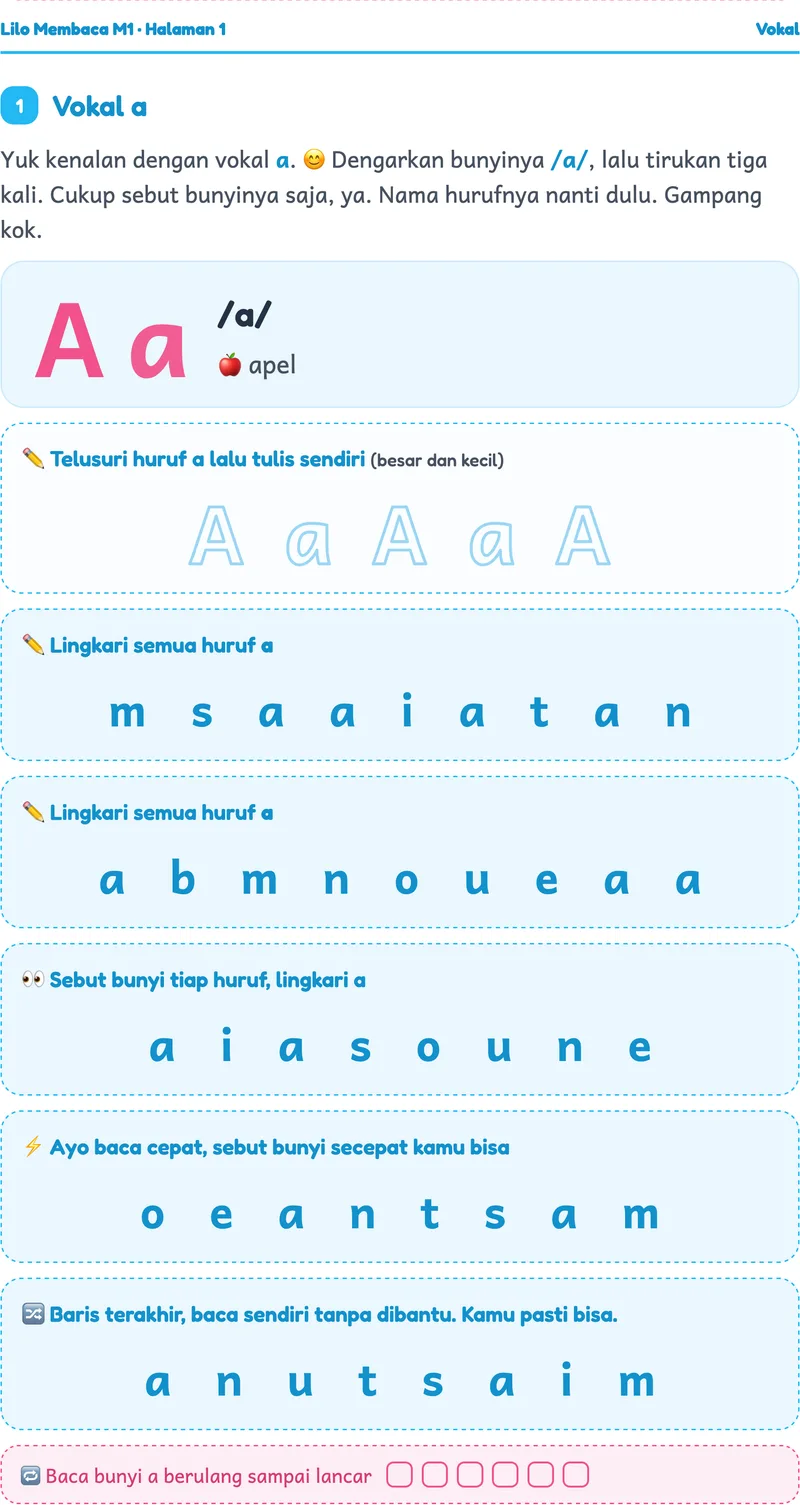
Through cards and point-and-read practice, Introduction Level children get to know the vowel sound a on this reading-module sheet. One small sound that starts the whole journey toward loving to read.
These sheets are a small glimpse of Lilo's own progressive curriculum, carefully arranged across 122 modules.

Tell us about your child on WhatsApp and we will suggest a starting level and a schedule that fits your family, anywhere in Mataram.
Free consultation on WhatsApp