

Little explorers aged 3 to 4
Your child meets letters and numbers through play, songs and things they can hold. Sessions feel like guided playtime, and curiosity grows without any pressure to perform.
One gentle journey for children aged 3 to 8. Your child learns to read, write and count together, guided by a verified tutor and a curriculum built on understanding first.
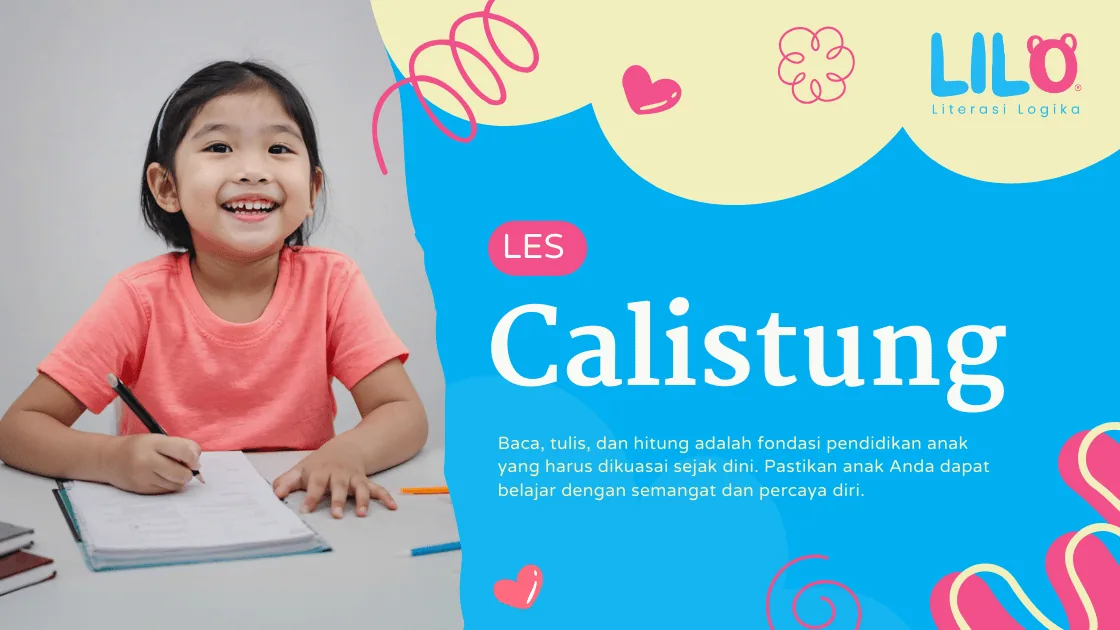
Reading, writing and counting in Padang is a guided learning program from Lilo for children aged 3 to 8 that teaches the three skills together as one journey. Your child begins with real objects, moves on to pictures, then meets letters and numbers, so every new skill rests on something the child truly understands.
Every child arrives at a different point. The placement assessment at the start makes sure your child begins exactly where learning feels doable and fun.
Your child meets letters and numbers through play, songs and things they can hold. Sessions feel like guided playtime, and curiosity grows without any pressure to perform.
Your child blends syllables, counts with confidence and starts writing letters and numbers, building the calm, steady foundation that makes the move to primary school feel natural.
Your child strengthens all three skills at once: reading with real understanding, writing words and sentences, and solving counting problems by reasoning through them step by step.
If your child has fallen behind, the tutor starts at the level where things still make sense and rebuilds from there, so confidence returns along with the skills.
We follow a simple rule: understanding comes before symbols. Every session moves in small, friendly steps that your child can actually master.
Before lessons begin, the tutor runs a gentle placement assessment. Your child starts at the level that fits, so early sessions feel encouraging instead of overwhelming.
Your child first handles real objects, then works with pictures, and only then meets letters and numbers. This is the same path Singapore Math uses to build real understanding.
Your child learns the sound each letter makes and blends those sounds into words. Reading grows from hearing and understanding, without long drills of spelling letter names.
Steady practice in small portions, built level by level, keeps every session light. Your child moves up a level only after truly mastering the current one.
Readiness shows up in small everyday habits. Match these clues to your child's age; two or three of them appearing is reason enough to begin.
Tutors for Padang are chosen from 200+ teachers in Sumatra. Some of them already live in Padang.
Graduates and current students alike.
Every application reviewed
Each file is read by our team.
ID card and diploma verified
ID card, diploma and photo are checked.
Experience and hours recorded
Available hours are noted down.
Learning the Lilo method first
Lilo guides and materials are provided.
Matching per child
Candidates answer questions about the child.
Tutor not quite right? Free tutor replacement, here is how
Your child simply feels invited to play, with no written test. Meanwhile the tutor notes a few small things that decide which stage is the right place to begin.
While your child colours or scribbles freely, the tutor checks whether they grip with a whole fist or with their fingertips. That shows whether the hand needs line practice before any letters.
In a guessing game with a ball, a spoon and a fish (bola, sendok, ikan), the tutor listens for whether your child hears the opening sounds /b/, /s/ and /i/. A child who hears them can start playing with letter sounds straight away.
The tutor sets seven buttons on the table and asks your child to count them. Some children touch each button once; others say numbers faster than their finger moves. That small difference sets the counting starting point.
The tutor watches how long your child stays with one game and what they do when an answer misses: try again, guess quickly, or stop. These notes shape the rhythm of the sessions that follow.
Once you get in touch, the first week follows a clear sequence. Here is what you and your child experience, from the first chat to the days before session two.
You tell us about your child on WhatsApp: their age, what they enjoy, and which part of Padang you live in. The consultation is free, and the team starts looking for a fitting tutor from that conversation.
You can read the tutor's profile before they meet your child, including a background such as primary teacher training or early childhood education. Your child then greets someone you already know a little.
The tutor arrives at your home, or the online class opens with a link and worksheets that reached you earlier through app.lilo.id. The session starts with games, and those games reveal where your child should begin.
Before leaving, the tutor tells your child, in words they understand, what went well that day, then leaves one small piece of homework that fits into roughly ten minutes.
Your child does the little homework while you keep them company. At the second session, the tutor opens worksheets from the coded module that matches your child's starting point.
Each stage carries its own mark of completion, so progress stays visible.
From recognizing letters to understanding whole passages, your child climbs one small step at a time until reading feels natural and enjoyable.
Hands get ready first with lines and patterns, then your child moves on to print letters, whole words and finally complete sentences.
Your child learns what numbers really mean before adding and subtracting, then solves word problems by drawing them out and reasoning through each step.
Alongside the three skills, every session quietly builds concentration, independence and the confidence to try, make mistakes and keep going.
This picture follows a four year old who knows no letters or numbers yet. They begin with the Starter package of four sessions a month, then move to Regular once they look forward to seeing the tutor twice a week.
Once a week, your child meets the opening sound of their own name and of objects around the house. Their hand practises straight lines and big circles.
Your child traces vertical and curved strokes, then writes straight-line capitals such as L, T and E, each in the right direction.
Sessions become twice weekly. Your child counts real objects to ten and discovers number pairs by splitting buttons into two groups.
Familiar letter sounds join into syllables such as ba, bi and bu, and those syllables combine into short words like bola and buku.
Your child reads two-syllable words without help and writes their own name neatly. The tutor's weekly report records those first words one by one.
Every child keeps their own rhythm. The tutor moves up a stage only after the previous one is truly mastered, so this timeline shifts to follow your child.
The Character module trains neatness, patience and finishing what you start. The first two habits quietly decide whether your child counts correctly and writes calmly.
A four year old counting a scattered heap of buttons often counts one button twice or misses one hidden under another. Once the buttons are lined up first, the count is almost always right. Neatness works as a thinking tool: an ordered row shows what has been counted, so memory only has to hold the next number. That is why the tutor asks your child to arrange objects before counting and return them to their tray before the activity changes.
Patience shows most clearly in writing. The numeral 5 is made in two movements, down and around, with the top stroke added last. A hurried child merges everything into one pull of the pencil, and the shape often comes out reversed. The tutor slows the hand with arrows on the worksheet, counts each movement softly with your child, and praises the waiting itself. That praise teaches your child that going slowly is part of getting it right.
Young children can only wait for a short while, so patience is built in small doses. A session moves between activities with a movement break in between, and every activity has a clear ending, such as the last five buttons dropping into a jar. That small feeling of completion is what brings your child back to the table for the next task, and week by week the calm stretches longer on its own.
At home you will often see the signs before they show in an exercise book. Your child starts returning the pencil to its place unasked, erasing slowly, or saying 'wait, let me count again'. That last sentence matters, because your child has begun checking their own work, a habit that travels into the classroom as problems grow longer and care counts for more.
These four signatures shape every session your child has with a Lilo tutor, whether at home in Padang or online.
Children who understand a concept keep it for life; children who only memorize it lose it by the next school term.
Beads, blocks and everyday things come before any written symbol. When your child can show an idea with their hands, the numbers and letters that follow actually mean something.
Your child learns the sound each letter makes and blends sounds into words. This turns reading into something your child can figure out alone, on any new word they meet.
Story problems are drawn as simple bars, the Singapore way. Your child sees what the question is really asking and learns to reason toward the answer instead of guessing.
Short, steady practice built level by level keeps skills warm without exhausting your child. Small daily wins add up to big, lasting progress.
Each code is a real stage in Lilo's own curriculum of 122 leveled modules, so you can always see where your child stands.
Most children who struggle with early learning were simply taught in the wrong order. These are the patterns we see most often, and how Lilo handles them.
Why it happensA memorized answer has nothing underneath it. When the question changes shape, the answer disappears, and learning starts to feel sour and discouraging.
How Lilo helpsLilo builds every concept with real objects and pictures first, so your child owns the idea itself and can use it on questions they have never seen.
Why it happensWriting needs hand muscles that develop gradually. Pushing letters too early leads to cramped grips, messy results and a child who starts to dread the pencil.
How Lilo helpsOur Introduction Level starts with lines and patterns that train the hand playfully, so when real letters arrive, writing feels satisfying instead of frustrating.
Why it happensA child who chants one to ten without holding and grouping real things is reciting sounds. The symbols stay empty, and later math becomes guesswork.
How Lilo helpsYour child counts real objects first, then pictures, then digits. By the time symbols appear, your child already knows exactly what they stand for.
Why it happensA rushed final sprint piles pressure on your child at exactly the moment school should feel exciting, and skills built in a hurry stay fragile.
How Lilo helpsStarting earlier with short, friendly sessions lets skills grow at a natural pace, so your child reaches the school gate calm, capable and confident.
The best materials are often already at home. These four activities use the yard or garden and the dining table, and each one trains a clear stage of the curriculum.
Collect ten pebbles with your child and split them into two groups with a twig as the divider: seven and three, six and four. Say each pair aloud. This trains stage B, and your child sees that ten breaks apart in many ways.
pebbles or seeds, a twig, garden soil
Draw one straight-line capital in the soil, such as H or T, and let your child copy it right beside yours, moving from top to bottom. These big movements prepare the hand for stage T before small writing in a book.
a small twig, soil or sand
Ask your child to place one spoon on each plate, then count how many cups are still missing. Matching one object to one place underpins counting at stage B, and laying the table grows the neatness habit.
plates, spoons and cups for the household
During a meal, say the opening sound of a food, for example /t/, and let your child guess: tempe or telur? Then swap roles so your child sets the riddle. The game sharpens listening for letter sounds at stages H and S.
the dishes on the table tonight
60/90/120 minutes
Contact us
choose 60, 90, or 120 minutes
Contact us
60, 90, or 120 minutes per session
Contact us
Padang is the capital of West Sumatra Province, a coastal city facing the Indian Ocean, with Padang Beach and the Batang Arau River among its best known landmarks. The city is widely respected for its surau learning tradition and its spirit of merantau, two legacies that place knowledge as a person's most valuable provision in life. Respect for knowledge and for teachers has long been part of everyday life here. Its districts stretch from Koto Tangah in the north to Lubuk Begalung and Padang Selatan in the south.
A Lilo teacher visits your home anywhere in our Padang service areas. Your child learns at a desk they know, in a setting that feels safe, and you can watch their progress up close at every session.
Online sessions run live on screen with a teacher, using the same curriculum as home lessons. This option suits a child in Padang who needs a more flexible schedule.
Your child begins by handling real objects, then moves to pictures, and later works with numbers and letters. Every stage follows a careful order, so each idea is fully grasped before the next one begins.
You can ask these questions of any tutoring provider in Padang. The answers show whether the lessons connect with your child's school and keep play and table time in balance.
Children gain confidence fastest when what they practise in lessons reappears in class. A good provider is willing to look at school books or worksheets. At Lilo, worksheets come from the coded module your child is studying, so the stage is easy to compare with schoolwork.
When lessons spell out letter names while school teaches sounds, a child can feel caught between two methods. Ask about the method directly. Lilo teaches reading through letter sounds and whole syllables, which lets your child work out new words independently.
Young children learn through their hands and bodies. A session spent entirely seated drains attention, and one spent entirely playing leaves little behind. A Lilo session moves through a greeting, practice with real objects, a movement break, a worksheet and a closing.
A starting point set too high makes a child anxious, and one set too low makes them bored. Ask how the provider judges it and whether a written test is involved. At Lilo, the starting point is found through games in the first session.
The fit with a tutor decides whether your child is willing to sit and try. Ask whether a change is possible and whether it costs anything. A free tutor change whenever the match is off is a firm Lilo service promise, drawn from a network of more than 5,000 active tutors.
For in-person sessions, a verified tutor travels to your home anywhere in Padang, including Padang Barat, Koto Tangah, Kuranji and Lubuk Begalung.
Lilo teaches from its own 122 leveled modules, so every session follows a tested path instead of loose worksheets gathered from here and there.
Your child holds real objects before meeting symbols, so counting and reading grow from real understanding that lasts well beyond the next test.
Reading, writing and counting reinforce each other in every session, so your child grows evenly instead of racing ahead in one skill and stalling in another.
Sessions can run in Indonesian or English, a natural fit for bilingual and national-plus families in Padang who want English as the language of learning.
Clear levels and mastery-based progress mean your child collects real wins week after week, and walks into primary school feeling ready.
Every path has its place. Here is an honest look at how guided learning with Lilo compares with two common alternatives.
| Aspek | Lilo | Learning Apps | Learning at Home Alone |
|---|---|---|---|
| How concepts are built | Real objects first, then pictures, then symbols | Mostly pictures and taps on a screen | Depends on the materials parents can find |
| Guidance during learning | A live tutor watches, corrects and encourages in the moment | Automated feedback with no one to explain why | Parents guide as well as time and energy allow |
| Matching your child's level | Placement assessment, then level up only after mastery | Levels set by the app's general settings | Hard to know which level truly fits |
| The three skills together | Reading, writing and counting woven into one journey | Usually separate games for separate skills | Often one skill at a time, as materials allow |
| Screen time | Learning happens at the table with real materials | Adds to daily screen time | Fully in the parent's hands |
Before the first lesson, we match your child with a tutor from Lilo's Sumatra network by age, learning needs and your address in Padang, or for online classes. Sessions begin at IDR 76,865 each, and the Regular package of eight sessions a month costs IDR 604,782. Billing works per package, and a longer package makes every session lighter on the budget.
Your child points out letters and numbers everywhere and is curious to meet a tutor.
IDR 307,460Your child sits happily through a lesson and benefits from practice twice a week.
IDR 604,782Your child often mixes up letter or number shapes and needs three weekly sessions.
IDR 891,965Your child is eager to learn almost daily, building reading, writing and sums together.
IDR 1,692,684Written into the Lilo Terms of Service.
One WhatsApp message is enough. Valid for as long as the package runs.
Here is how:
Topped up by a monthly report.
Reading, writing and counting tutoring in Padang really helped my child understand letters and numbers in a fun way. The tutor is very patient and creative in teaching.
Barra started primary school feeling well prepared. His teacher said he already knows his letters and numbers well. We are thankful we began lessons before school started.
These sheets come straight from Lilo's original modules. Reading, writing, and counting are trained side by side, step by step at your child's level.
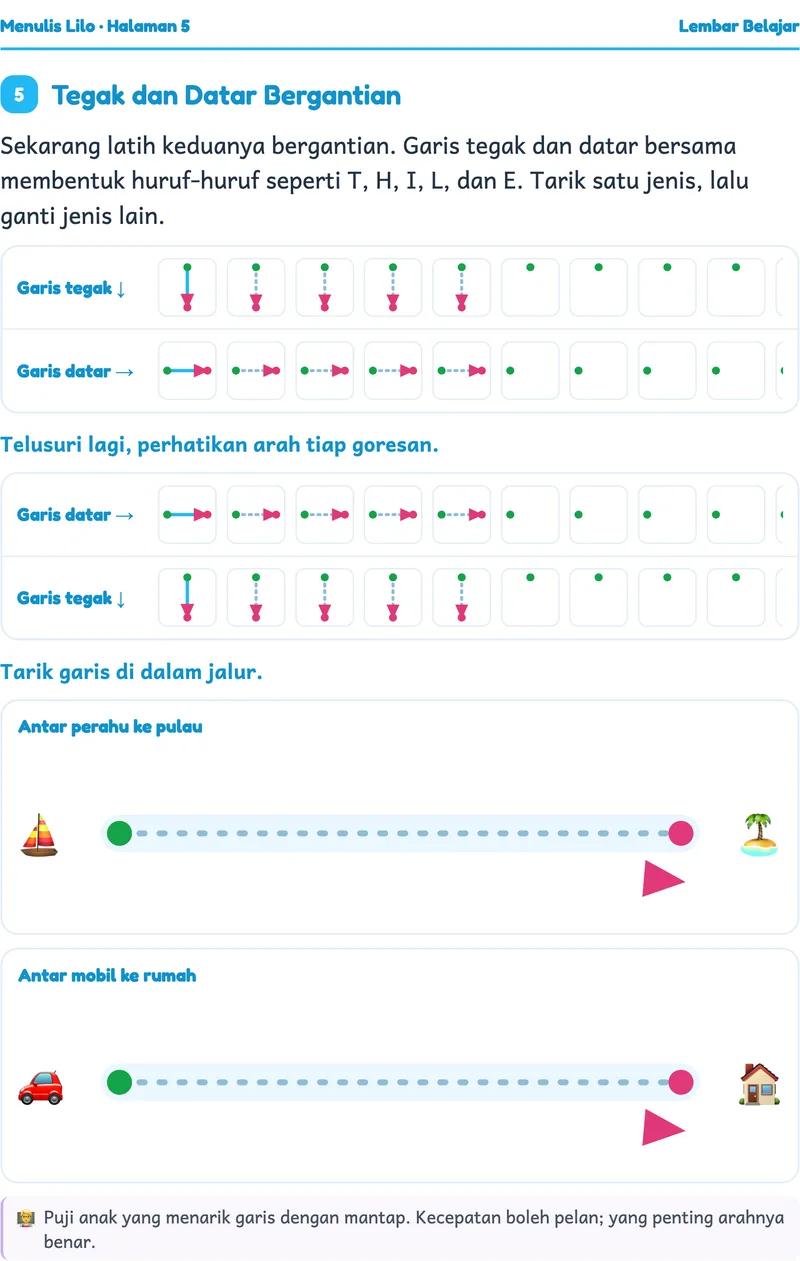
A real writing-module page: alternating straight and flat strokes train small hand muscles before the first letters.
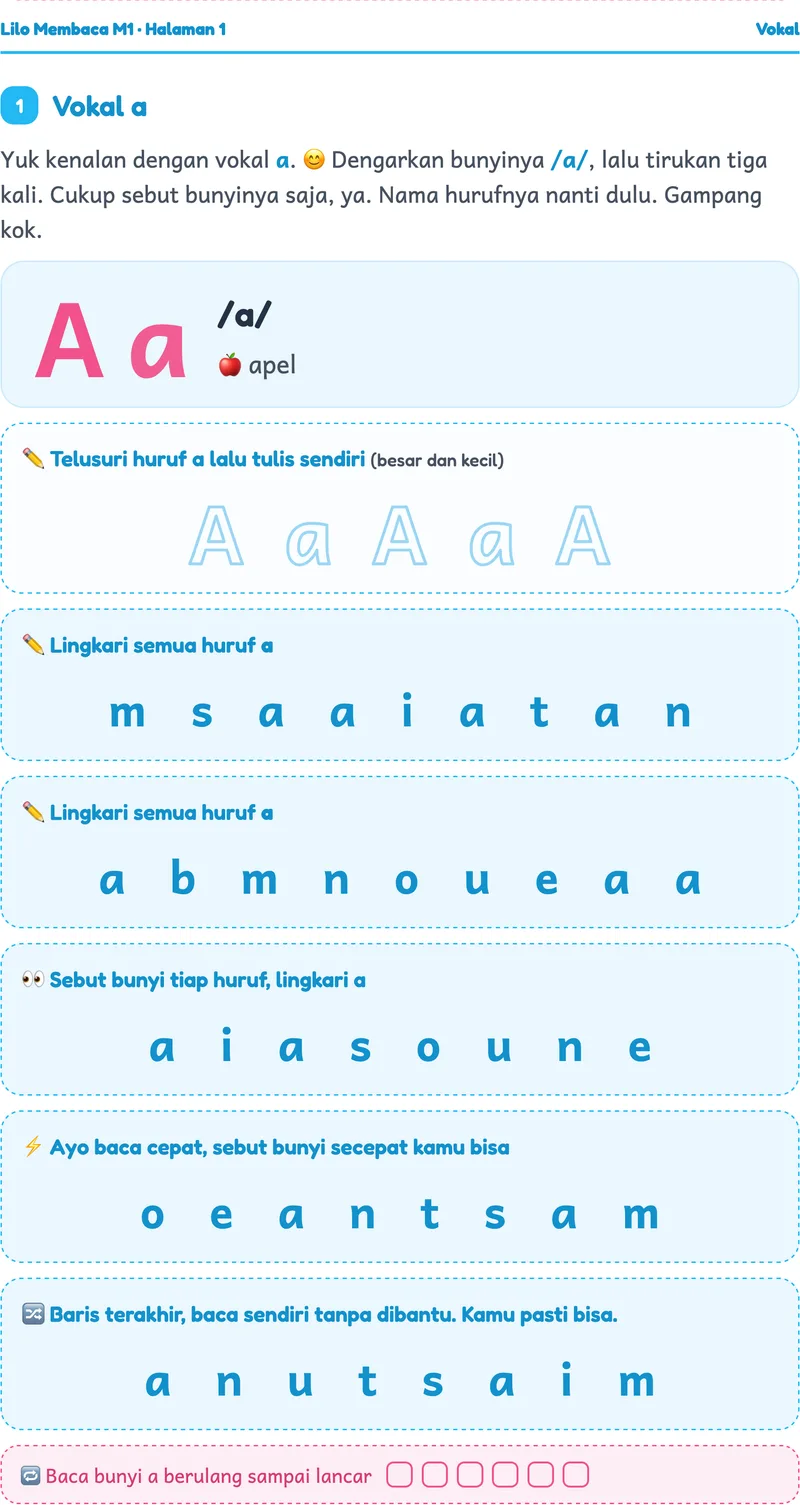
Through cards and point-and-read practice, Introduction Level children get to know the vowel sound a on this reading-module sheet. One small sound that starts the whole journey toward loving to read.
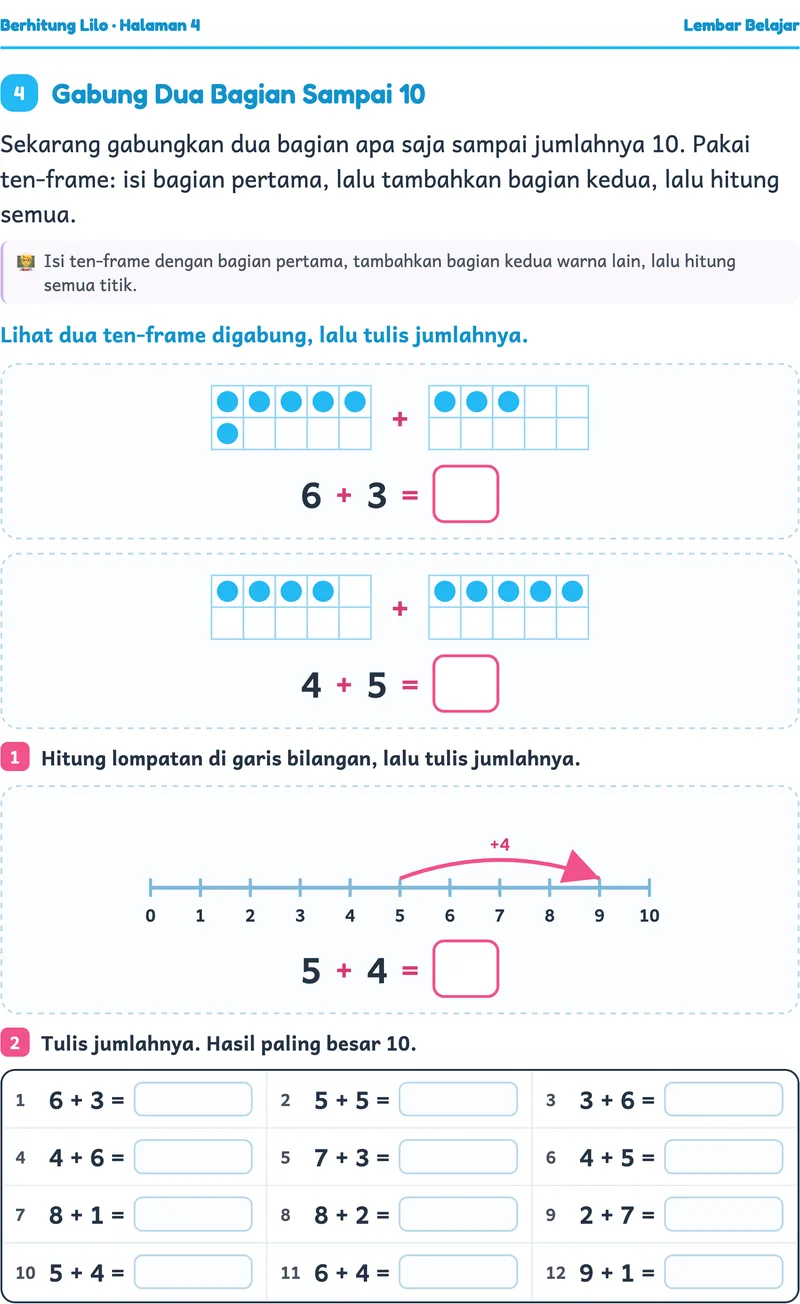
A real counting-module page: addition through ten-frames and a number line, seeing first and then counting, the concrete Lilo way.
Each sheet you see here comes from Lilo's progressive curriculum, one connected journey built from 122 modules.

Talk with our team on WhatsApp, tell us about your child, and get a free consultation. The tutor then finds the perfect starting level in the first lesson.
Free consultation on WhatsApp