
Ages 4 to 6
- Enjoys mazes and finding differences
- Beginning to group objects that belong together
- Needs practice finishing one task completely
Seventeen collections of puzzles and reasoning practice that train a child to observe, guess, check, and only then decide.
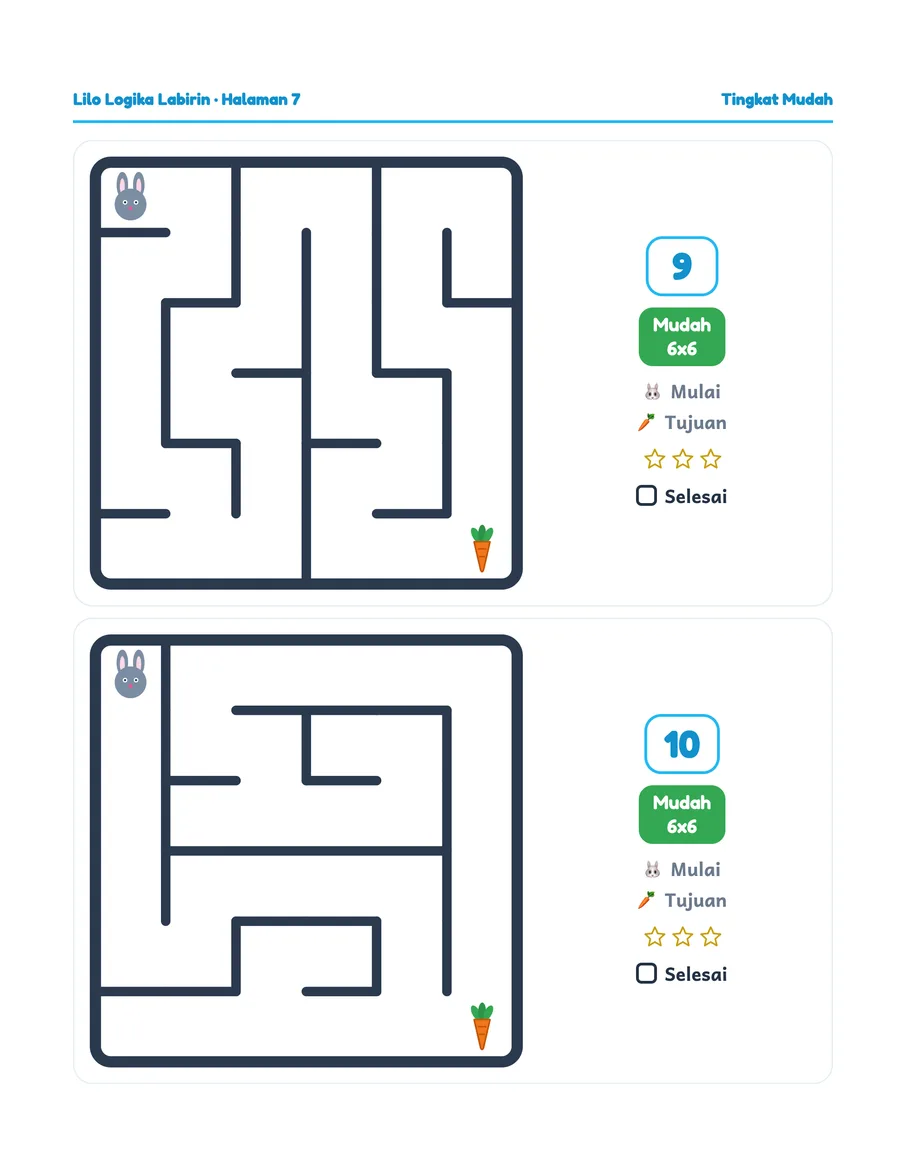
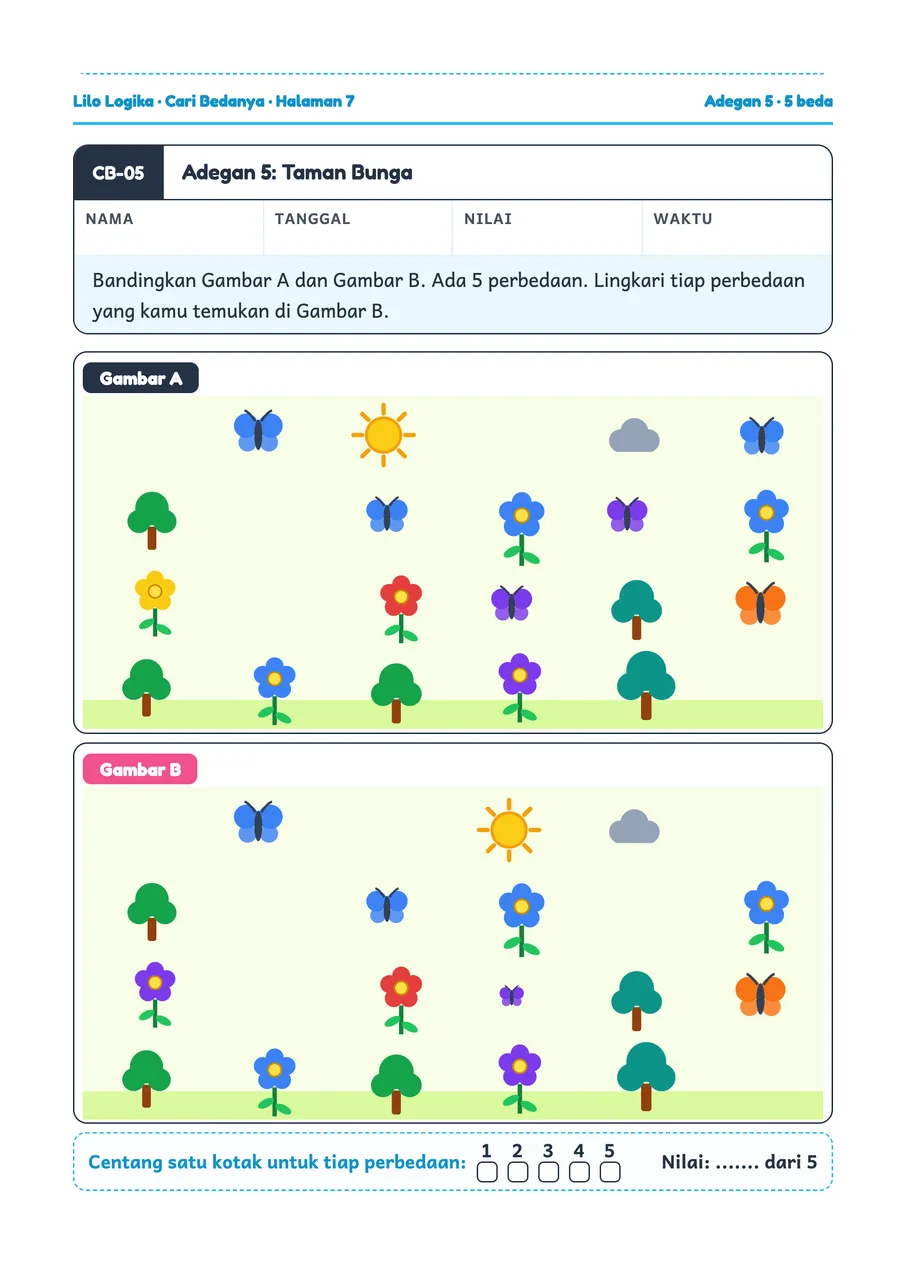
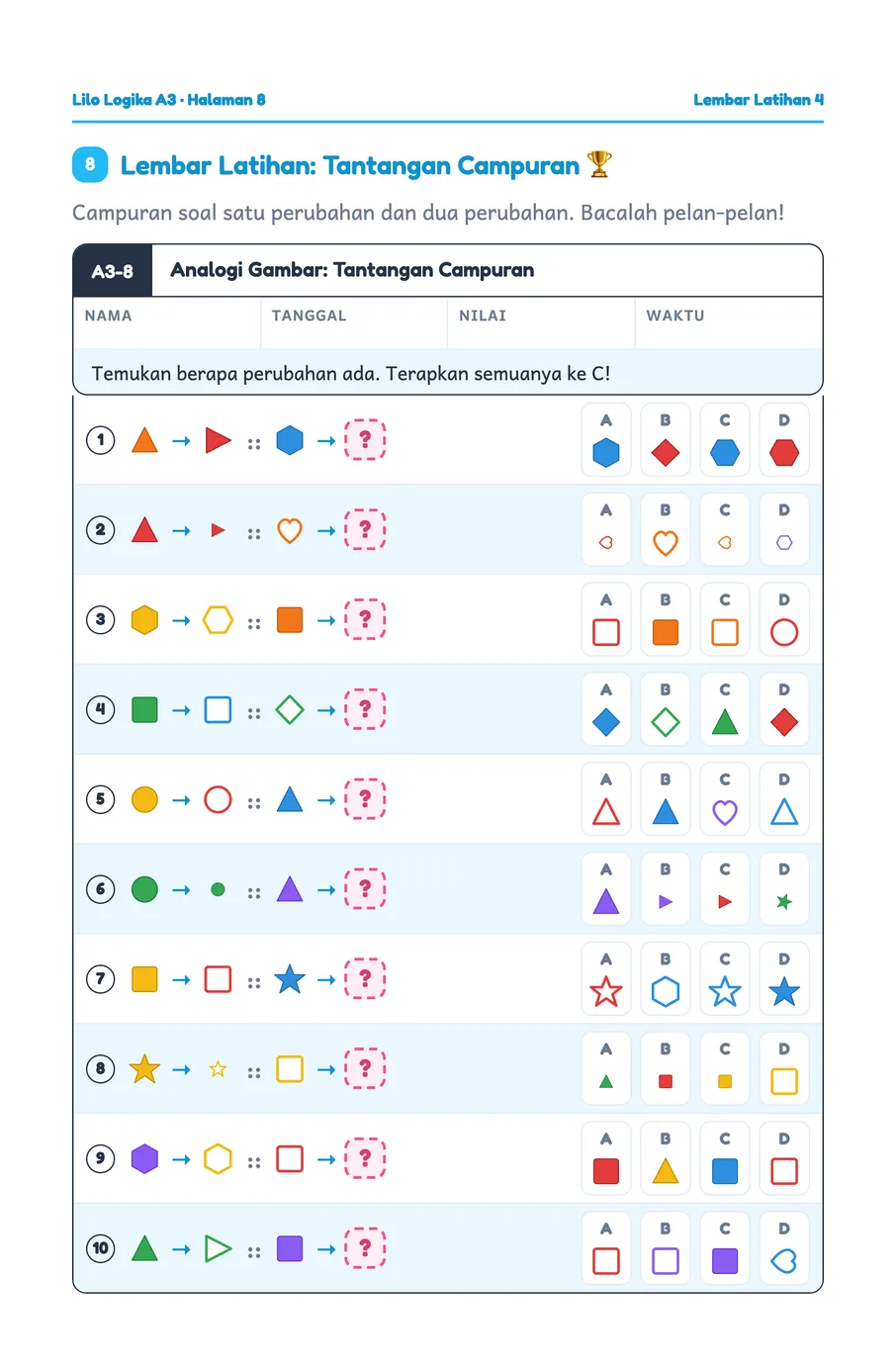
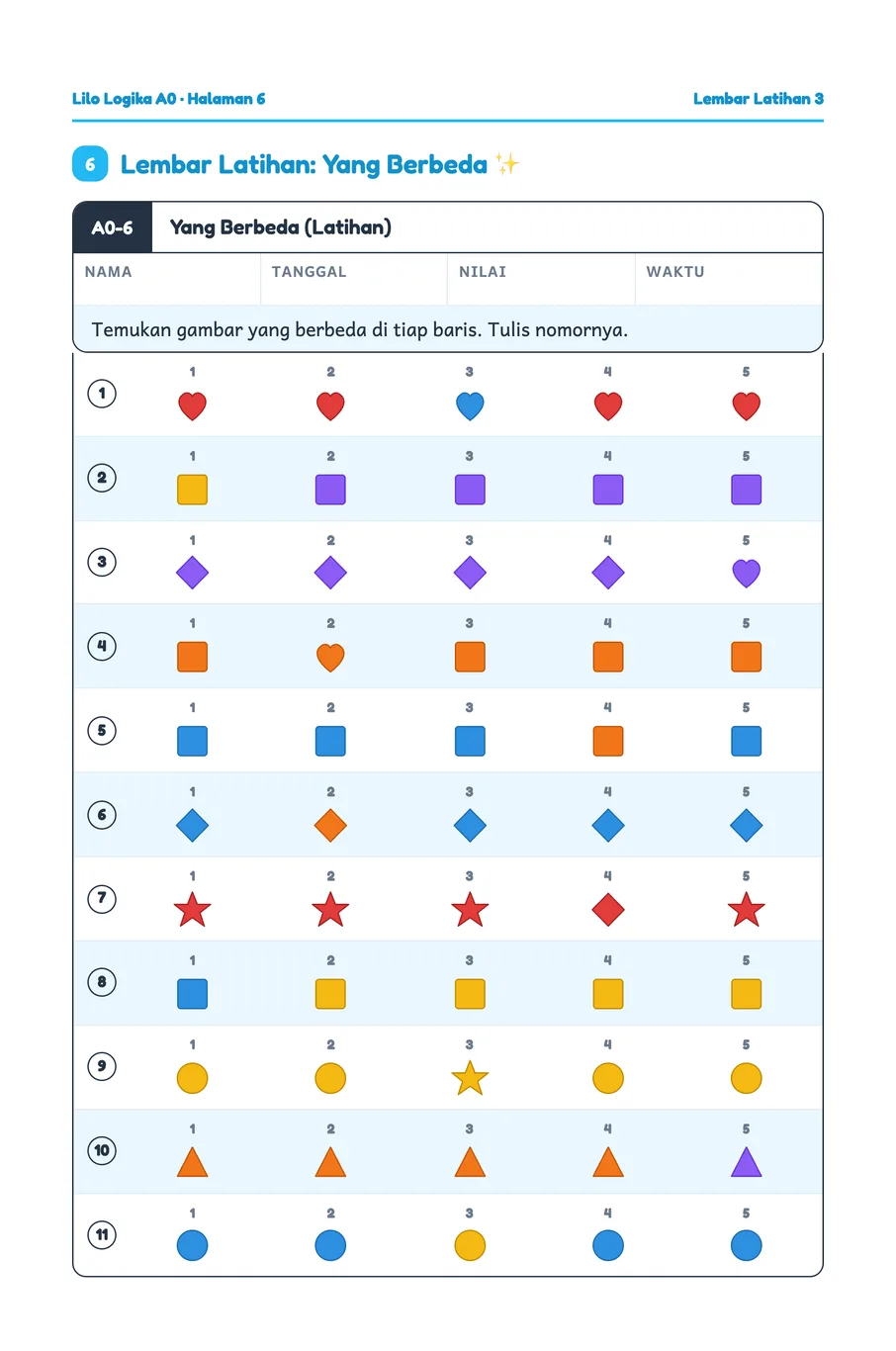 Real sheets from inside the pack
 Reasoning grows through practice that asks a child to notice patterns, group things, make a guess, then check their own answer. Pattern puzzles, sorting, picture sudoku, cause and effect, analogies, and deduction grids build that habit step by step.
A child who answers fast is often wrong not from lack of ability, but from never having practised pausing to check. That habit can be trained, and puzzles are the most enjoyable tool for it.
This pack builds the levels step by step, from the lightest to the most challenging. A child begins with levelled mazes, spot ten differences across forty scenes, shadow matching, and sorting fifty cards. Then comes AB and ABC patterns across sixty levelled exercises with a key, arranging four pictures into a story, and cause and effect cards.
The next tier asks for tighter reasoning: eighty picture sudoku boards, deduction grids, shape analogies of the A to B as C to what kind, fold and imagine exercises for spatial reasoning, tangram with sixty challenges, and number sequences. It closes with a thirty day daily challenge poster, a parent guide, and a fifteen minute logic readiness check.
The range is wide because the difficulty is tiered.
Six samples showing the leap from observing to deductive reasoning.
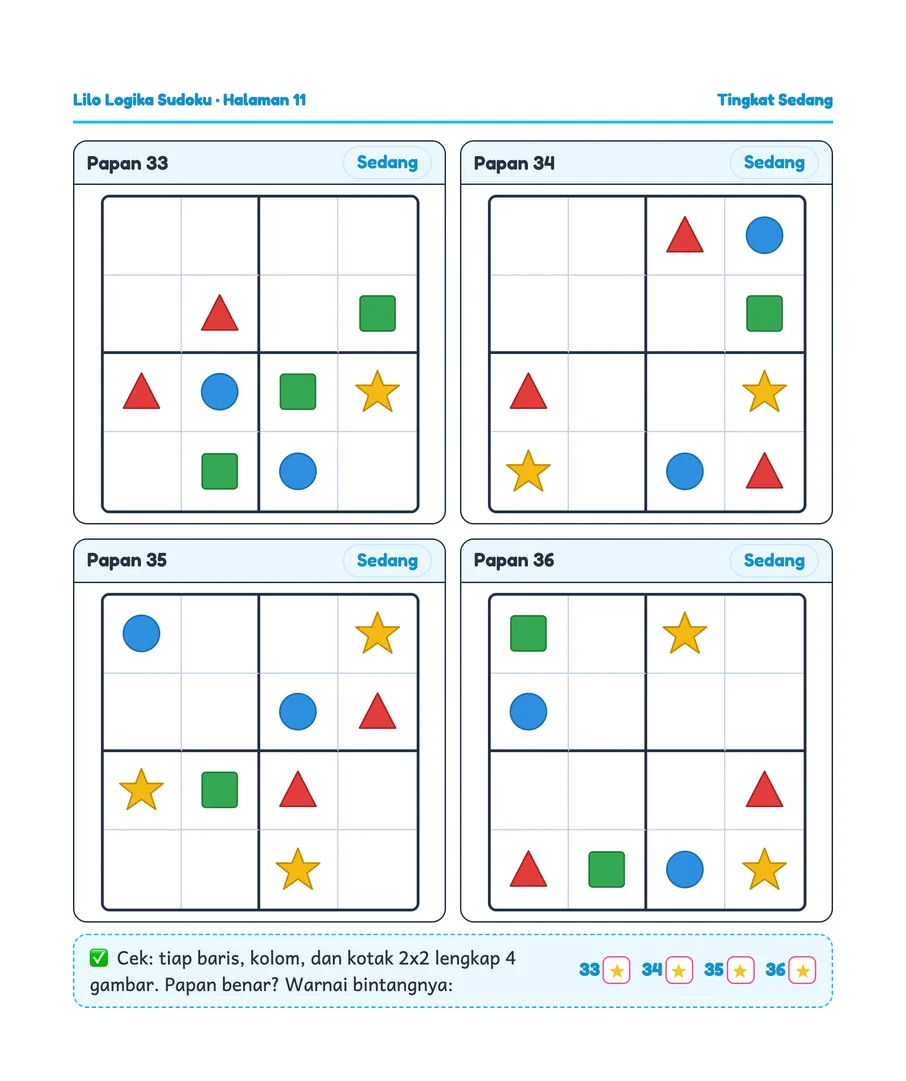
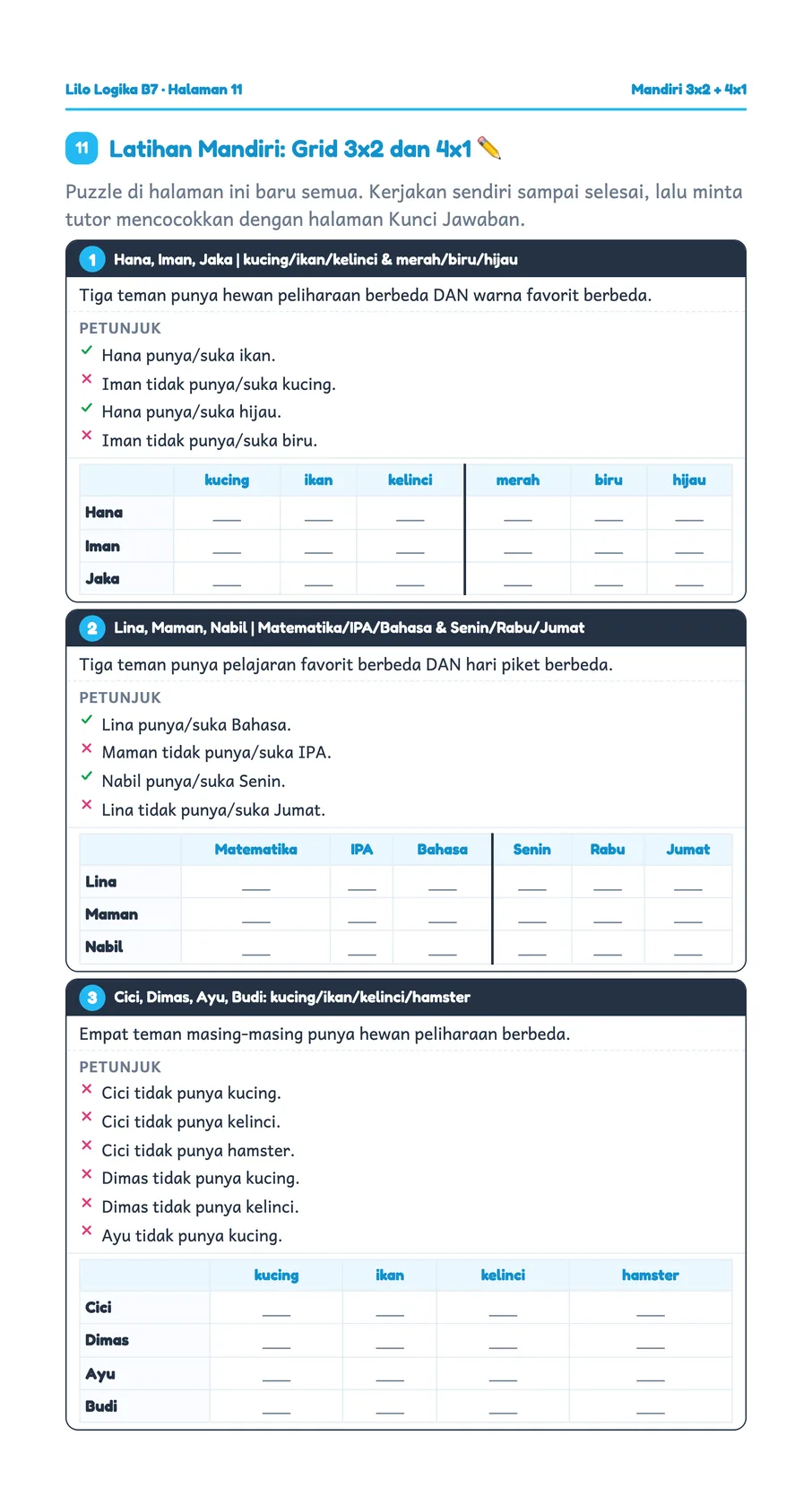
Printable puzzles, cards, posters, and a tool for gauging readiness.
One hundred levelled mazes, forty spot ten differences scenes, shadow matching, and fifty sorting and category cards.
Sixty AB and ABC pattern exercises with a key, arranging four pictures into an event, and number sequences with repeating patterns.
Eighty picture sudoku boards in 4x4 and 6x6, deduction grids, cause and effect cards, and shape analogies.
Fold and imagine exercises for spatial reasoning, plus an Indonesian tangram with sixty challenges.
A thirty day daily logic challenge poster, a parent guide, and a fifteen minute readiness check with instant results.
 100 Labirin Bertingkat
 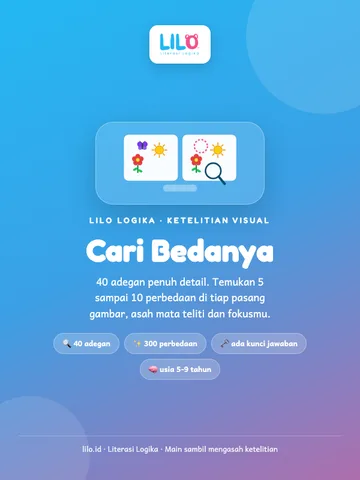 Cari 10 Beda
 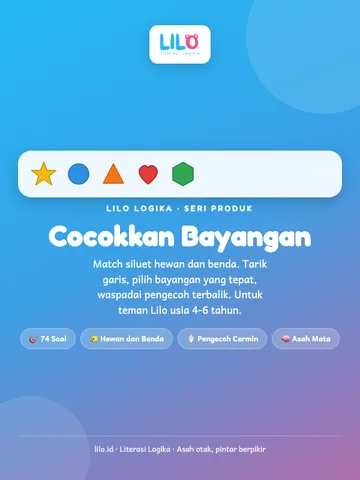 Cocokkan Bayangan
 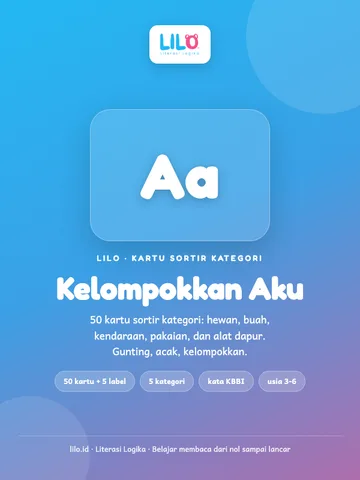 Kelompokkan Aku
  Kenapa Begitu?
 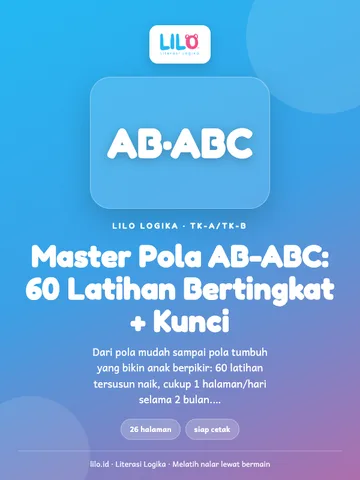 Master Pola AB-ABC
 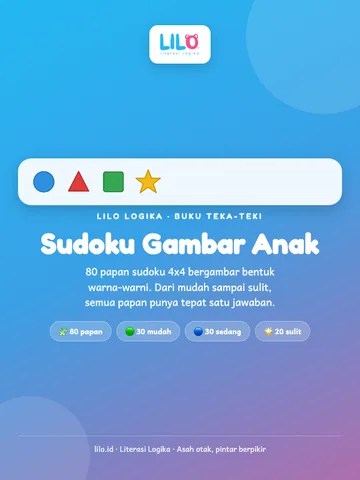 Sudoku Gambar Anak
 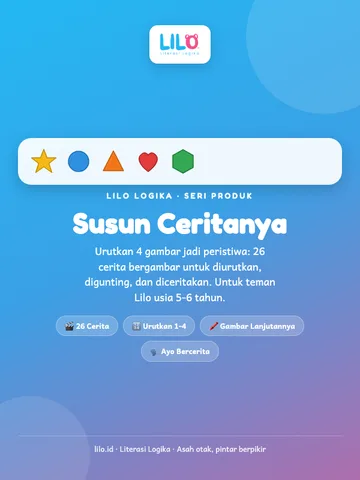 Susun Ceritanya
  Teka Grid: Puzzle Logika Deduksi untuk Anak
  Lipat dan Bayangkan
  Analogi Cerdas
 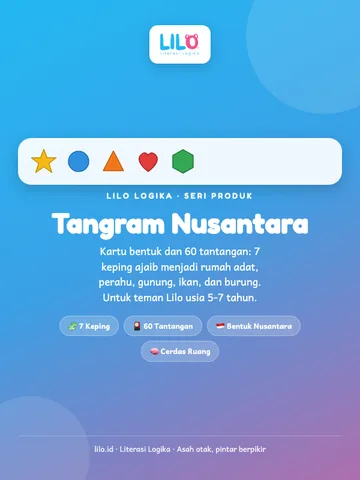 Tangram Nusantara
  Tebak Polanya
  Poster Tantangan Logika Harian
  Panduan Bunda
  Mana yang Beda?
  Lanjutkan Polanya
 Two free materials can be tried first: odd one out and continue the pattern.
Puzzles work best offered as a small reward inside the day.
Run the fifteen minute logic readiness check so you know which tier challenges your child without defeating them.
Put up the daily challenge poster and let your child pick. Choosing makes them far more persistent about finishing.
A simple question such as why is that the answer trains a child to notice their own thinking steps.
Deduction grids and tangram need longer stretches, so they sit better on an unhurried day.
Mazes and spot the difference work well on the road, turning waiting time into reasoning practice with no screen involved.
Logic is half the name of this brand, and this material is its most direct form.
Sudoku and deduction grids punish hurried answers gently, so a child learns to verify before deciding.
Tangram and mazes can be solved along different paths, teaching a child that the first idea is never the only one.
A child who narrates their reasoning understands it twice as deeply as one who only writes the answer.
The mazes, spot the difference, shadow matching, and sorting are already within reach. Sudoku and deduction grids can wait a few years.
It works alongside them. Reasoning ability makes a child readier for word problems and reading that demands understanding.
Yes, wherever they are needed, such as the levelled pattern exercises, so you never have to guess the correct answer.
Mazes and spot the difference around five minutes, picture sudoku ten to fifteen, and deduction grids longer because your child needs to check the answer again.
Drop one tier and let them succeed first. The parent guide inside covers how to support without scolding.
Yes. The Lilo Logic programme takes this reasoning further with a tutor, including word problems with the Singapore bar model.
If your child devours the puzzles here, the three classes below carry that reasoning into word problems and school maths. The next two packs strengthen the literacy that reading those problems depends on.
Seventeen puzzle collections that teach a child to observe, guess, and check.