
Does not know numbers yet
- Aged 3 to 4 and just starting to count objects
- Needs practice comparing more and fewer
- Enjoys colouring and tracing
Children build a feel for numbers through objects and pictures first, then move into addition, the hundred board, time, money, and early multiplication.
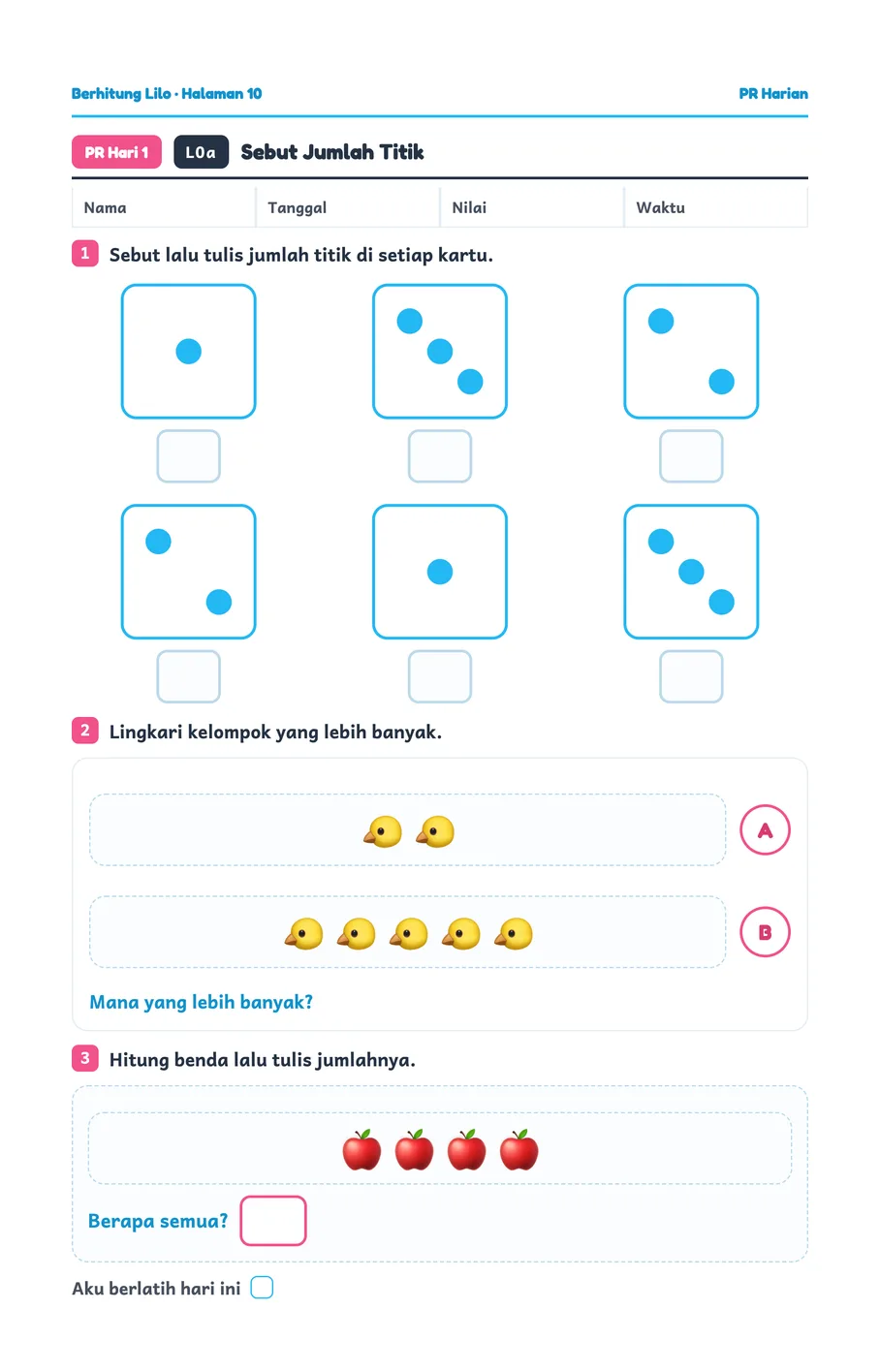
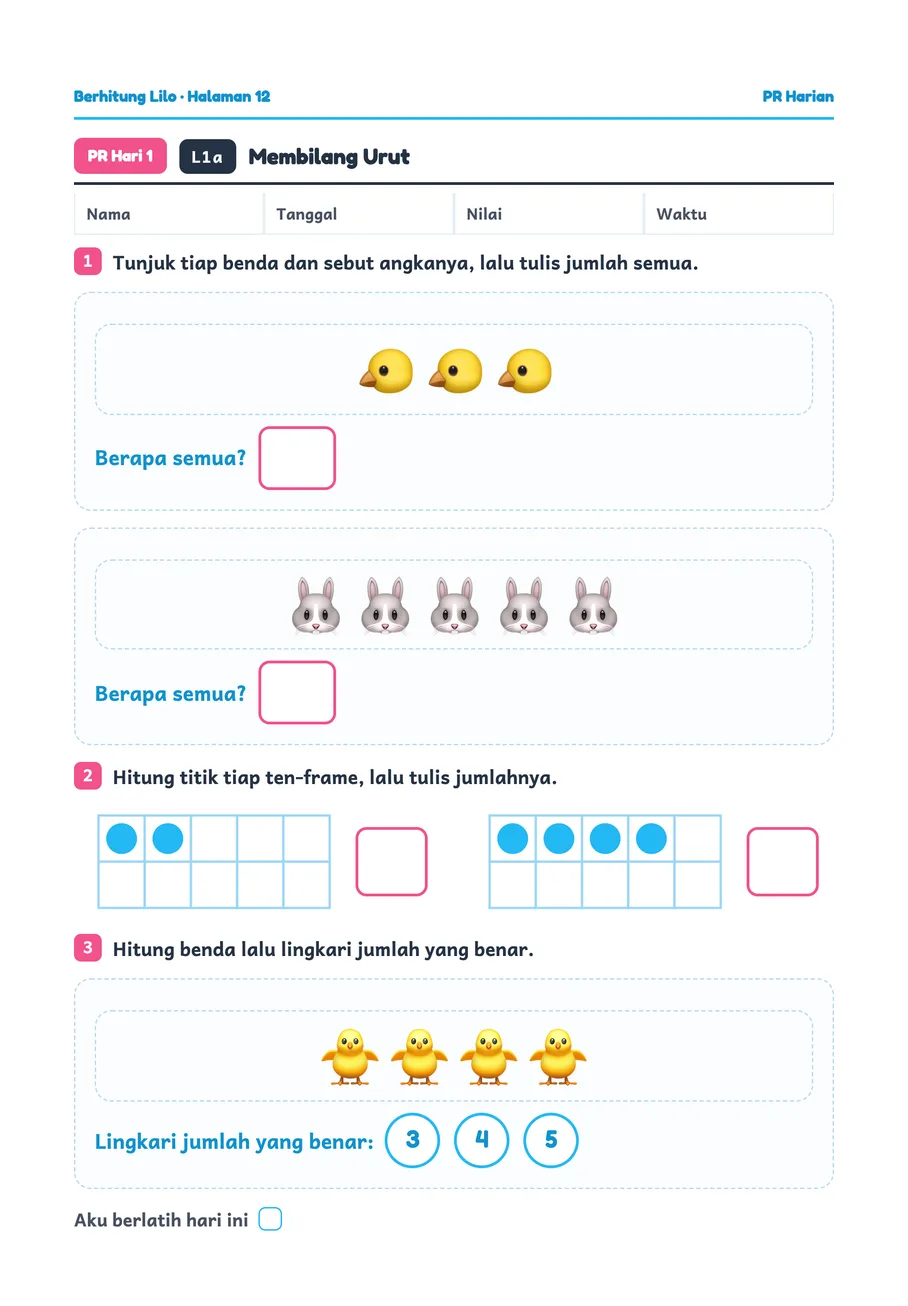
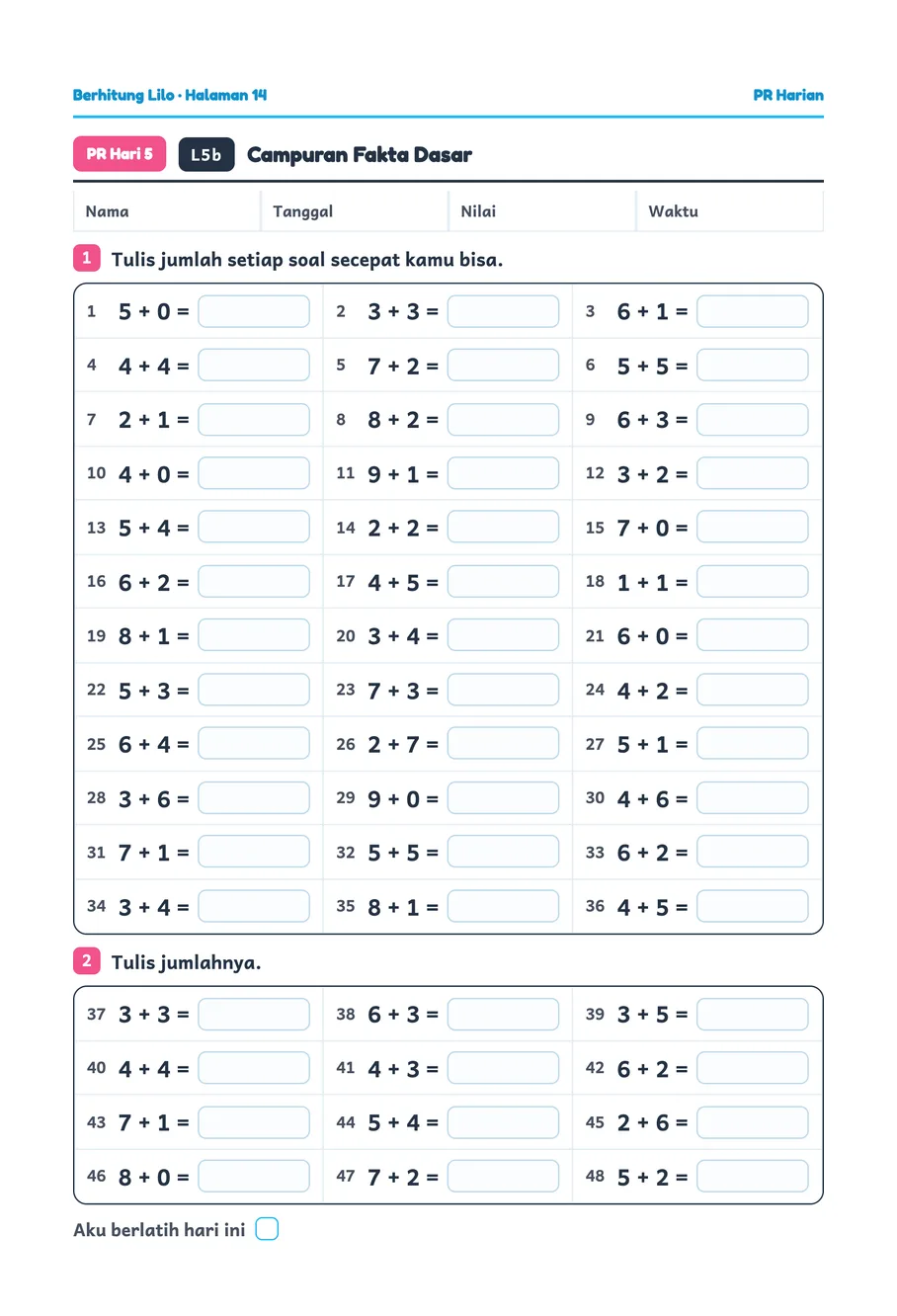
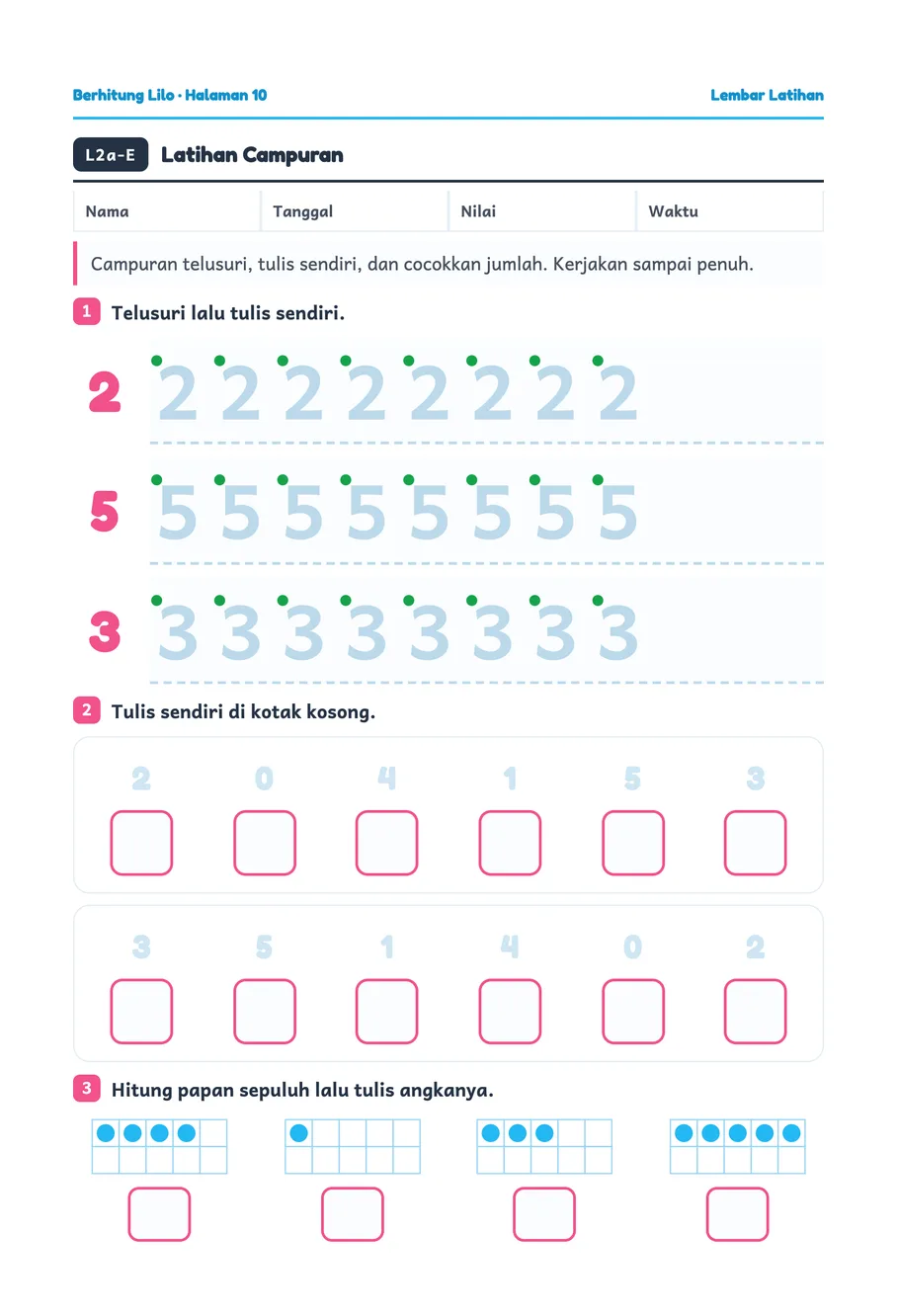 Real sheets from inside the pack
 Counting is built in stages: comparing more and fewer, recognising number symbols, counting objects, adding and subtracting with picture support, counting to one hundred, then using numbers in real life through telling time and handling money.
Many children can say one to ten, even one to one hundred, and still look puzzled when asked to bring seven spoons. Reciting the sequence is memory. Understanding an amount is a different skill entirely.
This pack starts from the understanding of amount. Your child compares more, fewer, and the same, then meets the symbols for one to twenty while counting real objects. Only after that does addition and subtraction arrive, and even then it comes with pictures and number lines before appearing as numbers on their own.
The final section reaches into your child's own world. Telling time from the long and short hands through to digital clocks, recognising rupiah notes and working out change at the corner shop, naming flat and solid shapes, and seeing multiplication as repeated addition through pictures.
Three stages of ability served by this pack.
Six sheets showing the order of thinking: comparing, recognising, writing, then calculating.
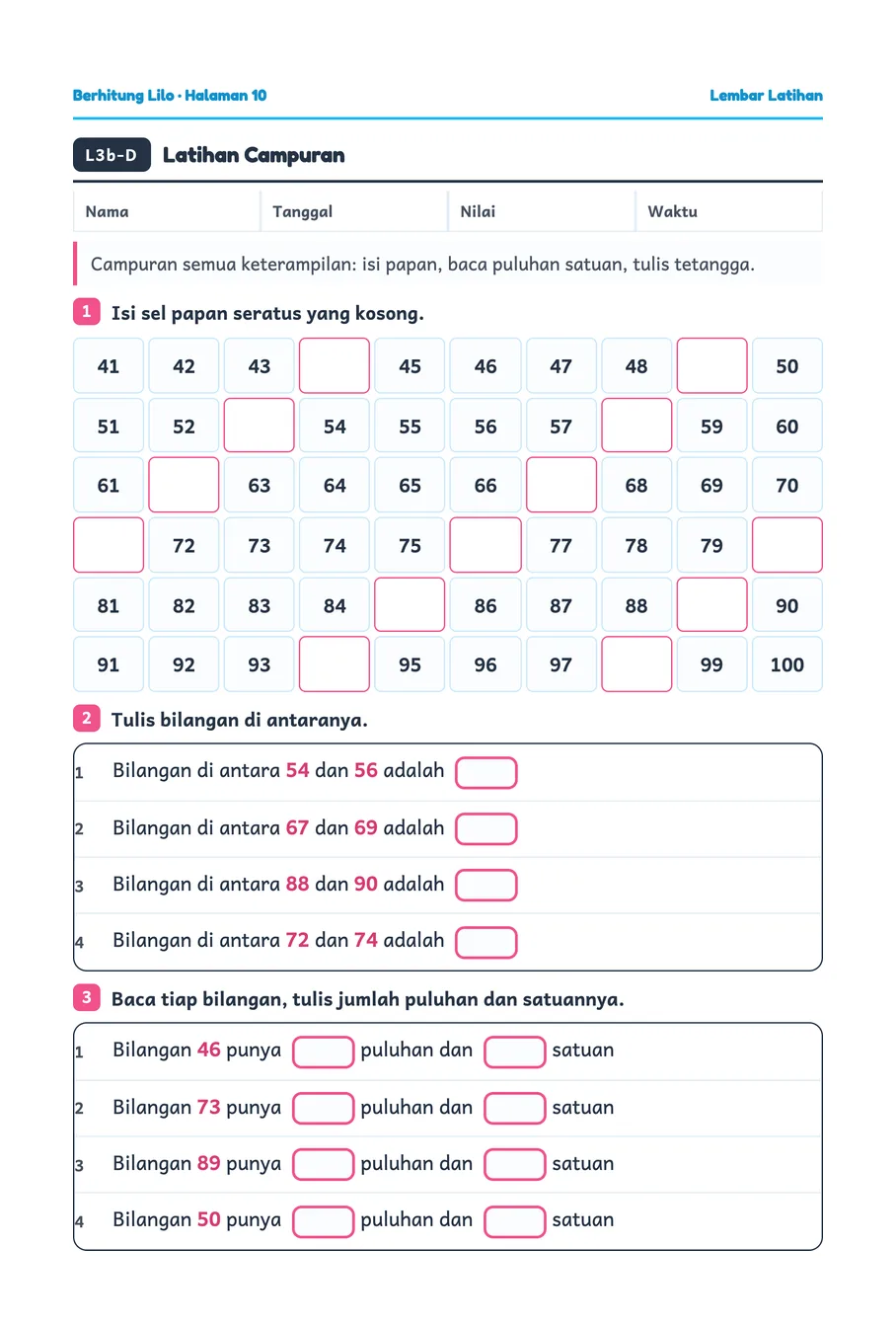
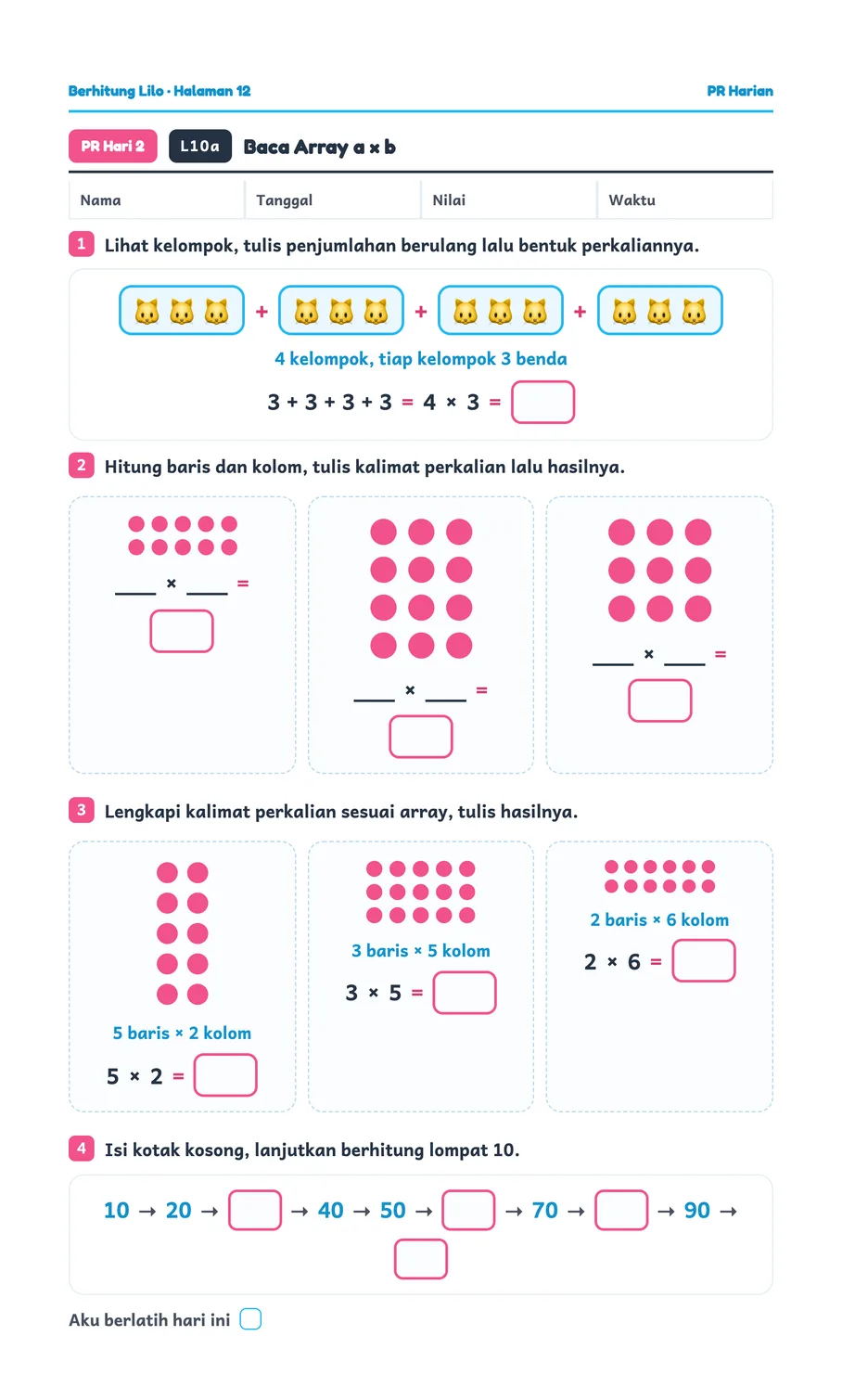
Worksheets, cards, posters, and guides that support one another.
Thirty sheets comparing amounts, forty sheets on numbers one to twenty with tracing and counting, and number flashcards to one hundred.
Fifty addition questions to twenty and fifty subtraction questions, presented with pictures, number lines, and stories, all with answer keys.
The hundred board, skip counting by two, five, and ten, finding missing numbers, and spotting patterns in number sequences.
Telling time, recognising rupiah notes and counting change, flat and solid shapes, and early multiplication seen through pictures.
A 120 page print ready workbook, four wall posters, twenty five kitchen based counting activities, and a fifteen minute parent guide.
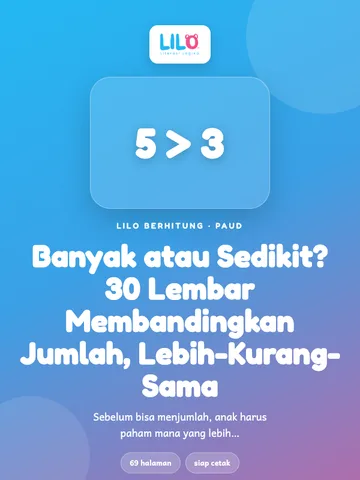 Banyak atau Sedikit? 30 Lembar Membandingkan Jumlah
 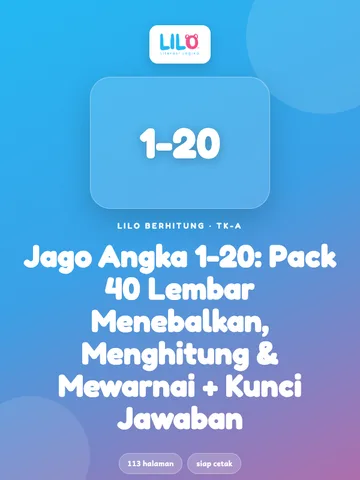 Jago Angka 1-20
  Flashcard Angka 1-100 Siap Cetak
  Menghitung Sampai 100
  Penjumlahan Sampai 20
  Pengurangan Itu Mudah
  Tebak Polanya
  Belajar Membaca Jam
  Bentuk dan Bangun Lengkap
  Kenal Uang Rupiah
  Kenal Perkalian Lewat Gambar
  Buku Kerja Numerasi Lilo
  Berhitung Sambil Main
  Poster Dinding Numerasi Lilo
  Kenal Angka 1-10
  Mulai Menjumlah
  Panduan Ortu
 Two of the materials are free samples: recognising numbers one to ten, and early addition from one to ten with pictures.
Fifteen minutes a day, with one day each week for number play without any sheets.
Use the kitchen activities inside the pack, counting spoons or comparing two glasses, before your child touches a worksheet.
Choose the sheet that matches your child's stage. Answer keys are included, so marking takes two minutes.
Number, clock, and shape posters become a quick reference when your child forgets, sparing you from constant spoken correction.
Use the twenty five kitchen activities inside. Counting spoons or comparing two glasses puts numbers back into the real world.
The order follows the Singapore Math approach used across every Lilo counting material.
Your child holds the objects, sees the picture, and only then writes the numeral. That order gives numbers meaning instead of leaving them as memorised sounds.
Hopping along a number line helps a child see addition as moving forward and subtraction as moving back.
Short stories appear from the very first addition sheet, so translating a sentence into a calculation becomes familiar early.
There is no need to stop it. Fingers are a reasonable tool at the early stage. The picture sheets and number lines in this pack help your child move into mental counting naturally.
Yes, on the addition, subtraction, numbers one to twenty, and shapes sheets. You can mark quickly without recalculating.
No. The workbook is arranged in sections, so you can print only the section in use and keep the rest for later.
Yes. The hundred board, time, money, number patterns, and early multiplication are usually untouched, and those are exactly what grade 1 draws on.
They are designed to print comfortably on ordinary A4, and they stay readable if you enlarge them to A3 at a print shop.
The Lilo Maths programme continues this path with the Singapore bar model, where a word problem is drawn as bars so children can see how the numbers relate.
Numbers in this pack travel from real quantities to early multiplication. The classes below suit a child who needs things explained more than once, while the next two packs add reading and writing at the same level.
From comparing amounts to counting change at the shop, gathered into one pack.