
Two year olds
- Enjoying squeezing, scribbling, and sticking
- Vocabulary growing fast through stories read aloud
- Daily routines only beginning to form
Between two and four, hands, ears, and habits take shape. This pack supplies the material for all three, from finger strength to a settled daily rhythm.
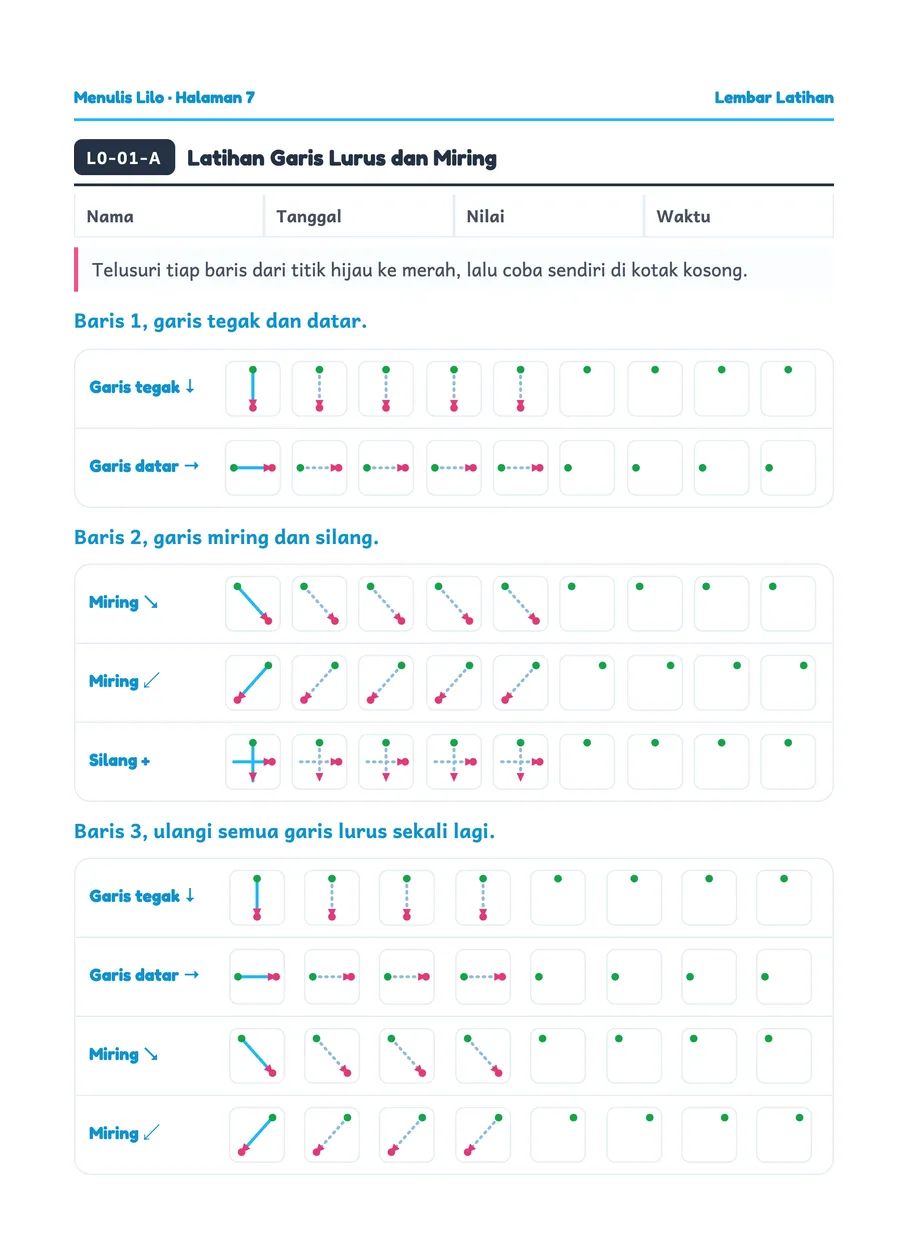
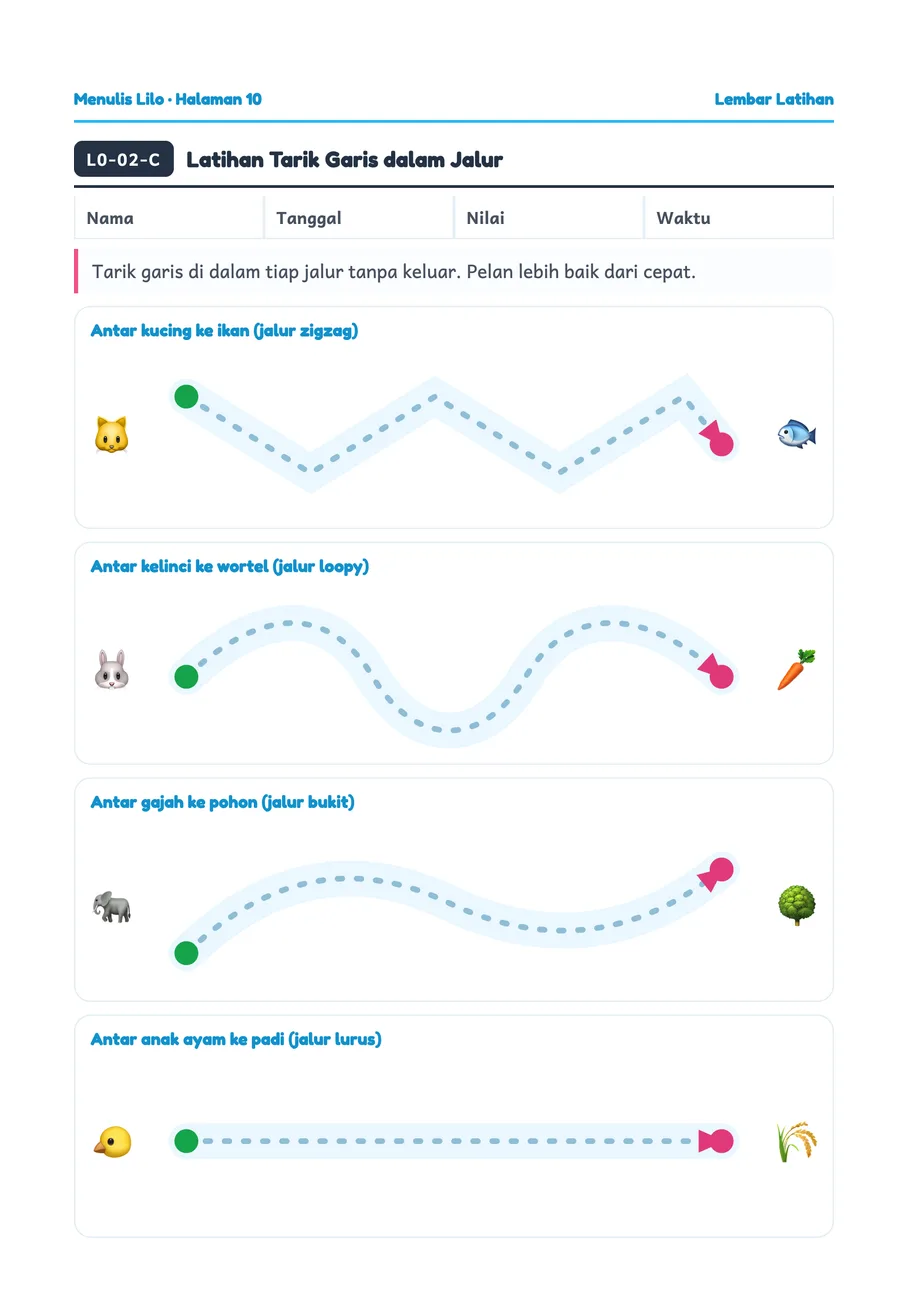
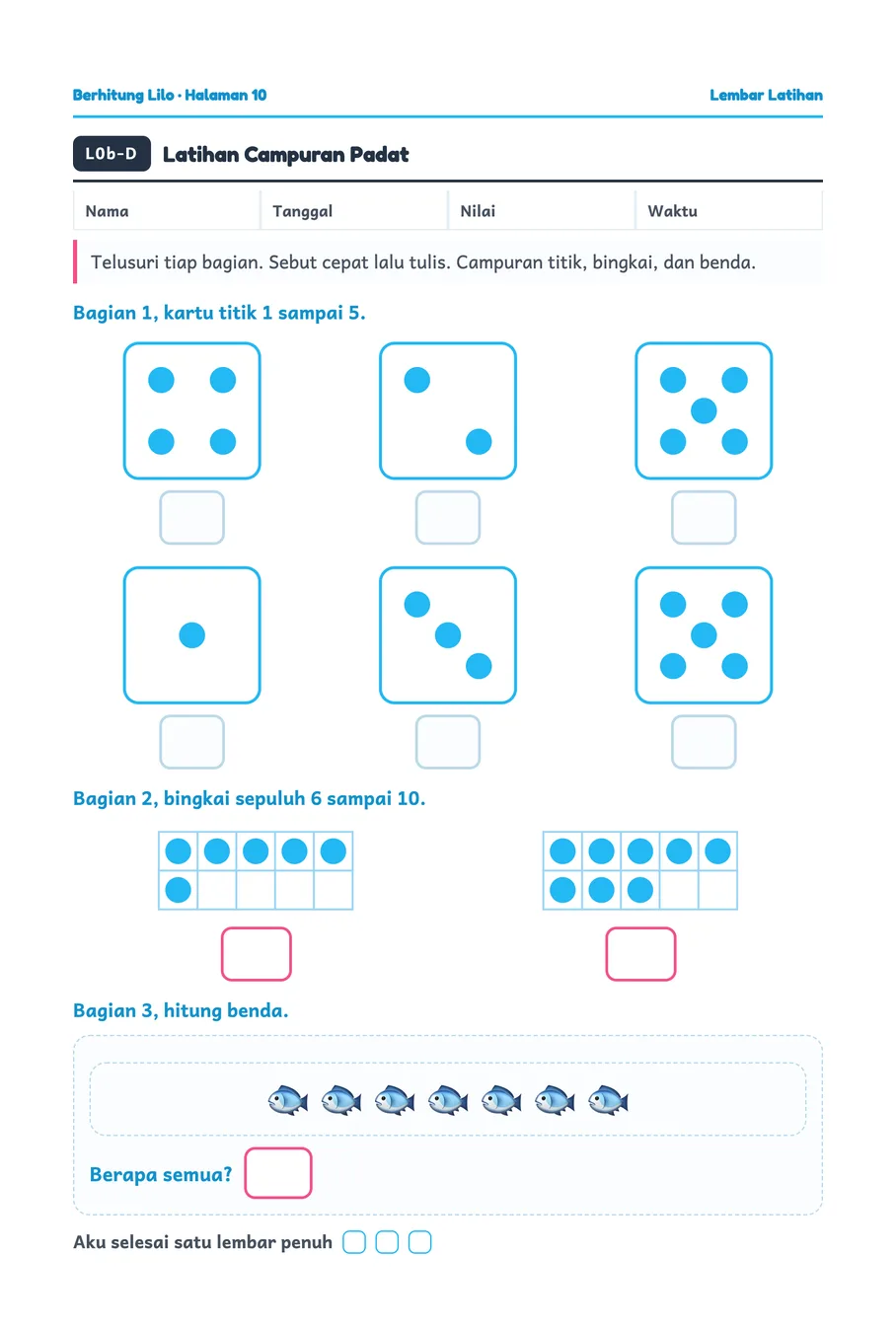
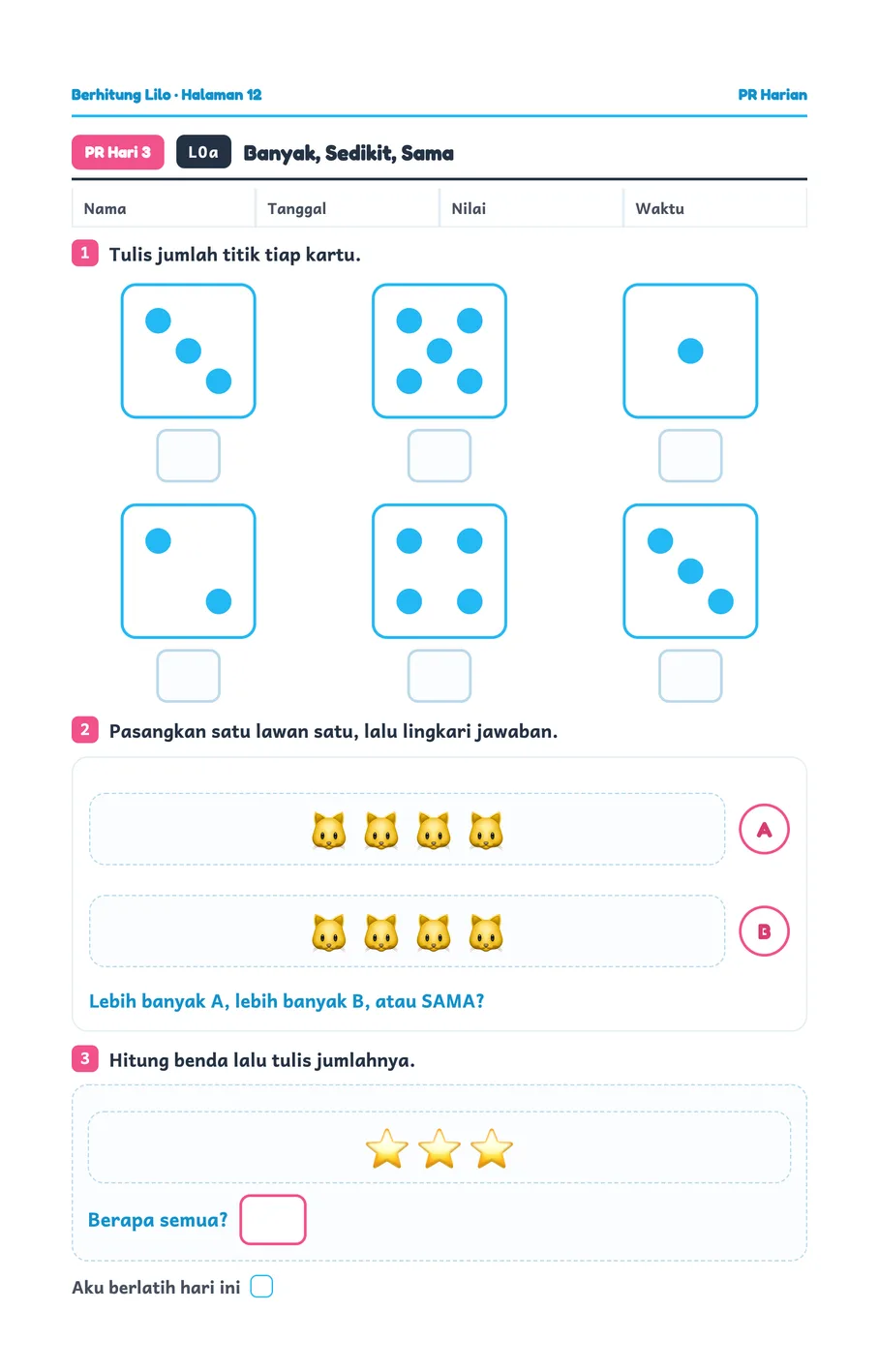 Real sheets from inside the pack
 Between two and four, children grow most through hand movement, spoken language, and daily habits. The right material is cutting practice, line tracing, meeting letters and quantities through real objects, listening to stories, and routines that repeat.
A two year old is not ready to sit through worksheets. What they need is a hand trained to grip, squeeze, cut, and stick, along with ears flooded with words through the stories you read aloud each day.
This pack supplies both. There are sixty line and pattern exercises, thirty graded cutting sheets, playdough mats for shaping letters and numbers, fingerprint art without brushes, and twenty five sensory activities built from cheap kitchen materials. On the language and number side there are letter cards, magic dot cards from one to twenty, one hundred first word flashcards, and sixty Indonesian animal cards.
The part that rescues most days is here too: twenty five ready sentences for handling a tantrum, a three day toilet training guide, visual routine cards from morning to night, and a fourteen day settling programme so goodbyes at the classroom door stay calm.
The years from two to four move quickly, and the contents reach across all of them.
Six sample sheets from inside, from first marks to meeting quantity.
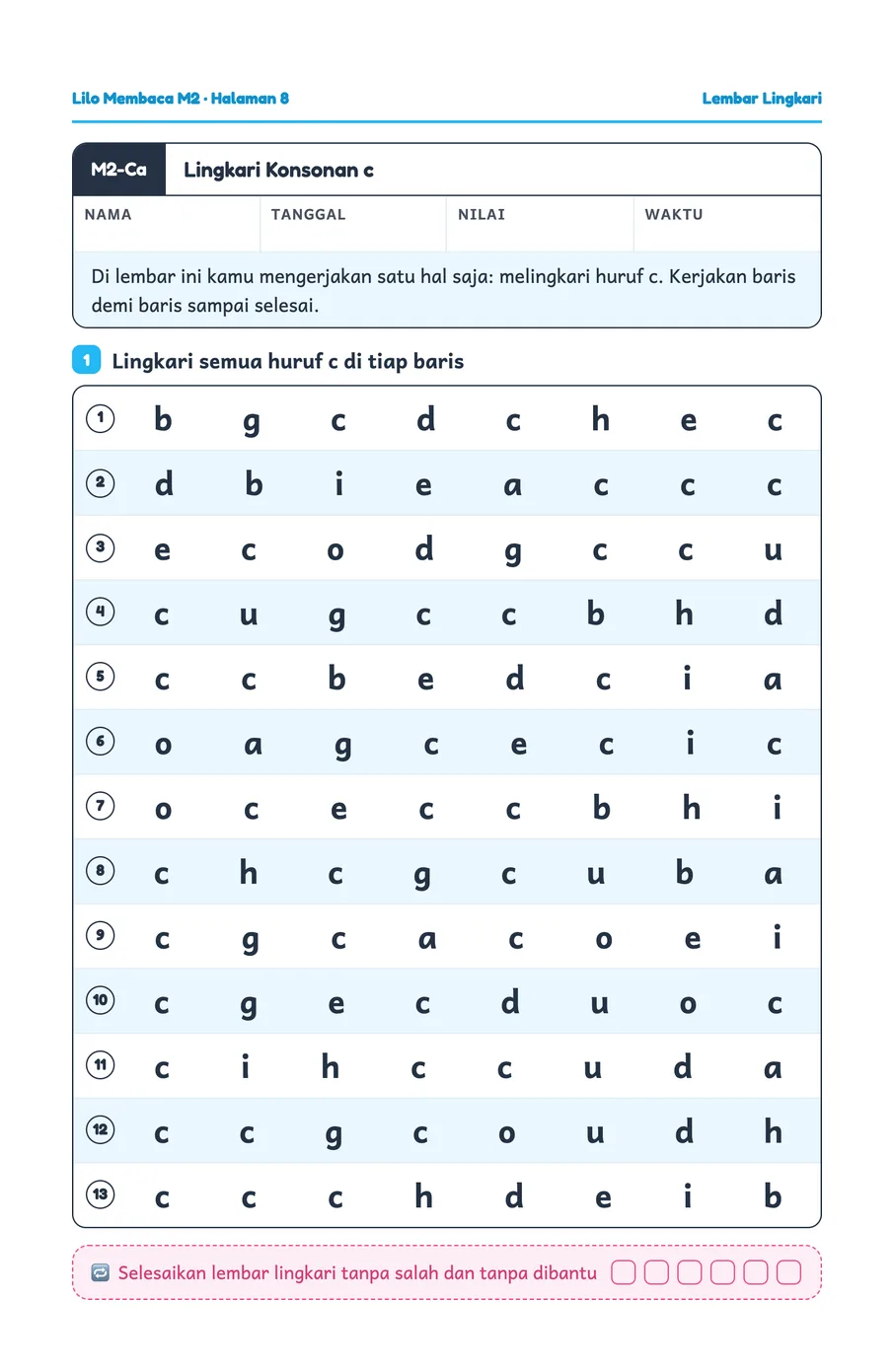
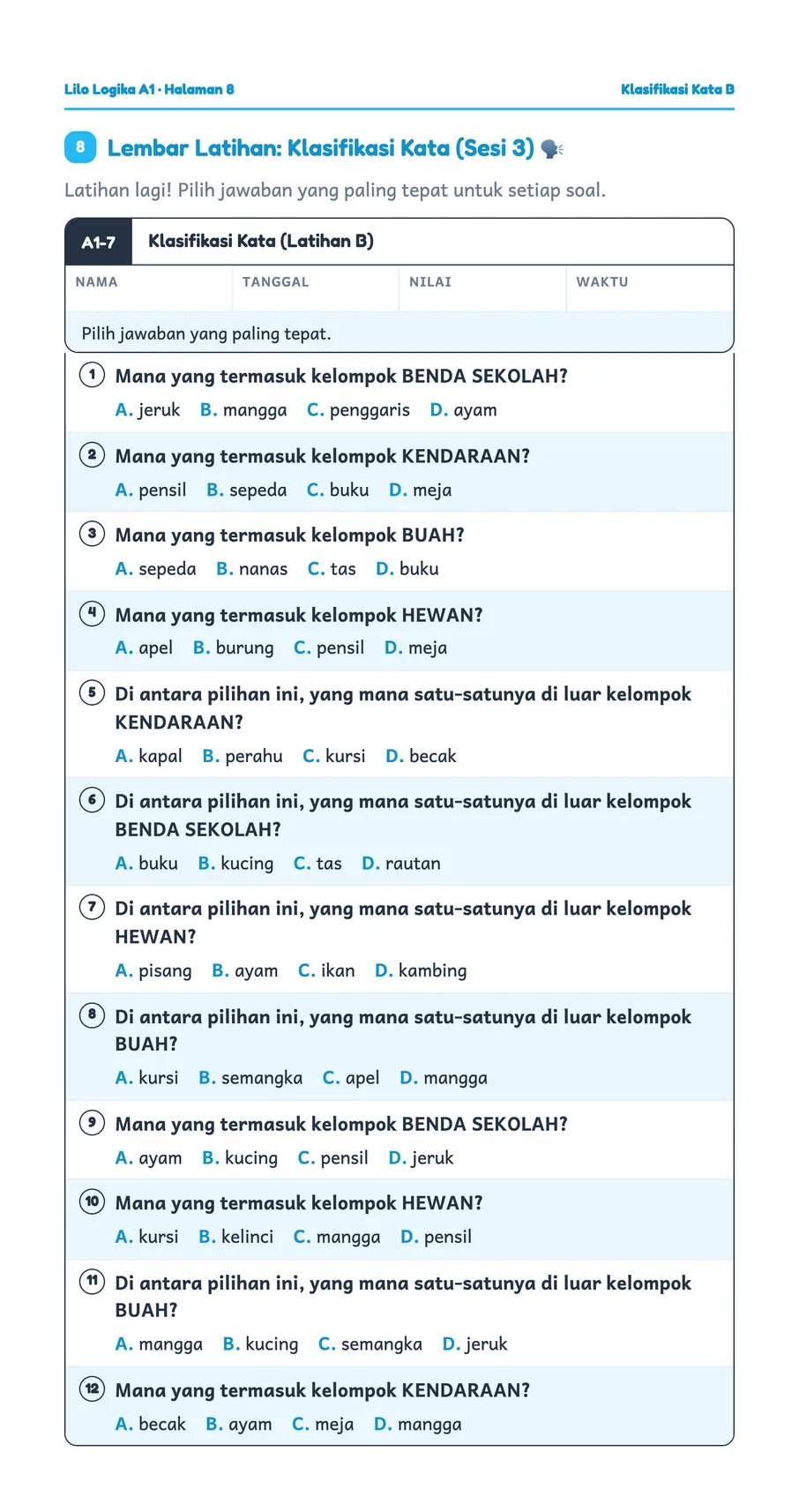
Printables, cards, and parent guides designed for the earliest years.
Sixty line and pattern exercises, ten first mark patterns, thirty graded cutting sheets, letter and number playdough mats, and fingerprint art.
Letter cards A to Z, one hundred first word flashcards, and sixty Indonesian animal cards carrying a name and one fact each.
Thirty sheets comparing more and fewer, magic dot cards from one to twenty, number tracing and counting sheets, and arrow guided number tracing.
Visual routine cards for morning, school, and night, a three day toilet training guide with a reward chart, and twenty five ready sentences for tantrums.
A fourteen day settling programme for brief separations, plus sorting and shadow matching activities that train attention.
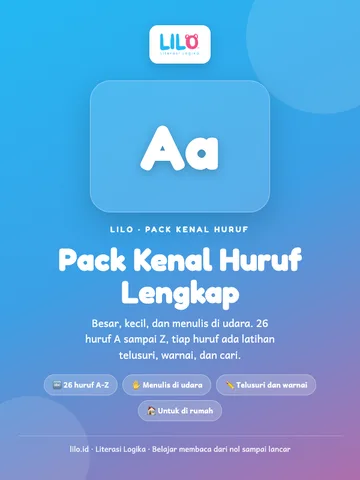 Pack Kenal Huruf Lengkap
 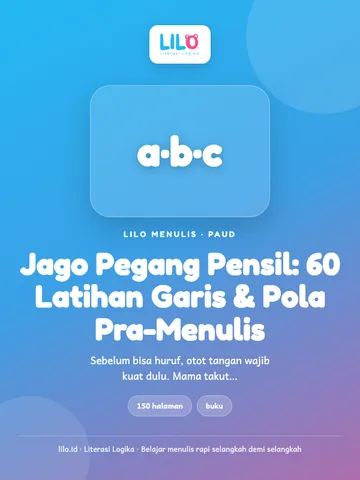 Jago Pegang Pensil
 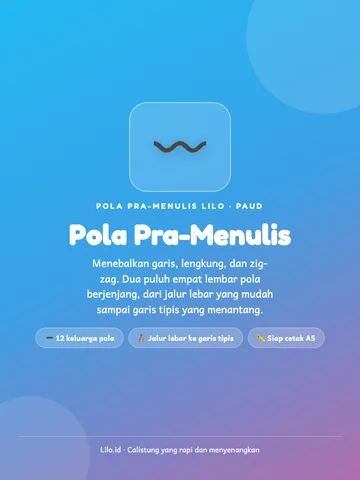 Pola Pra-Menulis
  Jago Gunting
 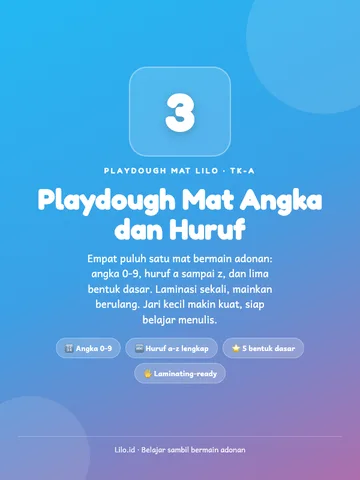 Playdough Mat Angka dan Huruf
 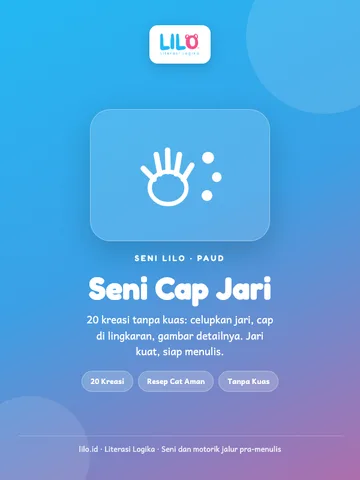 Seni Cap Jari
 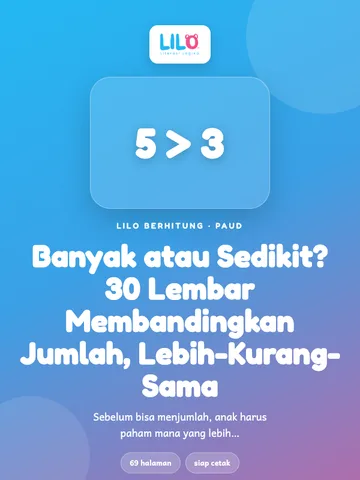 Banyak atau Sedikit? 30 Lembar Membandingkan Jumlah
  Flashcard Titik Ajaib 1-20 (Metode Kuantitas Cepat)
  Aktivitas Sensorik dan Motorik Halus di Rumah (25 Ide Bahan Murah)
  Script Ajaib Hadapi Tantrum
  Panduan Toilet Training 3 Hari + Reward Chart Harian
 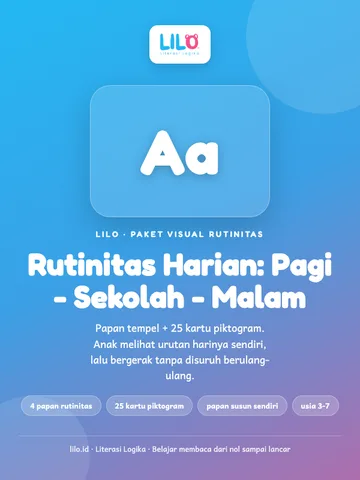 Paket Visual Rutinitas Harian
 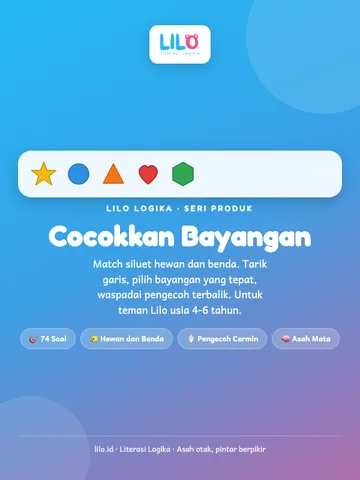 Cocokkan Bayangan
 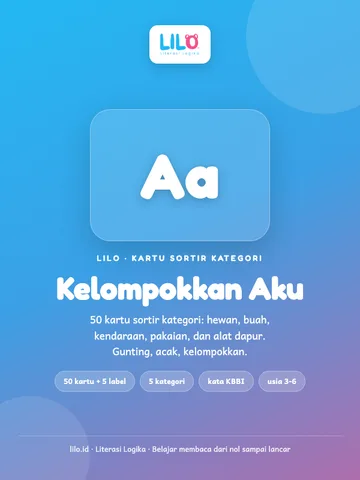 Kelompokkan Aku
 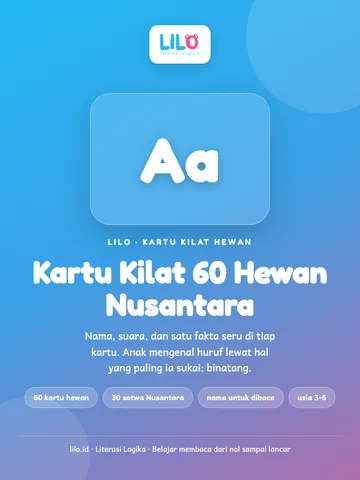 Kartu Kilat 60 Hewan Nusantara
  Flashcard 100 Kata Pertama
  Berani Masuk TK
  Kartu Kilat Huruf A-Z Lilo
  Coretan Pertama
  Kenal Angka 1-10
  Jago Angka 1-20
  Tracing Angka 1-20
 Everything inside is print ready, so you can reprint whenever your child needs it again.
Children this age hold attention for five to ten minutes, so the material is used little and often.
Pick one movement activity: cutting, playdough, or fingerprint art. These prepare the fingers long before a pencil appears.
Play with word cards, animal cards, or dot cards. Name them, let your child repeat, and stop before boredom arrives.
Put the visual routine cards on the wall and let your child point at the order. Repetition is what builds the habit.
Take the word or animal cards used that day and build a short story from the pictures. Your child absorbs new words while settling towards sleep.
Three principles guided the material for children aged two to four.
Strong fingers come from cutting and squeezing. A child who skips this stage runs out of stamina once writing begins.
Stories read aloud grow vocabulary far faster than worksheets, and that vocabulary is the foundation of reading years later.
Children this age feel safe when the day is predictable. Routine cards reduce the morning struggle noticeably.
No. The contents are hand activities, cards, and picture stories. The number and letter pages can wait until your child turns three or four.
Most use what you already have. The sensory activity guide is deliberately built around cheap materials such as rice, clothes pegs, and old containers.
It builds the foundation: letter familiarity, vocabulary, and listening. For the full path to reading, the material lives in the Reading Before Primary School Bundle.
Not necessarily. Ordinary paper works, and slightly thicker paper or lamination simply makes them survive years of small hands.
Start with the fourteen day settling programme and the routine cards. Both rehearse brief separations and a predictable day, the two things that shape the first week most.
Yes. You download once and print as your family needs, so a younger child later is covered as well.
A two year old learns through hands and ears, which is what this pack provides. The classes below open the door to learning with a teacher once your child can sit longer, and the next two packs wait at the level after this.
Twenty two materials for the hands, ears, and daily habits of a child aged two to four.