
Has just started kindergarten
- Sings the alphabet without knowing letter sounds
- Holds a pencil reasonably, writing still unsteady
- Counts to ten while pointing at objects
Material for one whole year: meeting letter sounds, mastering syllables, writing numbers to twenty, and training the hand through cutting and pasting.
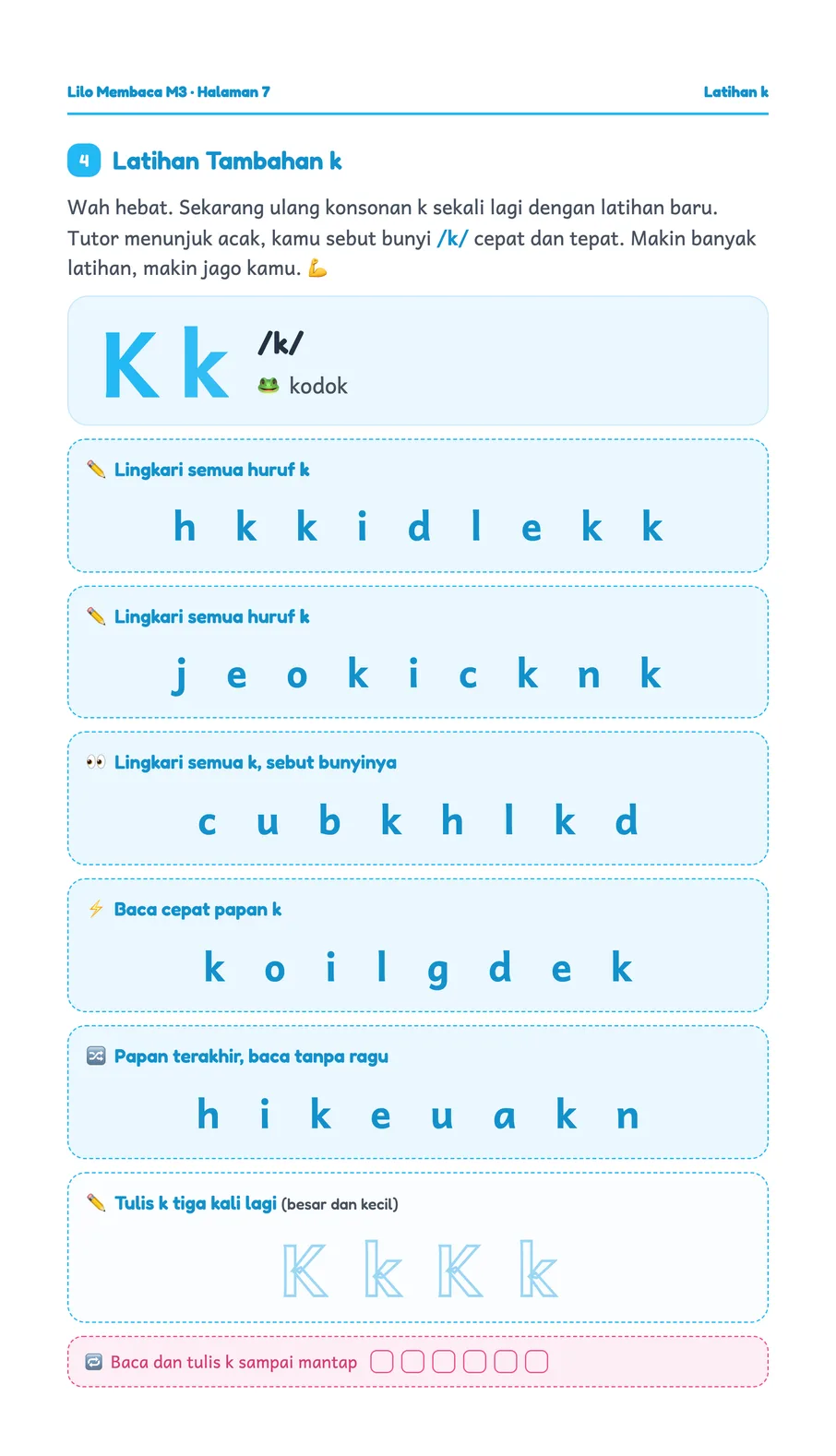
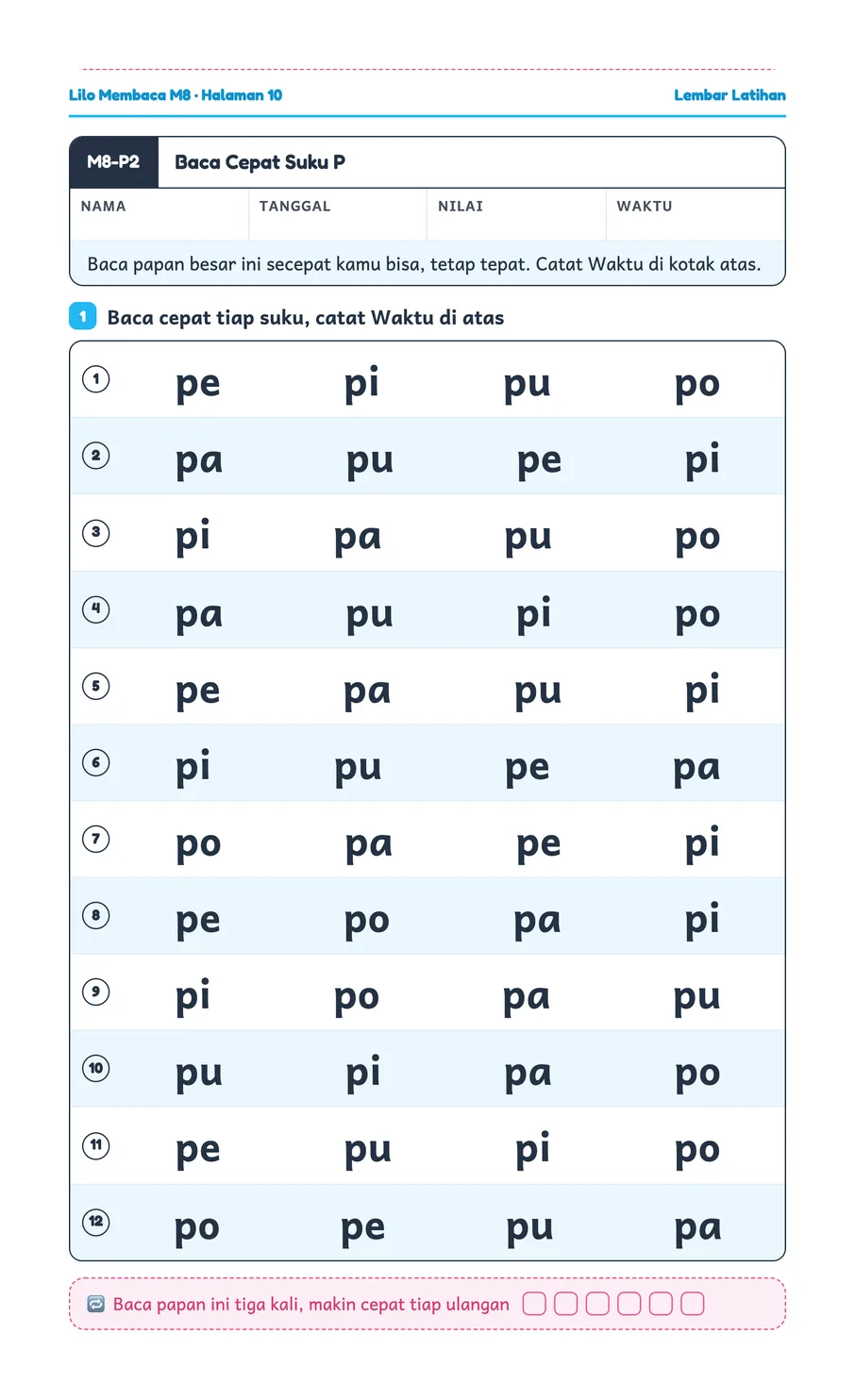
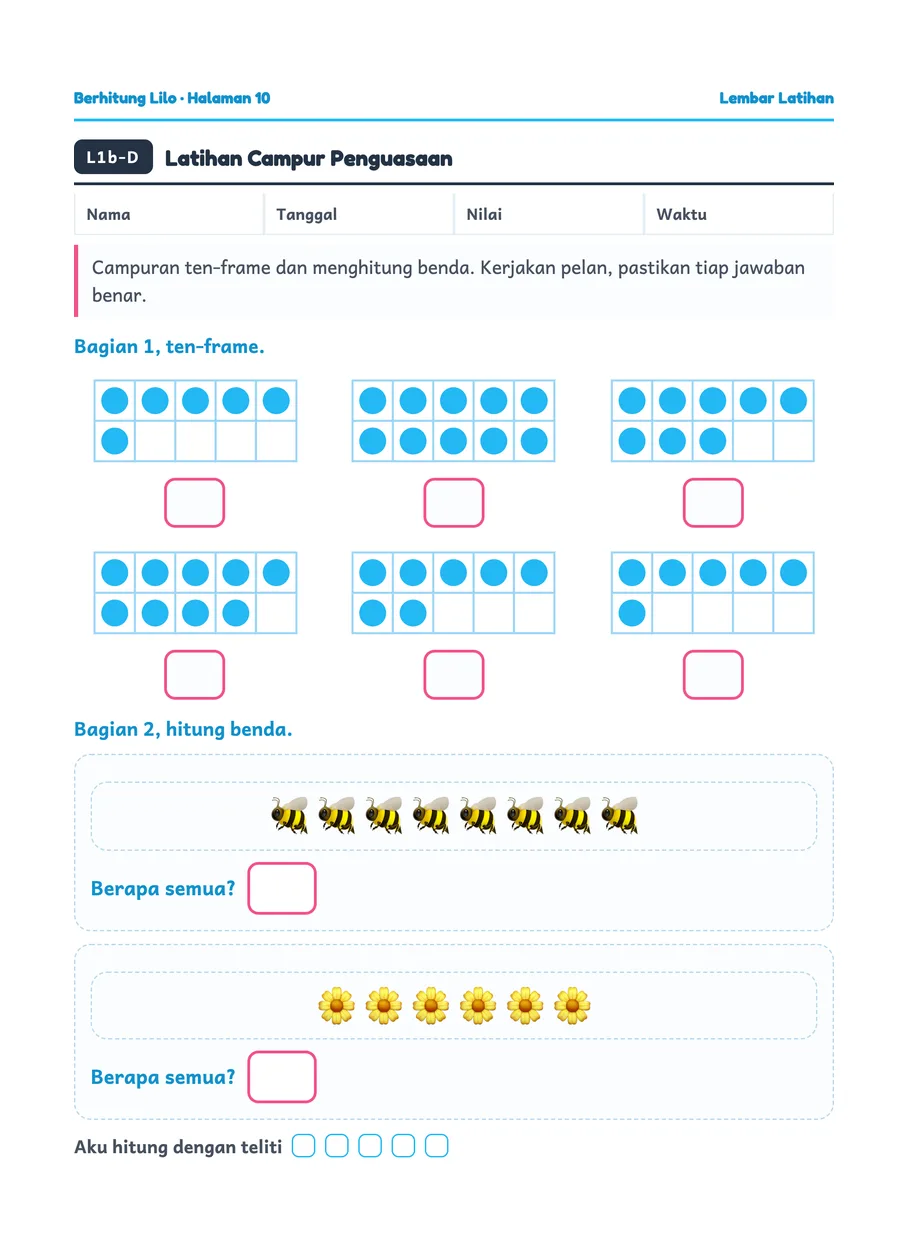
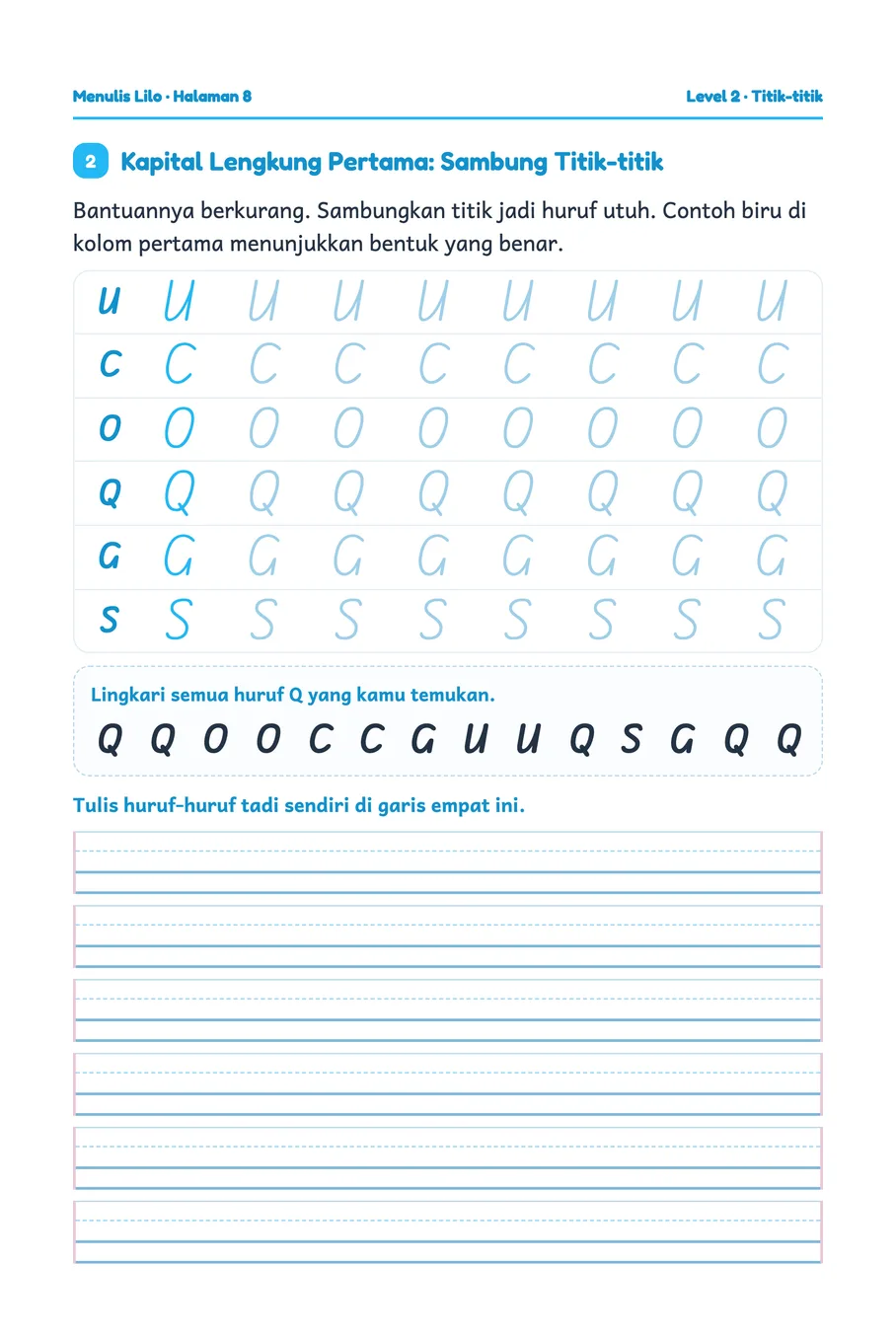 Real sheets from inside the pack
At four to five, a child ideally masters letter sounds, begins reading syllables, writes numbers one to twenty, recognises simple patterns, and strengthens the hand through cutting and pasting. This pack supplies material for every one of those goals.
Many children arrive already singing the alphabet, and that differs from reading. What decides progress is linking the shape of a letter to its sound, then joining two sounds into a syllable.
The pack follows exactly that line. Your child meets capitals and lower case letters, learns the sound of each letter through a pronunciation guide, then enters the syllable drill from ba, bi, bu through za, zi, zu across all twenty one consonants, with more than one hundred flashcards for rapid practice.
On the number side there are forty sheets covering one to twenty, a bright number poster, cards reaching one hundred, and arrow guided tracing so numbers stop coming out reversed. The hand keeps training through thirty graded cutting sheets, forty cut and paste activities, playdough mats, and an alphabet colouring book across twenty six themes.
Three signs that this is the right year for the pack.
Six sheets representing the order of the year: letters, syllables, tracing, then numbers and patterns.
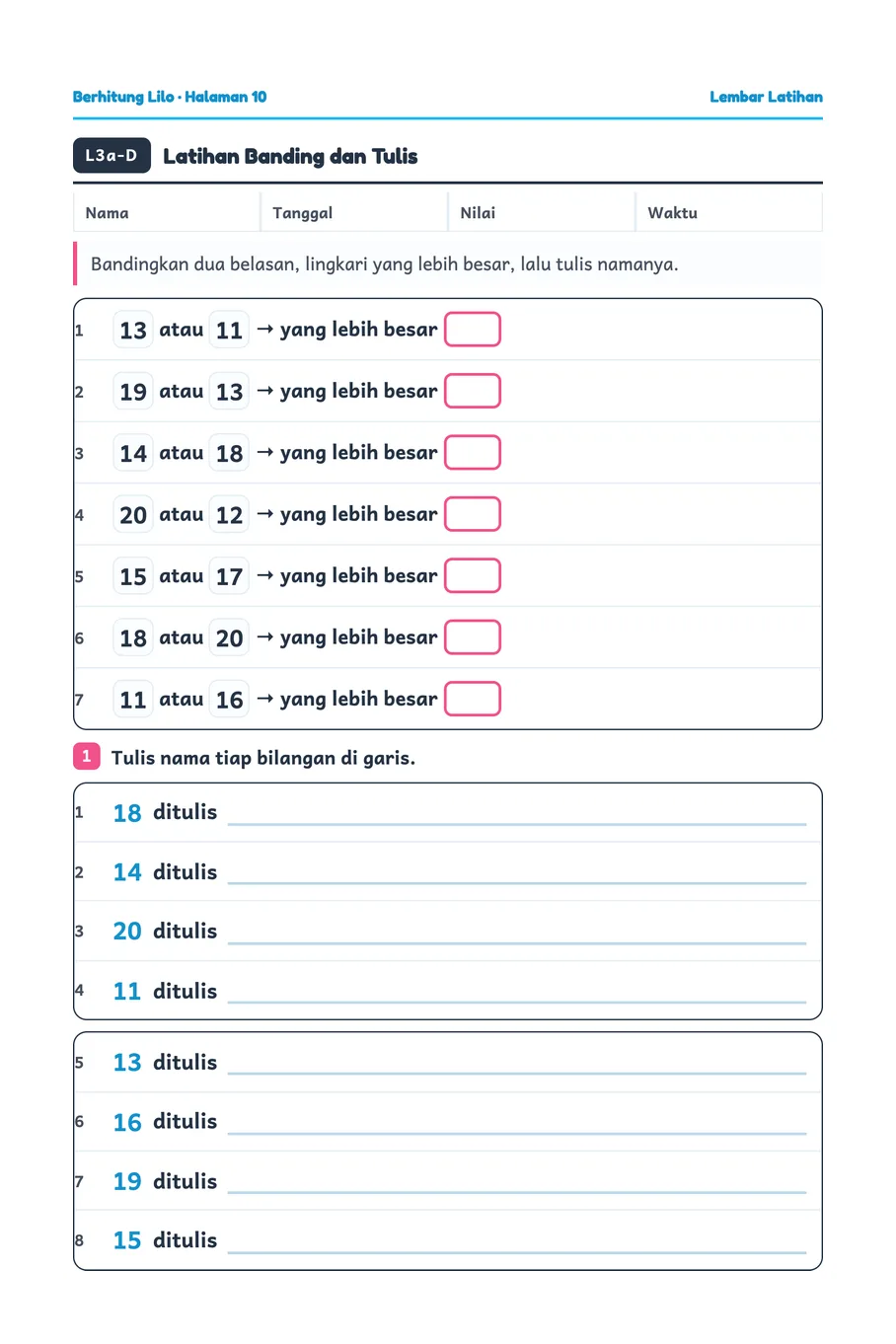
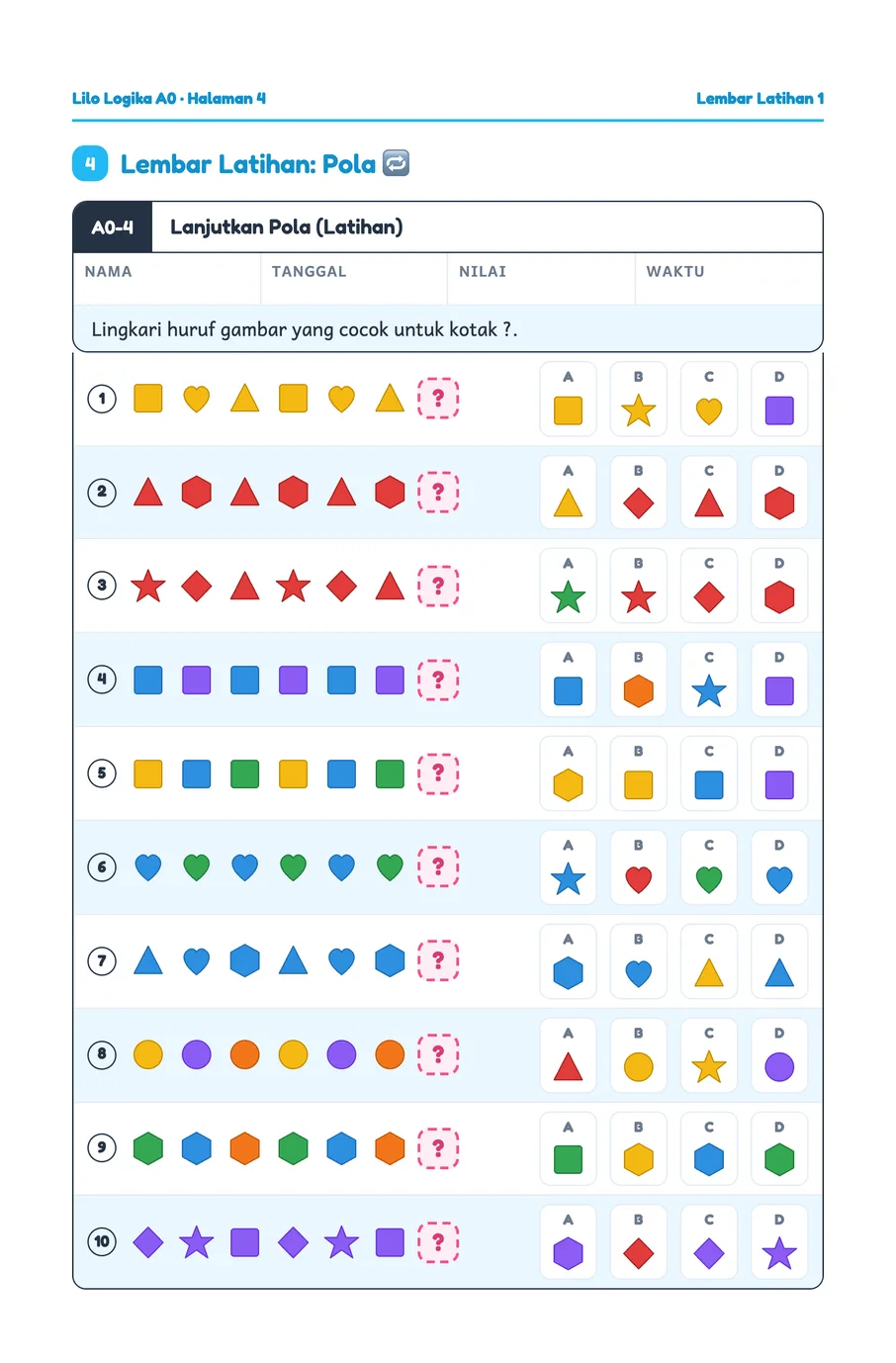
Worksheets, cards, posters, and hand activities that support one another.
Capital and lower case recognition, a pronunciation guide for every letter sound, and letter tracing paired with example words.
Drills across twenty one consonants plus more than one hundred flashcards, the first key before a child reads whole words.
Forty number sheets with answer keys, a bright number poster, cards to one hundred, and arrow guided tracing against reversals.
One hundred first words from around the house, opposite pairs, and emotion cards so your child can name what they feel.
Sixty AB and ABC pattern exercises, sorting cards, shadow matching, four picture story sequencing, thirty cutting sheets, and forty cut and paste activities.
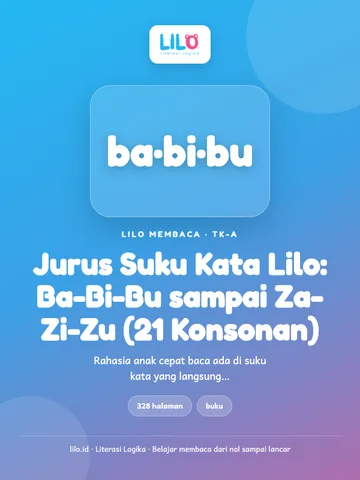 Jurus Suku Kata Lilo
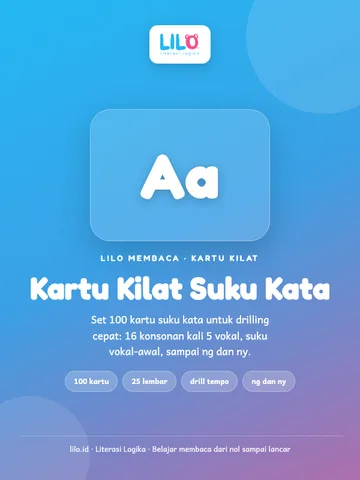 Kartu Kilat Suku Kata untuk Drilling Cepat (100+ Kartu)
 Pack Kenal Huruf Lengkap
 Tracing A-Z Lengkap
 Tracing Angka 1-20
 Kartu Tracing Angka Laminating-Ready
 Jago Angka 1-20
 Poster Angka Ceria 1-20
 Flashcard Angka 1-100 Siap Cetak
 Flashcard 100 Kata Pertama
 Flashcard Lawan Kata
 Flashcard Emosi
 Master Pola AB-ABC
 Cocokkan Bayangan
 Kelompokkan Aku
 Susun Ceritanya
 Jago Gunting
 Playdough Mat Angka dan Huruf
 Buku Mewarnai Alfabet A-Z
 Gunting-Tempel Cerdas
 Lembar Coba Suku Kata BA-BI-BU-BE-BO (Sampel Gratis)
 Tracing Huruf A-E
Two materials are free samples: a syllable trial sheet from BA to BO and letter tracing for A to E.
Split the school year into three parts so the material lands right on time.
Focus on letter recognition, the pronunciation guide, and tracing. Slip in word cards to grow vocabulary.
Enter the syllable drills and flashcards, while running the numbers to twenty sheets twice a week.
Add pattern work, sorting, cut and paste, and story sequencing. All three train ordered thinking.
The alphabet colouring book carries the days when your child resists practice, keeping the daily habit alive.
Three decisions behind the material for this age.
Your child practises the short sound of each letter, so meeting a syllable produces one whole sound straight away.
Number tracing uses consistent arrows, a habit that makes reversals far rarer in the following year.
Cutting and pasting are not filler. They train finger control alongside the ability to follow a sequence of steps.
This pack works best when your child already carries a few small skills and your home has a calm moment each day. The three groups of signs below help you judge when the first sheet is worth printing.
These are the steps you actually walk through once you decide to use this pack, from trying the sample sheets to judging when your child is ready to move into the next part of the year.
Print the syllable trial sheet from ba to bo and the letter tracing for a to e, then work through them together on a relaxed afternoon. Watch how your child responds: whether the sounds spark curiosity, whether the hand follows the lines comfortably, and how long the attention lasts. Those two sheets already tell you which parts of the year will feel light and which will need extra time.
Your materials open through the email you enter at checkout, so check the spelling once more before you press buy. Payment happens on the official Lilo payment page with QRIS, bank transfer, e-wallet or over the counter options. After that, every material waits in your Lilo account at app.lilo.id, ready to download whenever you want to print.
There is no need to print everything at once. Start with letter recognition, the pronunciation guide, letter tracing and a handful of first word cards, enough for one or two weeks. Keep the sheets in a single folder within easy reach, so your child sees a small pile that feels finishable and your mornings stay free from hunting for paper.
Each day your child completes one worksheet, then one hand activity such as cutting, pasting or shaping dough on a playdough mat. Together that comes to about fifteen minutes, a comfortable amount for a four or five year old. Choose the same time every day, perhaps after the afternoon bath, because children settle more easily into an activity whose time they already know.
The year map splits the school year into three parts of roughly four months each. At the end of each part, look back over the finished sheets and check the number sheets against their answer keys. If your child is steady, move on to the next part. If something wobbles, repeat that set for another week or two while still slipping in the colouring book.
The year map in this pack is a default pace. Four and five year olds rarely move exactly at that pace, and adjusting it is the most valuable skill you bring as the adult beside them.
Attention at this age is short and rises and falls from one day to the next. That is why the pack is built from many formats: sheets, flashcards, posters, cut and paste, dough and a colouring book. This variety is your pacing tool. The daily goal can stay fixed, say the sound of the letter m, while the activity changes to match your child's mood. A child too tired to write today can still practise m through the word cards, and a child full of energy can finish a tracing sheet and then hunt the house for things starting with m. The year map keeps moving, and the route simply bends to fit.
A child who bores quickly usually sends clear signals: answering before you finish asking, scribbling across the sheet, or asking when it ends two minutes in. At this age boredom often means the sheet is too easy or the session runs too long. Cut the session to half a sheet, then switch to a quick flashcard game. Let your child choose between two sheets, because a sense of control keeps a young learner at the table longer. If the number sheets match the answer key every time, move your child into the next part early and add pattern work as a fresh challenge.
A child who needs more time sends different signals. The hand tires fast, b and d swap places, or the same number flips again and again. Here you slow the pace on purpose. Stay longer in the letters and sounds part, repeat one consonant set until it feels light, and spread a single sheet across two days. Write less for a while and add more dough and cutting so the fingers strengthen first. The year map is allowed to stretch. A child who reaches the syllable drills in the fifth or sixth month is still walking the right sequence, and the sequence is what matters most.
One child often carries two paces at once, racing ahead with numbers while moving slowly through syllables, or the reverse. So set the pace track by track. The pack keeps letters, syllables, numbers, vocabulary and hand work as separate tracks, which lets you push one forward while holding another steady. End each session while your child still wants more, because that wish is what brings them back tomorrow. Keep a small notebook of what flows and what wobbles. If you would like a teacher to share this tuning, a Lilo tutor records each shift in the weekly progress report.
These milestones sketch the journey of a child who follows the year map with a calm daily rhythm. Treat them as a compass, because your child may reach each point a little earlier or a little later.
The first week is about getting acquainted. Your child learns that there is a special time for sheets and scissors, tries tracing a few letters, and says the sounds of two or three letters with you. It is natural if cutting feels more fun than writing, because hands that enjoy moving are the doorway to the pencil.
Your child begins saying the short sounds of several letters unprompted, perhaps while spotting a letter on a milk carton or a shop sign. Letter tracing looks tidier because the direction now feels familiar, and the first word cards bring a few more household names into everyday chatter.
The letters and sounds part is complete, and your child enters the syllable drills. Joining the sounds b and a into ba in a single breath starts to happen. Flashcards are used one consonant at a time, while the number sheets for one to twenty begin appearing twice a week.
Your child reads syllables across many consonants with growing confidence and starts recognising the same syllable inside short words. The arrows in number tracing mean digits that used to flip now face the right way far more often, and your child can compare two teen numbers and write them down.
AB and ABC patterns, sorting cards and four picture stories train your child to arrange steps in a sensible order. The hands are now strong enough to cut curved shapes. By this point many children are ready to join syllables into whole words, a fitting start for the next kindergarten year.
This picture shows the order of the journey without promising dates. A child who reaches a milestone later is walking the very same path.
These short activities use materials from the pack outside sheet time, at the dinner table, by the front door or just before bed, so sounds and numbers become part of your child's ordinary day.
| Activity | Time | What you need |
|---|---|---|
Guess the first sound from the first word cardsPut five cards showing household objects into a basket. Your child picks one, names the object, then guesses its first sound with you. Next comes the hunt for the real object somewhere in the house, and the card gets placed beside it. This links picture, word and first sound in one movement, and it fits nicely into the wait before dinner. | 10 minutes | Five cards from the 100 first words flashcards, a small basket |
Syllable flashcards on the way out the doorKeep the current set of syllable flashcards near the door, held together with a rubber band. Before you head out, flip the cards one by one while your child reads them. Five cards are plenty. Once the whole set reads smoothly two days in a row, swap in the next consonant. A routine this short keeps syllables warm in your child's mind, and it rarely feels like a lesson. | 5 minutes | One set of syllable flashcards for a single consonant, a rubber band |
Giant number trails in the air and on the floorPick one number that keeps coming out reversed. Your child traces it on the number tracing card with a finger, following the arrows, then draws the same number huge in the air with the whole arm. Next you shape that number on the floor with masking tape, and your child walks along it in the direction of the arrows. Big body movements help the writing direction stick firmly in memory. | 10 minutes | Laminated number tracing cards, masking tape |
Shaping letters with dough on the playdough matYour child rolls dough into a long rope and lays it over a letter or number on the mat, saying the letter sound while pressing it down. A bottle cap stamps a dot at the start of each line to show where writing begins. This suits a child who is not yet keen on holding a pencil, because the fingers grow stronger while the shape of each letter is still felt. | 15 minutes | Number and letter playdough mat, play dough, one bottle cap |
A four picture story before bedtimeShuffle four story cards on the bed. Your child arranges them into an order that makes sense, then retells the story in their own words, using first, then and finally. If the order differs from what you expected, ask for the reason. Very often the reason holds up, and this small conversation trains the ordered thinking your child will later need when reading whole sentences. | 10 minutes | One set of story sequencing cards, a bed or rug |
These questions help you decide clearly, based on your own child and your own home, before the first sheet comes out of the printer.
| Question to ask | Why it matters |
|---|---|
Does my child know letter sounds yet, or only the alphabet song? | The alphabet song trains the order of letter names, while reading rests on sounds. A child who only knows the song gains the most from the letters and sounds part at the start of the pack. A child who already says the sounds fluently can step straight into syllables. The two free samples show you where your child sits between the two. |
How many minutes a day can I genuinely protect and keep calm? | The pack is designed around a daily session of about fifteen minutes. Short practice that happens every day builds a stronger habit than one long session at the weekend. If your days are full, fix a set time before buying, perhaps right after dinner, so the pack is truly used across the whole school year. |
Can I print regularly at home or somewhere close by? | Every material comes as a print-ready sheet. You will print a few sheets each week, and some cards are worth laminating so they survive small hands. Sorting out your printing route at the start keeps the year map running smoothly and spares your child days without sheets because the ink ran out. |
Which track does my child need most this year? | The pack covers letters and sounds, syllables, numbers to twenty, vocabulary, and hand and attention training. Knowing the weakest track helps you give it a bigger share of the week. A child whose hands are still weak, for example, gains a great deal from the cutting sheets and playdough mats from the very first week. |
When would I want someone to measure my child's progress every week? | Some adults are happy guiding a child through this pack alone, while others want an expert eye that assesses and adjusts each step. For that second need, Lilo private lessons bring a tutor to your home or online through the Starter, Regular, Intensive or Complete packages, and the tutor is replaced free of charge if the fit is wrong. |
What comes next once the first kindergarten year is over? | Learning to read is a gradual journey, and what your child builds this year gets used again next year. When this pack is finished, the complete pack for the following kindergarten year carries on from syllables to reading words and sentences, adding addition and subtraction, so your child steps forward from familiar ground. |
Skip the letter section and go straight to the flashcards, numbers to twenty, patterns, and story sequencing. If your child already blends whole words, the Second Kindergarten Year Pack fits better.
One sheet a day is plenty at this age, plus one hand activity. Around fifteen minutes in total.
More than one hundred, covering all twenty one consonants. Print one consonant set first, use it until fluent, then move to the next.
The sheets progress from straight lines to more intricate shapes, and supervision is still needed. Blunt tipped children's scissors are enough.
Begin with playdough and cutting instead. Both strengthen the fingers, and interest in writing usually appears once the hand feels capable.
The Second Kindergarten Year Pack continues from syllables into words and sentences, adding addition and subtraction.
The materials open through the email you entered at checkout and are available in your Lilo account at app.lilo.id. Sign in with that same email, then download whichever materials you want to print. That is why the email address must be active and spelled correctly before you pay. If anything gets in the way of opening the materials, contact the Lilo team on WhatsApp and mention the email you used.
Daily worksheets print well on ordinary paper, since each one is completed once and then filed away. Cards that get handled often, such as the syllable flashcards and number cards, last longer on thicker card stock. The number tracing cards are prepared for laminating, so your child can trace them again and again with a marker that wipes off easily.
Yes, as long as you adjust the pace. Begin with hand activities such as dough, cutting straight lines and the alphabet colouring book, while introducing a few letter sounds through the word cards. The tracing and syllable sheets can follow once your child's grip feels steadier. If your child seems ready for even earlier material, Lilo's complete early years pack makes a gentle starting point.
Go back to the arrows and make the movement bigger. Ask your child to trace the number tracing card with a finger, then draw the number huge in the air before writing it on paper. Focus on one frequently reversed number for several days before moving to the next. Reversed numbers are normal at this age, and a consistent direction makes them appear less and less.
No. Admission to the first year of primary school in Indonesia does not require a reading, writing and counting test, as set out in Permendikdasmen 3/2025 Article 11 paragraph 5, and selection is based on age. This pack helps your child enjoy letters and numbers at a natural pace, so school begins with confidence and without the pressure of chasing targets.
Yes, the year map is a default pace that you are free to adjust. The numbers track can move earlier if your child loves it, and the letters and sounds part can run longer if sounds still get mixed up. The one sequence worth keeping is letter sounds before syllables, because your child needs to know each sound first before joining them together.
Swap the sheet for the alphabet colouring book or a cut and paste activity, then return to sheets tomorrow. What you are protecting is the habit of sitting together every day, and that habit stays alive through lighter activities. If the refusals continue for several days in a row, try moving the practice time or shortening the session, because the timing is often what feels off.
Yes, and the two support each other well. A Lilo tutor teaches from Lilo's own curriculum with worksheets from the module currently being learned, and closes each session with one small task of about ten minutes. This pack can fill the days between sessions. Tell the tutor which part of the pack your child is working on, so practice at home and in sessions points the same way.
A full year of first kindergarten material sits here. The classes below suit families who want a teacher measuring progress every week, and the next two packs are the natural continuation next year.
Letters, syllables, numbers to twenty, and hand training, ordered from the first day.