
Have a selection date
- The chosen school has opened registration
- One to two months remain
- You want a daily order ready to follow
There is a date ahead and the time is short. This pack turns the last two months into a clear daily schedule, right up to test day.
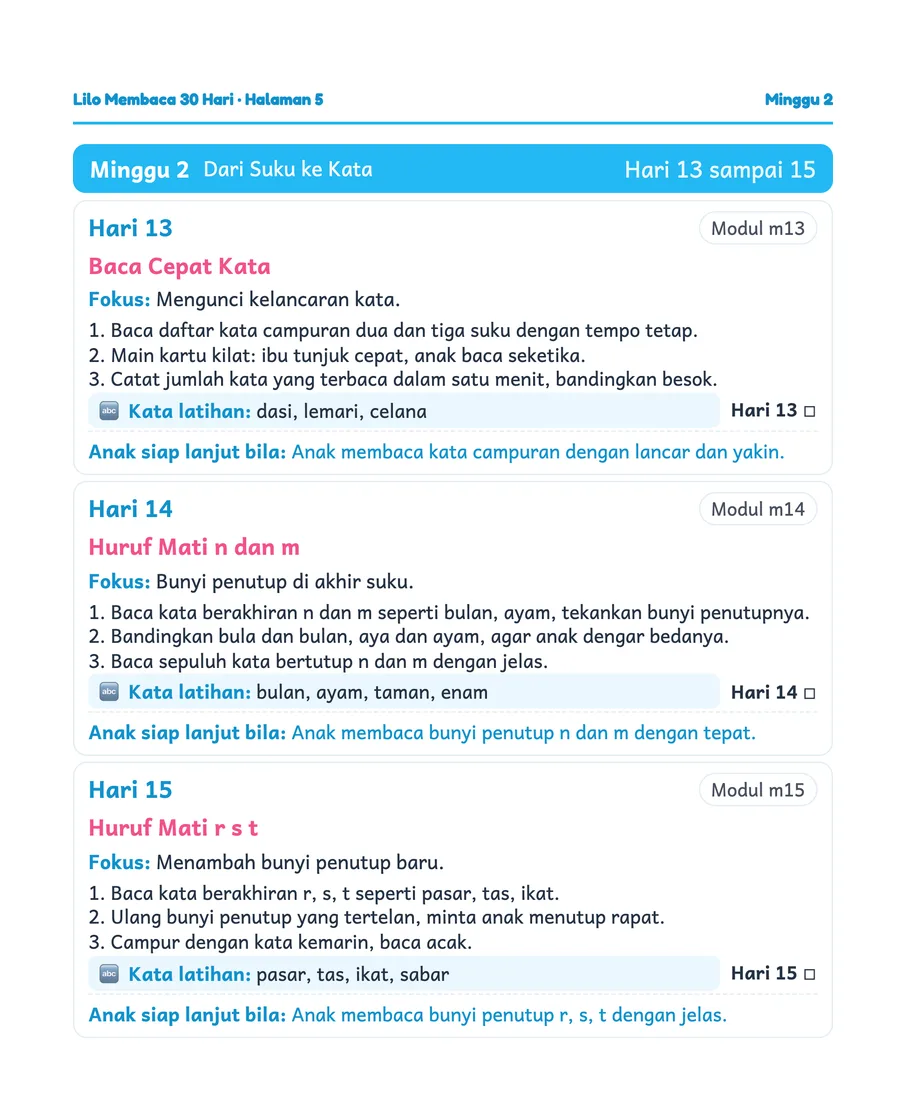
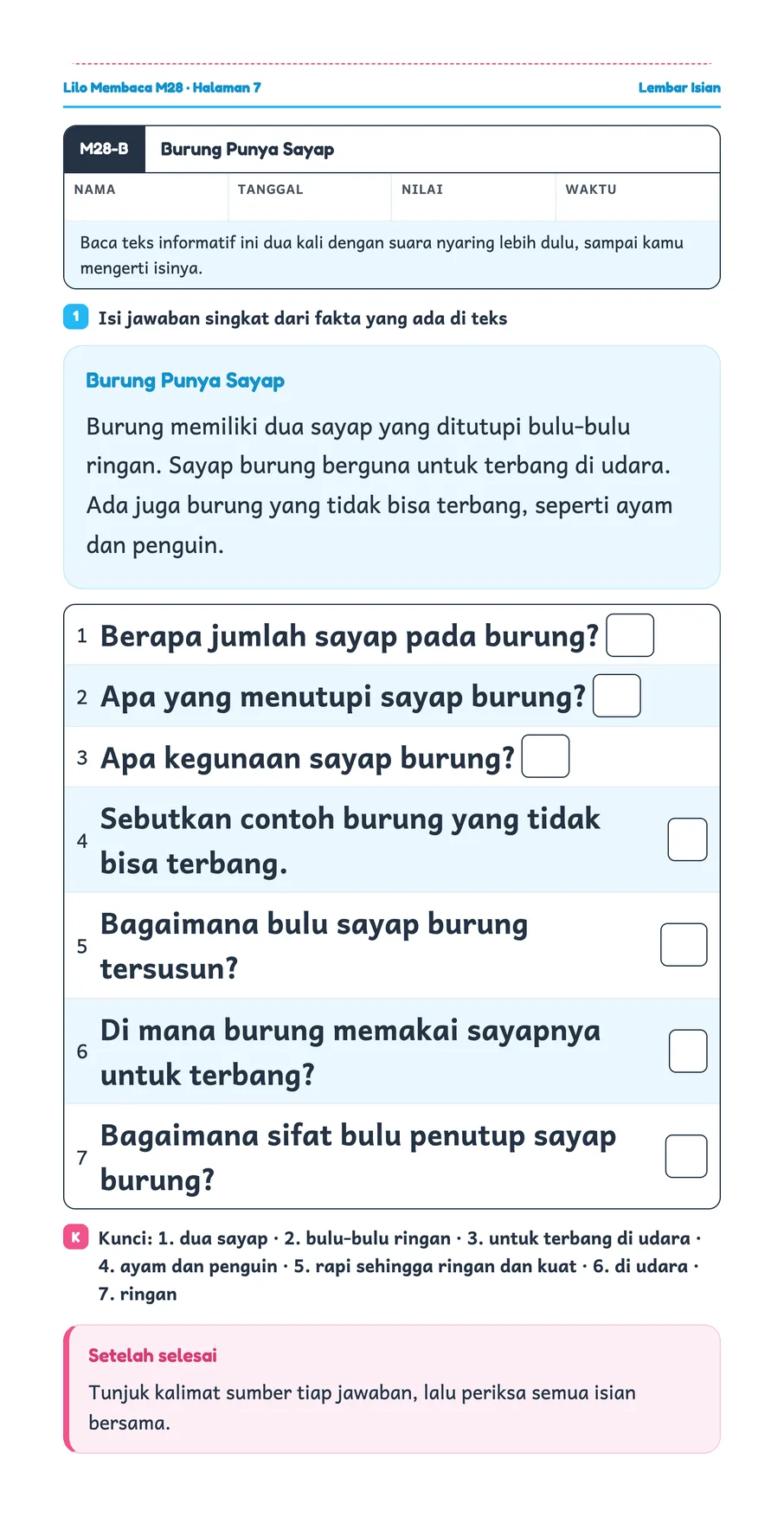
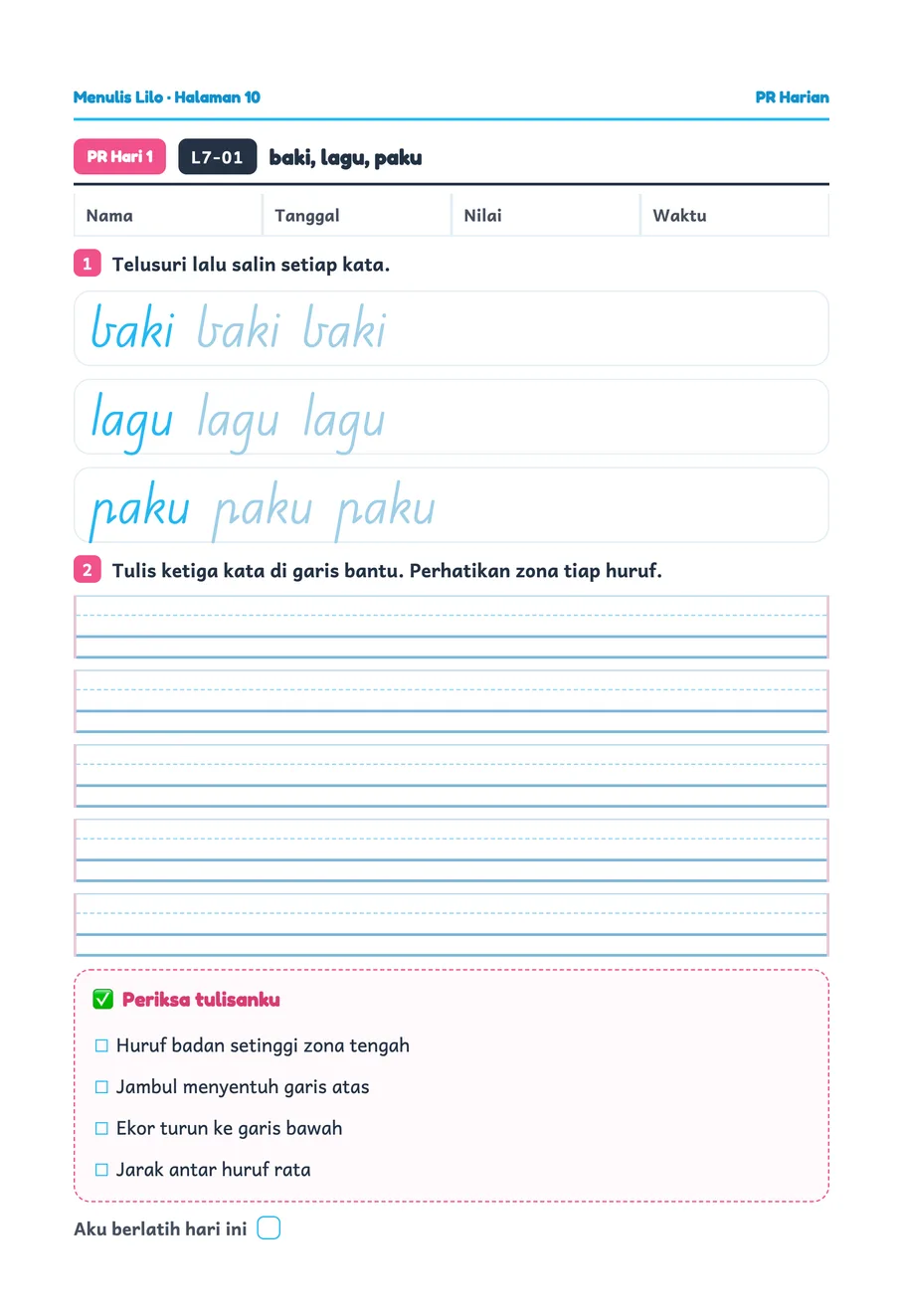
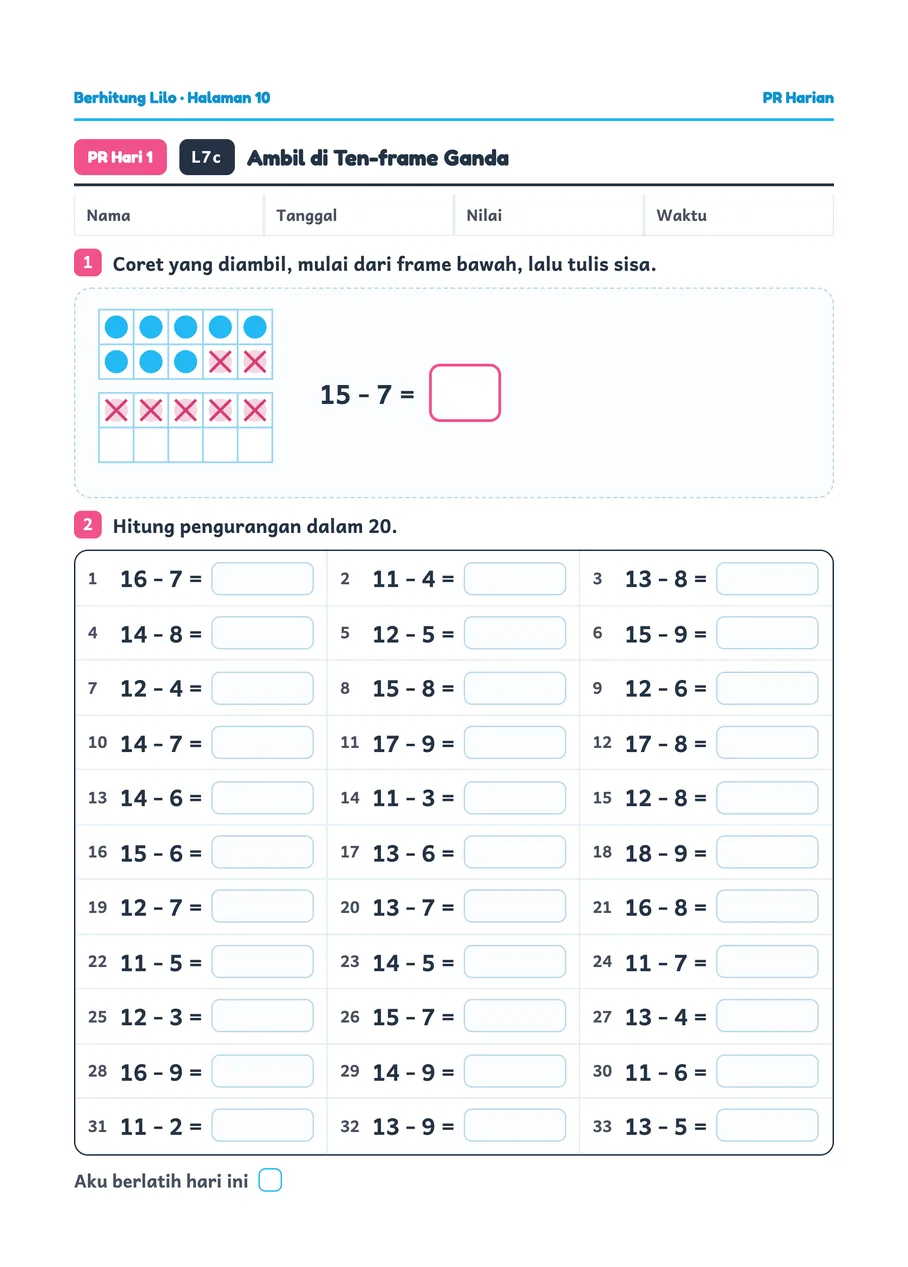 Real sheets from inside the pack
Effective preparation runs on a schedule: daily reading practice, addition and subtraction within twenty, sentence copying, simple reasoning drills, then test and interview rehearsal. This programme spreads all of it across sixty days.
As selection approaches, most parents end up drowning in material. There are workbooks, free downloads, and advice arriving from every direction. What goes missing is the order: what does my child do today, and for how long.
This pack answers exactly there. It carries a 30 day practice programme towards the test that blends literacy, interview, and reasoning, a 30 day reading fluency programme, a countdown calendar from day sixty, and a 30 day study calendar as a progress marker.
The practice material itself is chosen for what selection tends to ask: addition and subtraction within twenty, the hundred board, copying fifty sentences, writing letters unaided on four ruled lines, one hundred high frequency words, comprehension questions, picture sudoku, and cause and effect cards. It closes with ten sample entrance questions and their key, a five minute reading diagnostic, and a morning routine kit so the first school day runs calmly.
Three situations where a schedule helps far more than loose material.
Six sheets from the material used across the sixty days towards selection.
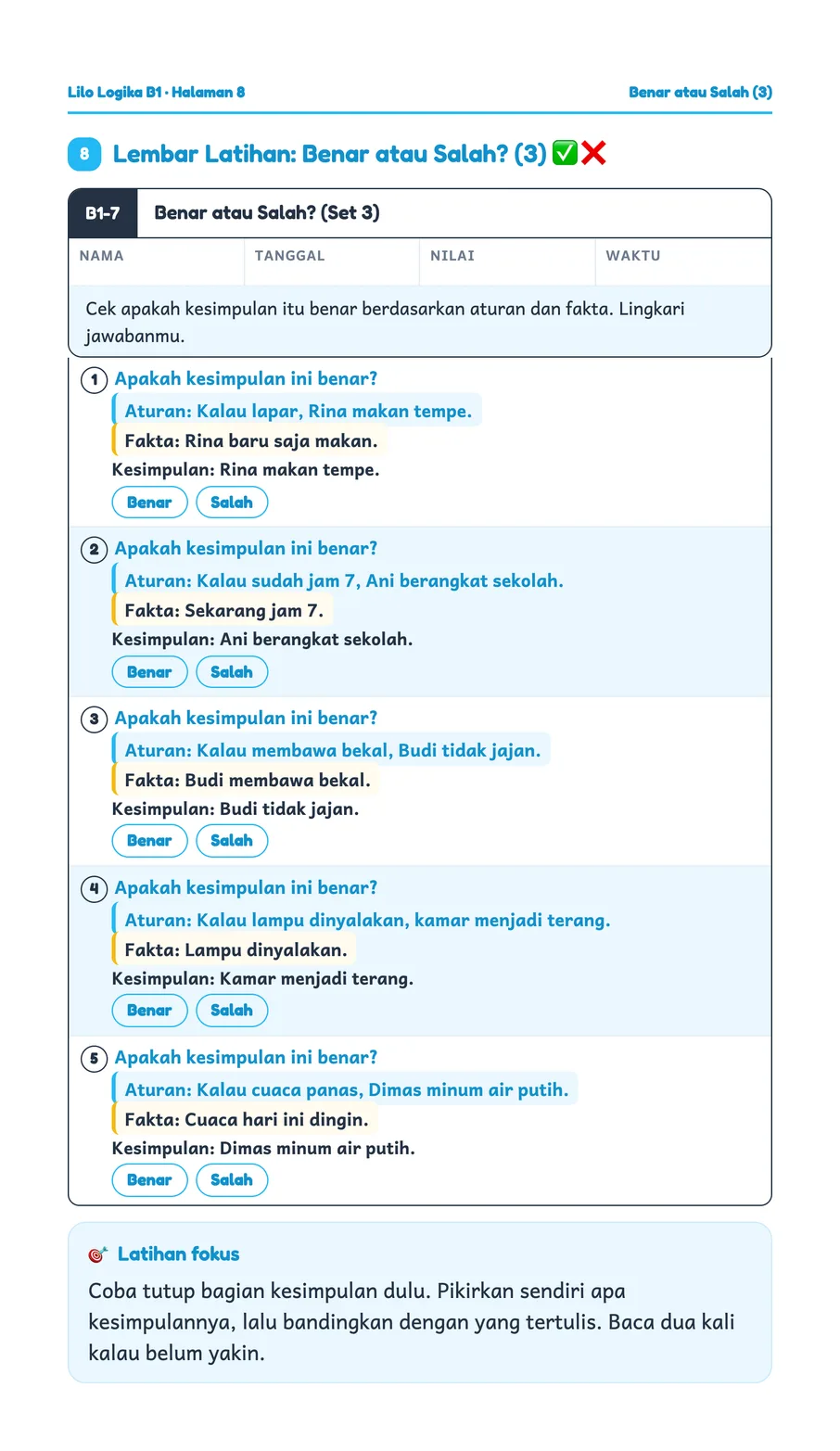
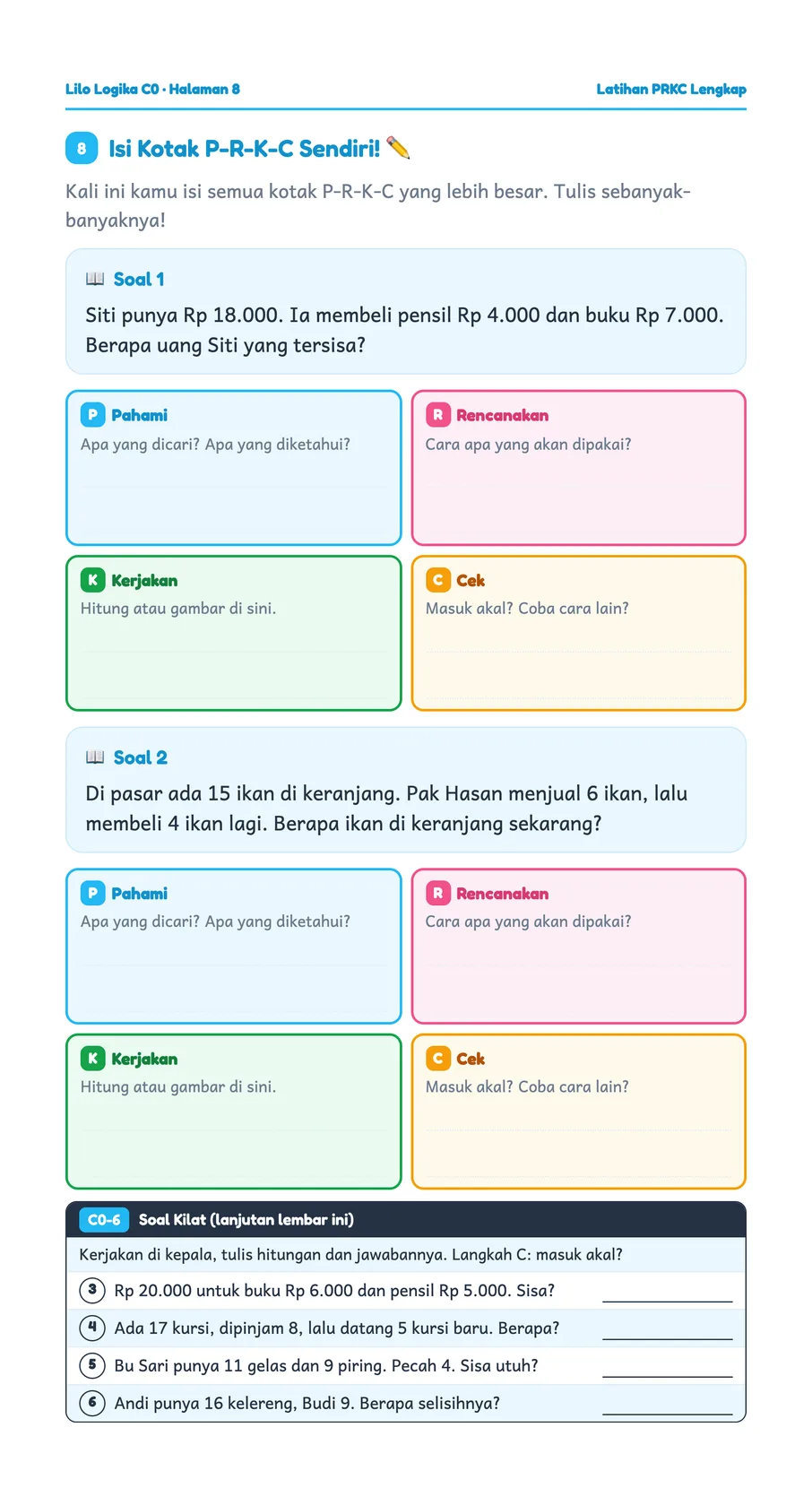
Scheduled programmes, practice material, rehearsal, and progress markers.
A 30 day run towards the test blending literacy, interview, and reasoning, plus a 30 day reading fluency programme.
Addition and subtraction within twenty, the hundred board, fifty sentences of copying practice, unaided letter writing, and one hundred high frequency words.
Ten sample entrance questions with the key, forty interview question cards with sample answers, and comprehension question practice.
Eighty picture sudoku boards and cause and effect cards, two materials that train a child to hold back and check first.
A day sixty countdown calendar, a 30 day study calendar, visual daily routine cards, and a first school day preparation kit.
 Lolos Tes Masuk SD
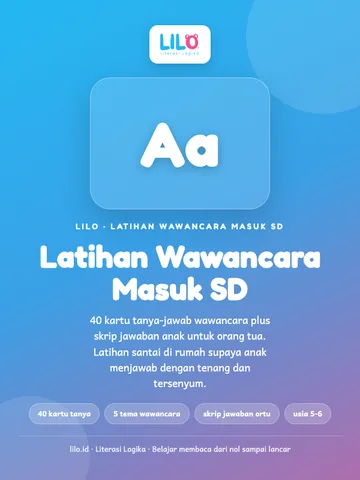 Latihan Wawancara Masuk SD
 Kalender Countdown Siap Masuk SD (H-60)
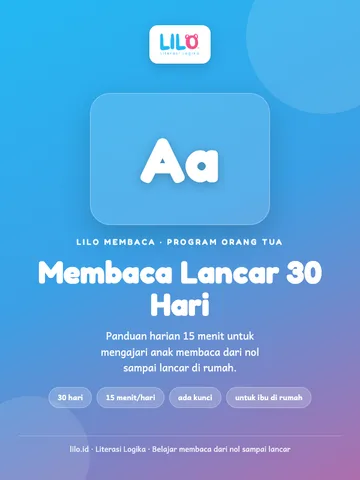 Membaca Lancar 30 Hari
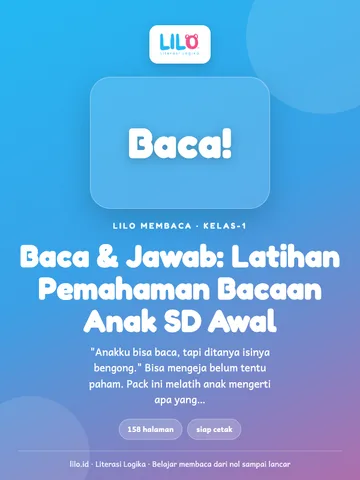 Baca dan Jawab
 Penjumlahan Sampai 20
 Pengurangan Itu Mudah
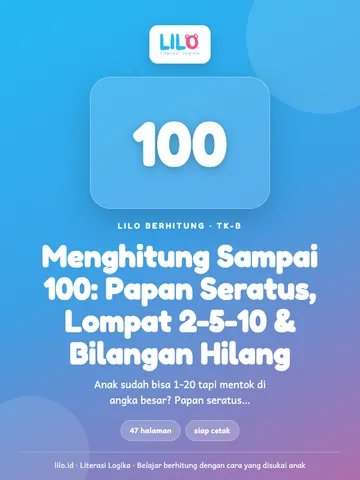 Menghitung Sampai 100
 Menyalin Kalimat Rapi
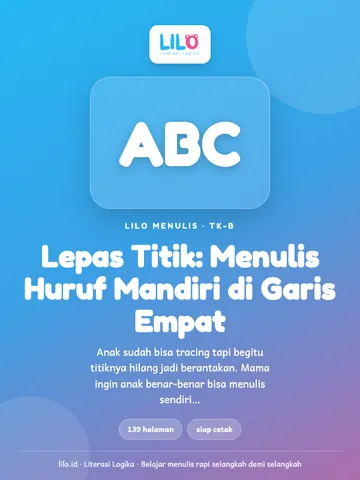 Lepas Titik: Menulis Huruf Mandiri di Garis Empat
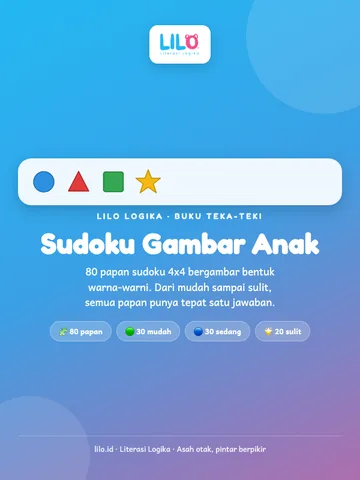 Sudoku Gambar Anak
 Kenapa Begitu?
 Kata yang Sering Muncul
 Kalender Belajar 30 Hari
 Balik Sekolah Siap Tempur
 Paket Visual Rutinitas Harian
 Checklist Kesiapan Masuk SD (Sampel Gratis)
 10 Soal Asli Tes Masuk SD + Kunci Jawaban (Gratis)
 Diagnostik Baca 5 Menit
Three free materials can be tried first: the readiness checklist, ten sample test questions, and the five minute reading diagnostic.
You simply follow along, marking the calendar together with your child.
Run the five minute reading diagnostic and the readiness checklist. The results decide which area gets the larger share.
Run the 30 day programme. Each day carries one focus, and the calendar gets crossed off together afterwards.
Work the ten sample questions like a real sitting, then talk the answers through calmly.
Use the question cards casually, reduce the sheet workload, and make sure your child sleeps well.
Move to the morning routine kit and visual daily cards so the first school week starts without rushing.
Three principles that keep preparation from turning into pressure.
Twenty minutes daily across two months beats sudden long sessions, and your child still enjoys learning afterwards.
Question cards are used in the car or before bed, so answering in full sentences becomes an ordinary, comfortable habit.
The diagnostic runs twice. Your child sees their own progress, and that confidence carries into test day.
A sixty day schedule pays off most when a few things are already in place. Check the three groups of signs below. If most of them fit, your child can start at day sixty tomorrow afternoon.
Before the calendar gets its first mark, five small steps make the next two months run smoothly. All of them fit into a single afternoon.
Once payment is complete, open your Lilo account at app.lilo.id and download every material in one go. Keep them in a single folder named after your child's selection date. Whenever you need a sheet, you know exactly where it lives, and the two months ahead feel like one project with a clear finish line.
For the first two weeks, print the countdown calendar, the readiness checklist and the five minute reading diagnostic. Daily practice sheets are printed week by week, once you know which area needs the larger share. This saves paper and keeps the table clear, so your child only ever sees today's task.
Choose the same hour every day, perhaps after the afternoon bath, and the same corner to sit in. Children of this age learn through habit. When the time and place stay fixed, their body is ready before the sheet opens, and you avoid coaxing them from scratch each day.
Let your child stick the calendar up and choose the marker colour for crossing off. Explain in simple words that each box is one day closer to the new school. That sense of ownership matters. A child who helped hang the calendar tends to ask for the session, because they want to cross off today's box.
Set up one folder with two pockets, one for sheets still to do and one for finished sheets. Each weekend, take out the second pocket, check it against the answer key and mark the question types that keep tripping your child up. That small note decides which sheets you reprint next week.
Selection day rarely tests one skill at a time. A session that blends several skills prepares your child for the switching they will meet in the room.
In a selection room, a child switches fast. They read a short instruction, count some pictures, then answer a teacher's question in their own words, all within a few minutes. A child who spent two months practising one kind of sheet per day is often surprised by this. They count well, yet need a moment to move their attention from numbers to words. That is why the 30 day programme towards the test inside this pack blends literacy, interview and reasoning. It trains an ability people rarely name: changing tasks calmly.
The key is one thread running through the session. Take one theme, such as a short text about a butterfly. Your child reads it, answers one question about it, counts the butterflies in the picture, then copies one sentence from the text onto the four ruled lines. Four skills move through one story. Your child's brain ties words, numbers and hand movement to the same picture, so the memory holds longer. On test day, when the question type changes, your child is already used to carrying attention from one part to the next.
The order inside the session matters too. Open with whatever is easiest for your child as a warm up, perhaps a question card or one row of addition. Place the most demanding part in the middle, while attention is fresh. Close with a hands on task such as copying a sentence or filling a sudoku board, because hand movement settles a child. Each part needs only three to five minutes. Switching too often tires a young child, so three or four parts per session is plenty.
This approach also gives you an honest picture. In one mixed session you can see clearly which part flows and which part slows your child down. Note the slow part and give it a slightly bigger share the following week. Lilo tutors in the primary school preparation class work the same way, blending several skills in one session, then closing with a short recap and one small task of about ten minutes. At home, you run that same pattern with the sheets already arranged inside this pack.
Outside the sheet session, small moments through the day keep practice alive. Pick one or two a day and fit them to the mood at home.
| Activity | Time | What you need |
|---|---|---|
Dinner table interviewDraw one question card at dinner and ask it the way you would in an ordinary chat. After your child answers, swap roles so your child asks you the same card. Trading places shows them the shape of a question from both sides, and they grow used to answering in full sentences while looking at the person speaking. | 5 minutes | Interview question cards |
Bottle cap shop up to twentyTurn bottle caps into play money and price a few items on the table, each under twenty. Your child buys two items, adds the prices together, then works out the change from twenty caps. Addition and subtraction appear inside one story, so your child sees how the two operations belong together. | 10 minutes | Bottle caps, price slips, small household items |
Kitchen word huntChoose five words from the high frequency word list, write them on small slips and hunt for them on food packets, the wall calendar or labels around the kitchen. Each word found goes up on the fridge door. Your child learns to spot words quickly in unexpected places, exactly the skill a test question asks for. | 10 minutes | One hundred word list, small paper slips, tape |
Hold it, then check itWork one picture sudoku board together with one rule: before drawing an answer, your child points along the row and the column to check it. This habit of holding an answer for a moment pays off on test day, when a child is tempted to answer an easy looking question before finishing the instruction. | 10 minutes | Picture sudoku board, coloured pencils |
Guess the effect at bedtimeTake one cause and effect card, cover the effect side and ask your child to guess what happens next and explain why. Then reveal the card and compare it with the guess. This trains reasoning and speaking at the same moment, two things that often appear together in an interview. | 5 minutes | Cause and effect cards |
Every child moves at their own pace, so these milestones are a picture with no promised dates. Use them as a mirror. If your child moves faster or slower, the schedule still works once you shift the portions.
The reading diagnostic and readiness checklist are done. You know whether your child needs more help with reading, counting or speaking to new people. Your child begins to learn the rhythm: sit down, one sheet, cross off the calendar, finished.
Your child rarely asks why they have to study today, because the session has become part of the afternoon. Addition within twenty starts to happen with fewer fingers, and copied sentences sit more neatly on the four ruled lines.
Around the middle of the programme, many children read a short text with fewer pauses and can answer a question about what it says. Interview cards start to get full sentence answers, though sometimes a second prompting question helps.
The ten sample questions are worked like a real sitting, then talked through calmly. Your child learns that a wrong answer becomes the next piece of practice. Many children feel excited at this stage, because it feels like trying something new and important.
The sheet workload is lighter, sleep is protected and the question cards are played casually. The diagnostic runs one more time, and your child sees for themselves the distance between day one and today. That confidence is what they carry into the room.
If one milestone arrives later, give that area a bigger share and keep everything else running as usual.
The right preparation depends on the time left, your child's readiness and how the chosen school selects. Answer these six questions first so your choice rests on real circumstances.
The time left shapes the preparation. Two months leave room to measure, practise and then rehearse calmly. If the gap is much longer, your child gains more from broad foundation material first. This pack is built for a gap of around sixty days, and its calendar counts down from there.
Under Permendikdasmen 3/2025 Article 11 paragraph 5, entry to grade 1 of primary school does not require a reading, writing and arithmetic test, and selection uses age. Some schools still hold an observation or an interview. Ask the school directly, then give more weight to the parts your child will actually meet.
The sixty day programme assumes your child already holds the basics of reading and counting and is ready to sharpen them. If your child is still meeting letters one by one, start with foundation reading material first. The five minute reading diagnostic in the pack helps you answer this question with certainty.
A daily schedule runs when an adult keeps it going. That companion only needs to be present, read the instructions and check answers against the key. If nobody can be there at a fixed hour, consider tutor support from the start so the two months stay full.
Without a measure, two months feel like a routine with a blurry end. Good preparation measures at the start and repeats at the end, so you and your child see the change with your own eyes. In this pack the reading diagnostic runs twice and the study calendar marks each day.
Some children settle more readily with a person from outside the home. In that case a tutor keeps the rhythm and the pack's sheets cover daily practice. At Lilo, the team matches the tutor for primary school preparation, you can view the tutor's profile before the first session, and the tutor is replaced free of charge if the fit is wrong.
Yes. Take the 30 day programme and compress it by combining two days into one session, prioritising the test rehearsal and interview practice.
At the start yes, especially for the diagnostic and for talking answers through. Once the rhythm settles, most sheets can be done alone while you check them against the key.
Yes, and this is where the gain is largest. Forty question cards with sample answers rehearse full sentence answers until it feels ordinary.
They overlap, with different weight. This one leans on the schedule and rehearsal across sixty days, while the complete pack carries far more practice material.
Ideally they read simple words. If not, start with the Reading Before Primary School Bundle so this programme lands at the right level.
Yes. The morning routine kit, visual daily cards, and counting material stay useful through the first semester of grade one.
Printing week by week works best. At the start, prepare the countdown calendar, the readiness checklist and the reading diagnostic. Once the diagnostic results are in, you know which area needs the larger share, so every sheet you print gets used. Printing in stages also keeps the table clear, and your child is spared a tall stack of paper on day one. Every material stays in your Lilo account, so any sheet can be reprinted whenever you need it.
Swap the sheet for a light home activity and still cross off the calendar. An occasional refusal is normal at this age, especially when your child is tired or feeling unwell. The rhythm is what carries the programme, so five minutes with the question cards is enough for that day. If refusals run for several days in a row, check whether the portion is too heavy and drop one part. A child who feels capable usually returns to the table on their own.
Choose the hour you can protect most reliably every day, such as after the afternoon bath or before dinner. A twenty minute session fits around a working day as long as the hour stays fixed. The question cards can be played in the car or at bedtime, so interview practice keeps moving even on tight days. Weekends are for checking sheets against the answer key. If nobody can be present at a fixed hour, a tutor can keep the rhythm.
Under Permendikdasmen 3/2025 Article 11 paragraph 5, entry to grade 1 does not require a reading, writing and arithmetic test, and selection uses age. Some schools still hold an observation or interview to get to know new pupils. This pack helps in both situations, because it trains your child to answer in full sentences, sit calmly through a task and read a short instruction. Those are the same things your child needs in the first week of grade 1.
Talk it through calmly and begin with the questions your child got right. Name two or three that went well, then pick one wrong question and read it again together. Very often your child already knows the answer and simply rushed. Avoid counting mistakes out loud in front of them. Wrong questions go on the list for next week's practice, so the rehearsal feels like practice and your child stays willing to try again.
Yes, because the schedule counts back from selection day. If the date moves earlier, compress the daily practice stage and bring the rehearsal and interview cards forward. If it moves later, add a few days of review in the areas the diagnostic flagged, then shift the rehearsal stage closer to the new date. Rewrite the numbers on the countdown calendar together with your child, so they always know how many boxes are left.
Yes, and the two fit together well. The tutor keeps the rhythm and reads your child's needs in each session, while the pack's sheets cover daily practice between sessions. Lilo lessons are paid per monthly package: Starter holds 4 sessions, Regular 8, Intensive 12 and Complete 24, and larger packages cost less per session. To pick the package that suits the time your child has left, use the free WhatsApp consultation.
The materials are waiting in your Lilo account at app.lilo.id, opened with the email you entered at checkout. That is why the email address needs to be active and typed correctly. Once you are in, you can download all nineteen materials to your device and print them at home or at a nearby print shop. Keep them in one folder named after your child's selection date, so each week's sheets are easy to find.
Sixty days is a tight plan, and no child has to walk it alone. The classes below provide a tutor to keep the rhythm, and the next two packs offer extra material when the timeline turns out to be gentler.
Sixty mapped days, from daily practice to test and interview rehearsal.